
Career profile

Agricultural Equipment Operator

Agricultural equipment operators drive harvesters and tractors, adjust attached gear, and keep crops moving.

Half your attention goes to what the machine leaves behind, and the other half to the path it takes next.
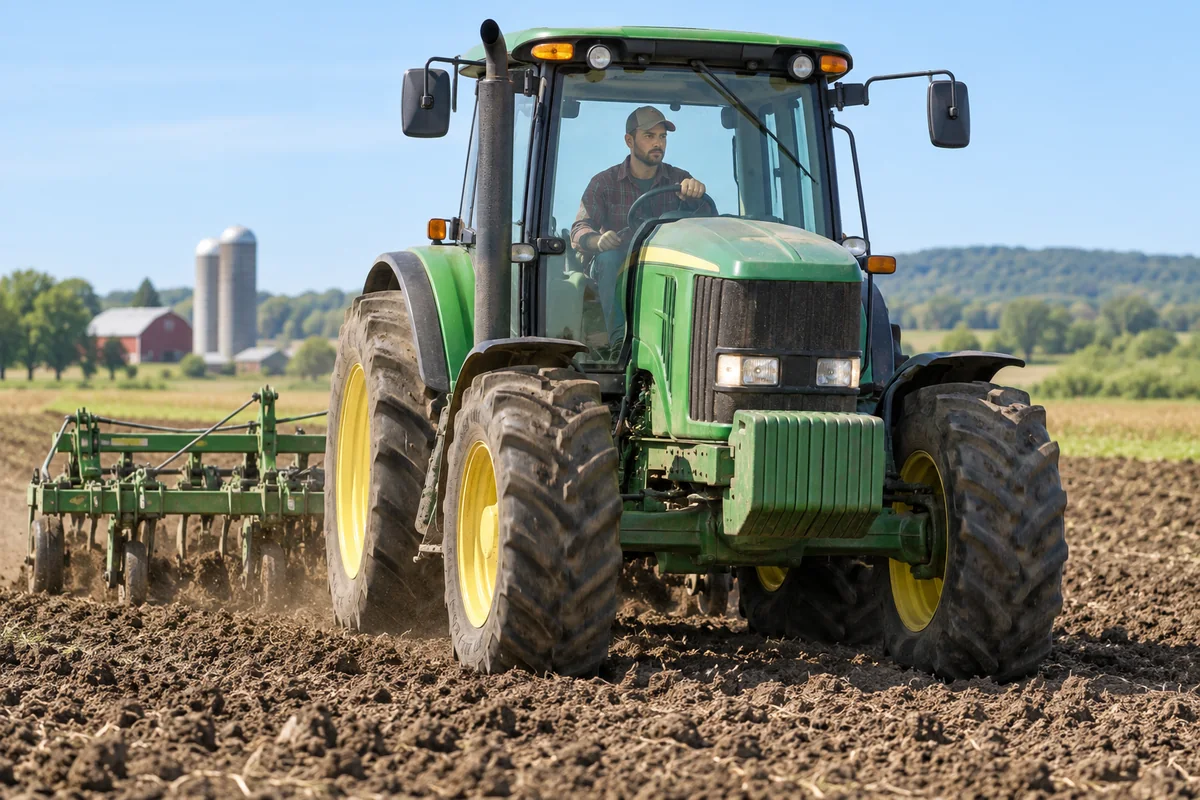
An adult agricultural equipment operator driving a tractor to cultivate a field in daylight.

A day in the life

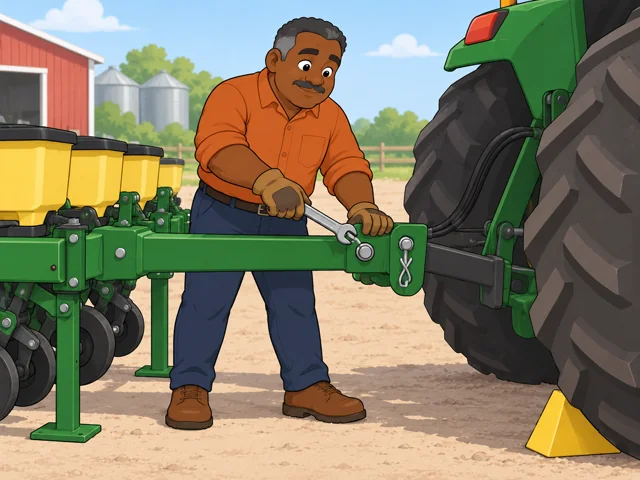
1An older operator tightens a tractor-to-planter hitch fastening with a wrench while the planter rests on support stands.

Get the tractor ready for fieldwork

Hook a planter or plow to the tractor with hand tools so it's ready for fieldwork.
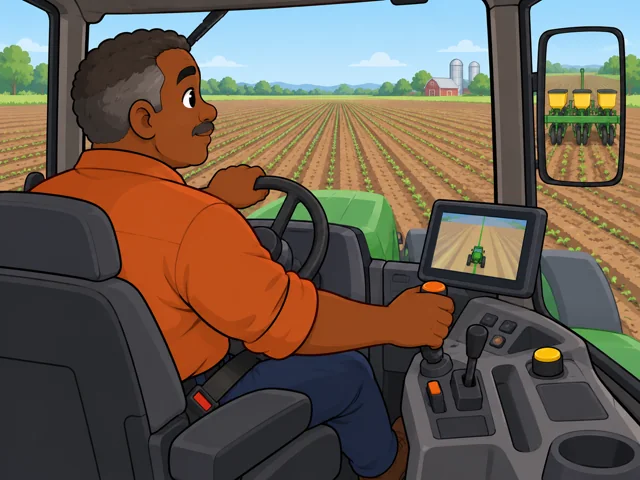
2The operator steers across the field and adjusts a planter control, with planted rows ahead and an abstract guidance route on the cab display.

Drive and adjust in the field

Steer across the field while changing the implement's settings, with automatic guidance helping some machines stay on course.
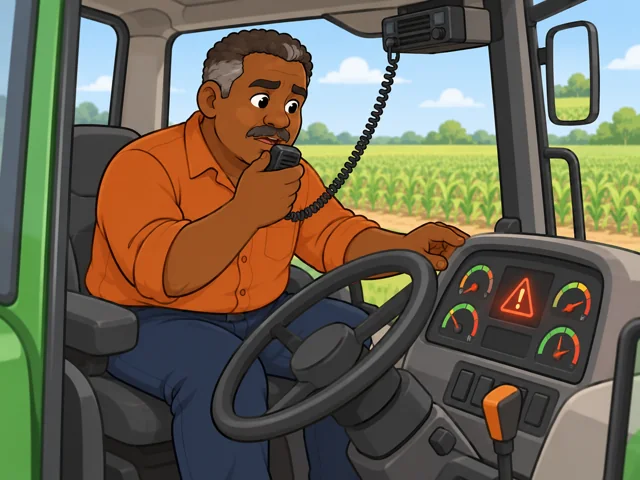
3Stopped at the field edge, the operator checks the tractor gauges and reports a machine problem over the radio.

Catch a problem by ear

When a strange rattle starts, read the gauges and tell your supervisor about the fault.
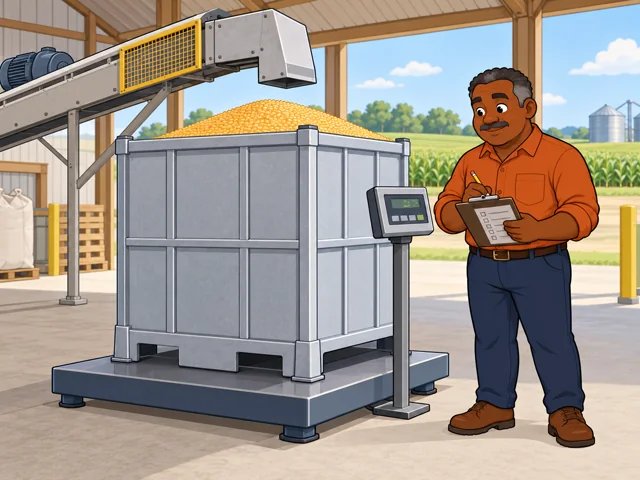
4Beside a stopped grain conveyor, the operator checks the scale beneath a filled grain container and records its weight on a clipboard.

Move and weigh the harvest

Shift crops with augers or conveyors, set each full container on a scale, and log its weight.

Quick facts

Preparation

Learn on the job

United States

Pay

$20.06/hour

United States · 2025

Outlook

9% projected growth

United States · 2025–2035

Quick orientation

Preparation, pay & outlook

Preparation

Learn on the job

A degree is generally unnecessary; equipment jobs may require prior experience.

Geography
United States
Period
Not applicable

Pay

$20.06/hour

$41,730 annual national median for agricultural equipment operators.

Geography
United States
Period
2025

Outlook

9% projected growth

National equipment-operator employment is projected to grow from 2025 to 2035.

Geography
United States
Period
2025–2035

Fit, tradeoffs & changing tools

Things to weigh

  • Planting and harvest can bring long days; seasonal jobs may leave gaps in employment.
  • Expect weather exposure and physical work outside the driver's seat.

Where AI may help

Some tractors can follow guidance lines automatically. Compatible autonomous tillage systems can work without someone in the cab.

What people still lead

People still bring those machines to the field, configure the work, and respond to obstacle or mechanical alerts.

What we can’t predict yet

How much time shifts from driving to monitoring will depend on the machines and field tasks a farm can automate.

Pay in context

Earnings

Compare the hourly rate with the length of the working season when weighing an offer.

The national pay range

The 2025 median was $41,730 annually, or $20.06 hourly. The 10th and 90th percentiles were $33,500 and $58,650 annually. Those describe the wage spread, not starting and senior pay.

Geography
United States
Period
2025
Pay basis
National annual and hourly median; annual 10th and 90th percentiles

Workplace pay differs

In May 2023, crop-production support employers averaged $18.76/hour ($39,020/year), versus $21.88/hour ($45,510/year) at nondurable-goods merchant wholesalers in industry groups 4241, 4247 and 4249. These are historical industry averages, not current offers.

Geography
United States
Period
May 2023
Pay basis
Published hourly and annual industry mean wages for agricultural equipment operators

Openings include replacements

The earlier 2024–2034 projection estimated 10,500 openings annually, including replacement hiring. This is a separate forecast period from the 2025–2035 growth figure above.

Geography
United States
Period
2024–2034
Pay basis
Projected annual job openings; not compensation

Getting started

Join a farm and learn its machines

What the route involves
Learn safe machinery use from the employer after hiring.
What it can lead to
Build toward operating the farm's equipment; complex machines may require longer training.
What to check
Some jobs require experience or a driver's license. Federal rules generally restrict hazardous farm-machine work below age 16, with specific exemptions; state rules may be stricter.

Practice in a college farm course

What the route involves
Take hands-on tractor training. Maui College's Farm Tractor & Equipment Operation course covers maintenance, implement hookups, hydraulics and field adjustments.
What it can lead to
Develop practical familiarity with a tractor and its attachments before seeking an operator job.
What to check
This course requires consent to enroll. It is a preparation option, not a universal hiring requirement.

Look for employers that train beginners, or build equipment skills before applying.

After entry

Career paths

This starts where the entry routes leave off: early work, growing capability, and advancement or specialization.

  1. Get established

    Learn the farm's machines and safety procedures until you can use them consistently.

  2. Handle more equipment

    Build skill in field adjustments, implement hookups and routine maintenance.

  3. Lead a crew

    With experience, you may move into crew leadership or another supervisory position.

Where you can work

Crop farms

Work follows planting and harvest seasons, with changing implements and busy stretches when fieldwork peaks.

  • Outdoors
  • Field work
  • Vehicle
  • Physical demands
  • Safety-sensitive

Custom-harvesting crews

You may travel with a crew between customers' fields, moving harvesting equipment and crops. Equipment cleaning and repairs are part of keeping the crew working.

  • Outdoors
  • Field work
  • Vehicle
  • Travel
  • Physical demands
  • Safety-sensitive

Try it

See whether the job clicks before you commit to the path.

Draw a field on graph paper and choose a width for a tractor's implement. Trace passes that cover the field, marking missed strips and overlaps. Notice whether checking coverage and planning turns holds your interest.

Stay safe: Keep this exercise on paper; it does not prepare you to operate machinery.

Explore more careers

Sources

  1. O*NET OnLine / U.S. Department of Labor. Agricultural Equipment Operators. Accessed 2026-10-03.
  2. O*NET OnLine / U.S. Department of Labor. Agricultural Equipment Operators: National wage rows on Nebraska wages page. Accessed 2026-10-03.
  3. U.S. Bureau of Labor Statistics. May 2023 Occupational Employment and Wage Statistics: Agricultural Equipment Operators. Accessed 2026-10-03.
  4. U.S. Bureau of Labor Statistics. Occupational Outlook Handbook: Agricultural Workers. Accessed 2026-10-03.
  5. John Deere. Autonomous Tractor. Accessed 2026-10-03.
  6. University of Hawaii Maui College. AG 232: Farm Tractor & Equipment Operation. Accessed 2026-10-03.
  7. U.S. Department of Labor. Prohibited Occupations for Agricultural Employees. Accessed 2026-10-03.
  8. U.S. Department of Labor. Agricultural Employment. Accessed 2026-10-03.
  9. Morrison Chopping LLC / U.S. Department of Labor SeasonalJobs. Custom Harvester: Job order H-300-26148-959981. Accessed 2026-10-03.

Your message goes to the Great Jobs team. How we use your information