
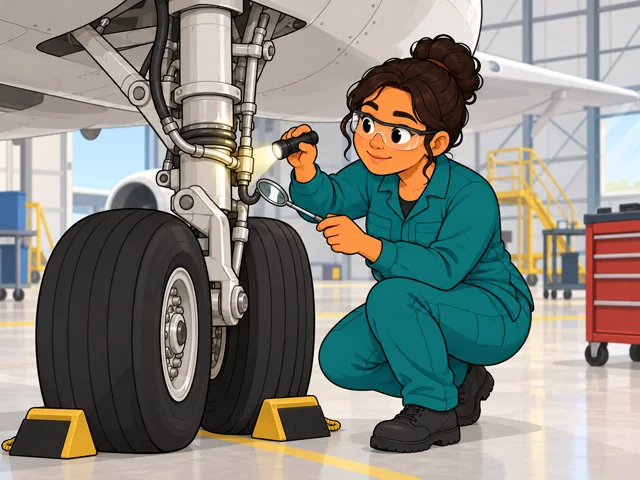
Inspect gear, hydraulics, and engines
Search the airframe, landing gear, hydraulic systems, and engines for wear, leaks, cracks, and other flaws.
Career profile
Aircraft mechanics start from manuals and measurements, then inspect, repair, and test real aircraft parts.
You inspect parts, find faults, repair or replace them, test finished jobs, and keep logs. Precision, records, safety, and reaching the parts all matter.
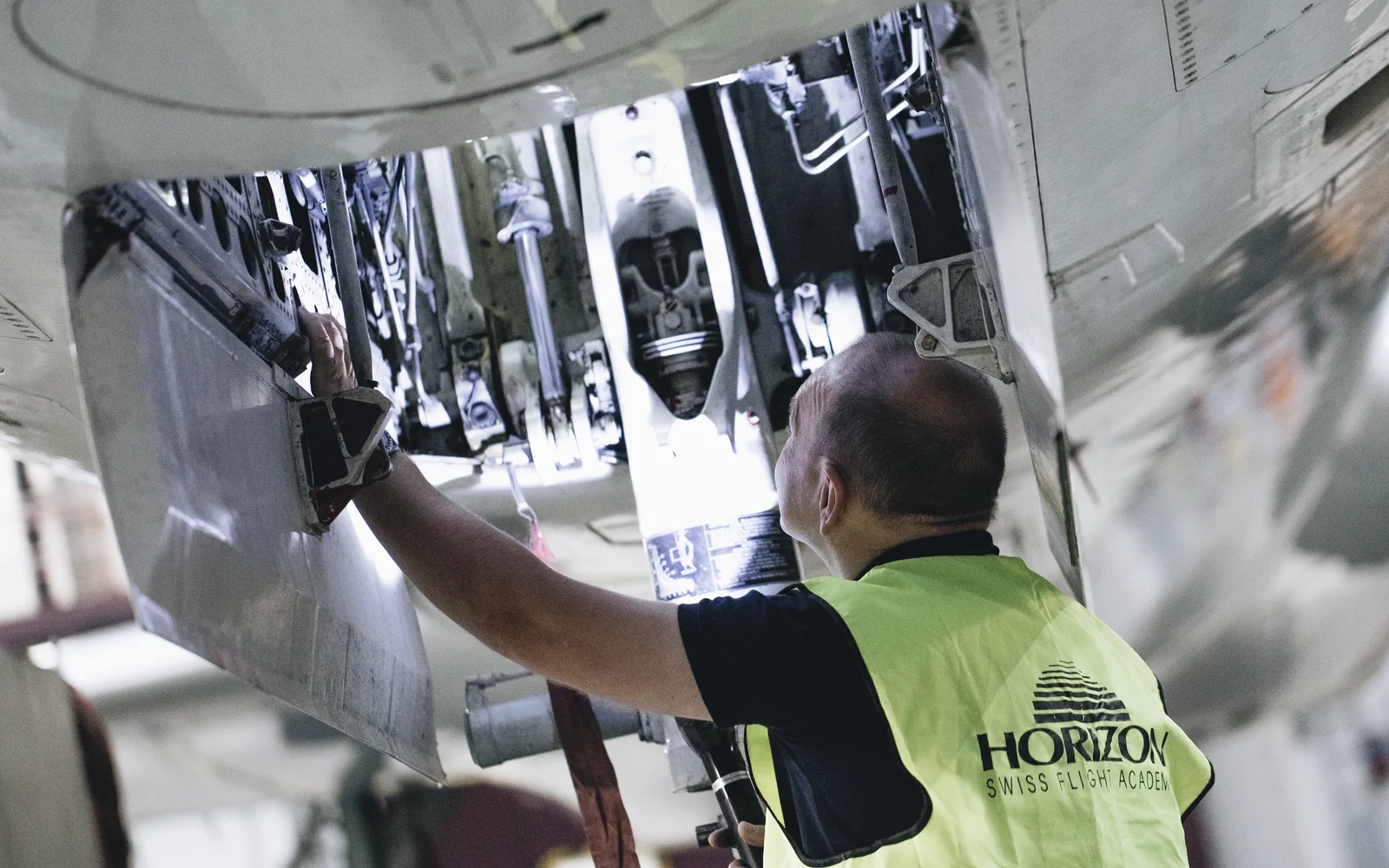
Search the airframe, landing gear, hydraulic systems, and engines for wear, leaks, cracks, and other flaws.
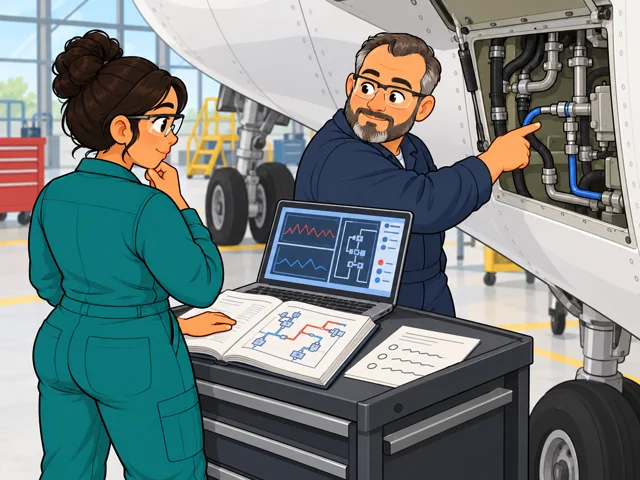
Trace a fault through reports, readings, system behavior, manuals, and drawings, and software may help sort them.
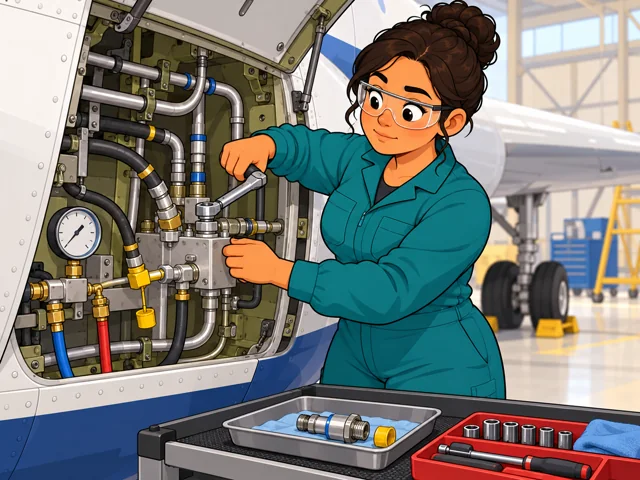
Remove, adjust, repair, or replace parts using tools and precision measuring instruments, then test the finished work.

Record the maintenance you did and what inspections found, and software may help store and retrieve it.
United States · BLS occupational guidance current on 2026-09-10
United States · May 2025
United States · 2025-2035 projection
National evidence, read carefully
Many mechanics complete FAA-certificated maintenance training; qualifying civilian or military experience is another route. Typical education alone does not establish FAA eligibility.
May 2025 U.S. median for aircraft mechanics and service technicians—not starting or guaranteed pay.
For 2025–35, BLS separately reports independently rounded employment endpoints of 140,000 and 147,600 and a rounded increase of 7,500. The cited BLS page does not provide a separate annual-openings estimate for aircraft mechanics.
Software can help search manuals, analyze information, plan maintenance, and manage records.
Inspection, repair, testing, verification, and regulated mechanic privileges remain human-led under current rules.
Adoption varies by aircraft and shop; the cited sources do not provide an occupation-specific AI-displacement percentage.
Pay in context
May 2025 U.S. median for aircraft mechanics and service technicians—not starting or guaranteed pay.
Exploration can test your interest, but certification requires an FAA-recognized school document or qualifying practical experience plus testing.
Training and advancement
Start routes show what you can do now; the path below shows how the career can develop. This path also has a credential or licensing boundary; see the requirements and limits.
Meet FAA eligibility rules, document the applicable school or experience route, and pass the required knowledge, oral, and practical tests.
Certificate privileges depend on the rating, prior task experience, current instructions, recent experience, and other applicable rules.
Add the other rating, specialize by aircraft or system, or pursue Inspection Authorization after meeting its separate requirements.
Facilities for inspections, troubleshooting, repairs, component work, and records.
Active-aircraft work shaped by weather, shifts, and service deadlines.
Aircraft mechanics also work in aerospace manufacturing, federal operations, and courier-related operations.
Try one grounded step
Find one reachable FAA-certificated school. Confirm its ratings, completion document, current certification, and whether you can observe a lab before paying.
Stay safe: Verify current FAA certification and program coverage directly before making a financial commitment.