
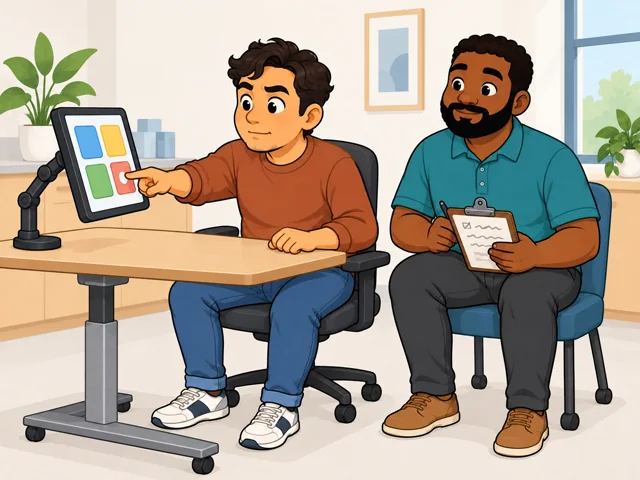
Ask their goal, then watch
Watch where access fails, since reaching the screen and picking the right button can be separate problems.
Career profile
Assistive technology specialists fit devices and software to each person's reading, communication and computer-use abilities.
Each case starts with figuring out what blocks someone. Then you help pick a tool that works for them and train them on it.
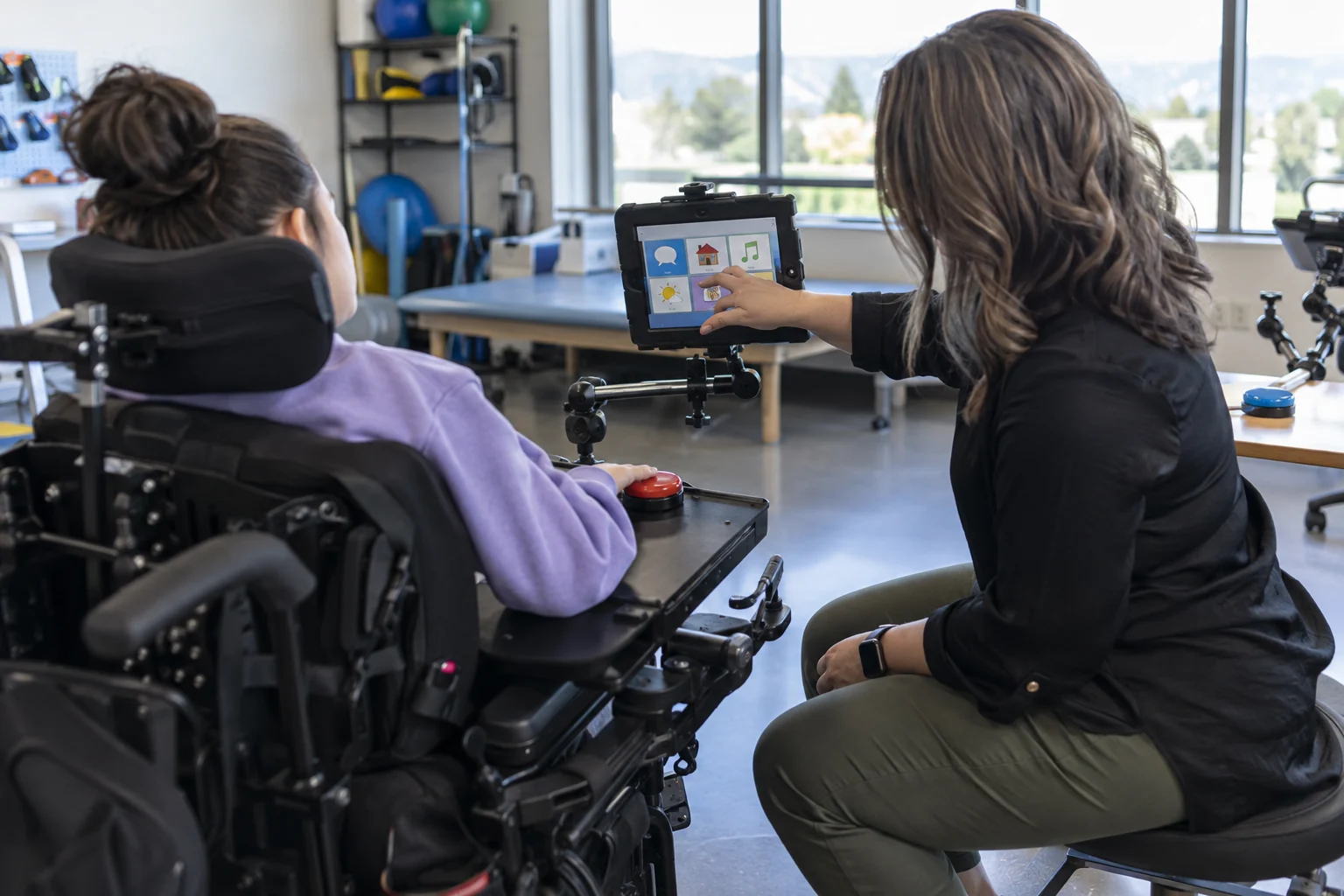
Watch where access fails, since reaching the screen and picking the right button can be separate problems.
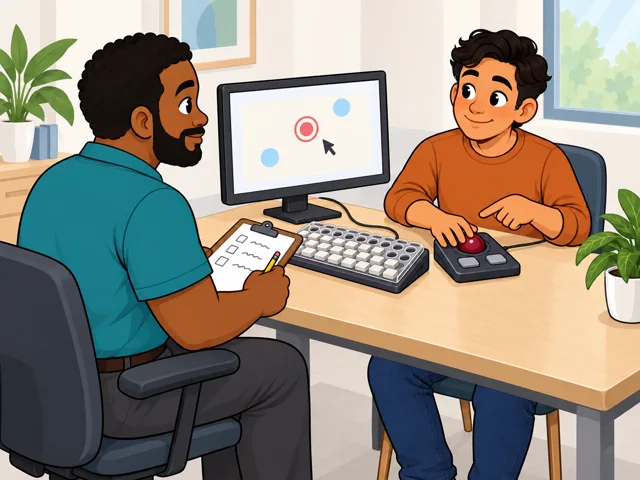
Compare it with one other computer control, noting what the person manages with each and which they prefer.
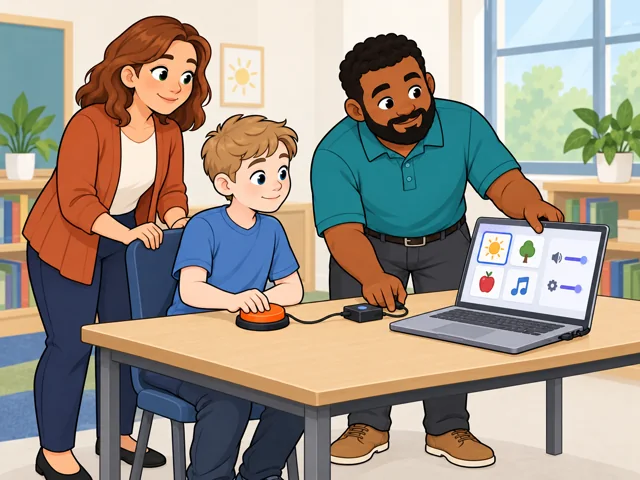
Configure the software, fix a connection problem and show the student and the teacher how it works.
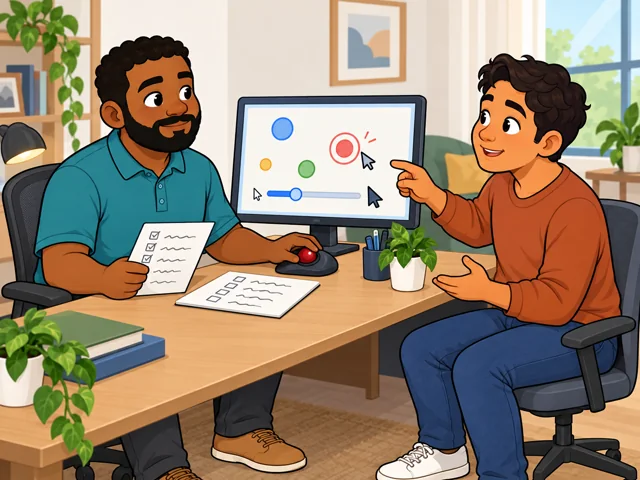
Ask about daily use, then adjust settings or book a new trial if the first pick falls short.
United States
There is no separate national median for this job title. A local college pay range appears below.
There is no separate national growth rate or annual openings estimate for this job title.
Quick orientation
Requirements depend on the setting. Technology experience can support an education job; professional certification has its own education-and-experience requirements.
There is no separate national median for this job title. A local college pay range appears below.
There is no separate national growth rate or annual openings estimate for this job title.
Some phones and tablets now include voice control and eye tracking. These give you more ways to test access without starting with a separate device.
You and the user decide whether a feature works for the actual task and surroundings.
How far built-in features will replace separate equipment remains uncertain; a convenient feature may still need substantial customization.
Pay in context
Use the employer's location, pay scale and scheduled hours to judge an offer. This college range gives you a concrete reference.
Sierra College in California lists $31.51–$40.24 an hour for Assistive Technology Specialists on its July 2025 schedule. At 2,080 paid hours, that equals about $65,541–$83,699 a year before additional compensation. This is a local contractual range, not a national median.
Within that district, salary steps and applicable longevity pay affect earnings. Your annual total also depends on paid hours. Ask which step you would enter and how many months the job covers.
Choose a setting before choosing a program. College technology jobs and professional certification have different entry requirements.
After entry
This starts where the entry routes leave off: early work, growing capability, and advancement or specialization. This path also has a credential or licensing boundary; see the requirements and limits.
Learn your workplace's devices and keep clear setup notes so you can troubleshoot repeat problems.
Develop skill with accessible course materials and coordinate installations with campus technology staff.
Deepen a specialty such as computer access and begin mentoring colleagues through assessments and trials.
You work with teachers and families, attend individual education-plan meetings, and keep classroom equipment usable. Recommendations must fit how the student learns in class.
You support adult students across computer labs and courses. Work can include accessible readings, captioned video and coordination with campus technology staff.
Try it
On a device you already use, find a feature that reads text aloud. Try the same paragraph at two speeds, then write brief setup instructions. Notice whether you enjoy adjusting a tool and explaining the choice.
Stay safe: Use your own settings and note how to restore them. This explores usability; it does not simulate someone else's disability.