
Career profile

Audiologist

Audiologists diagnose hearing and balance problems, then care for them over time.

You link test results to the daily trouble a person has, like keeping up when others talk, then help them choose what to try next.
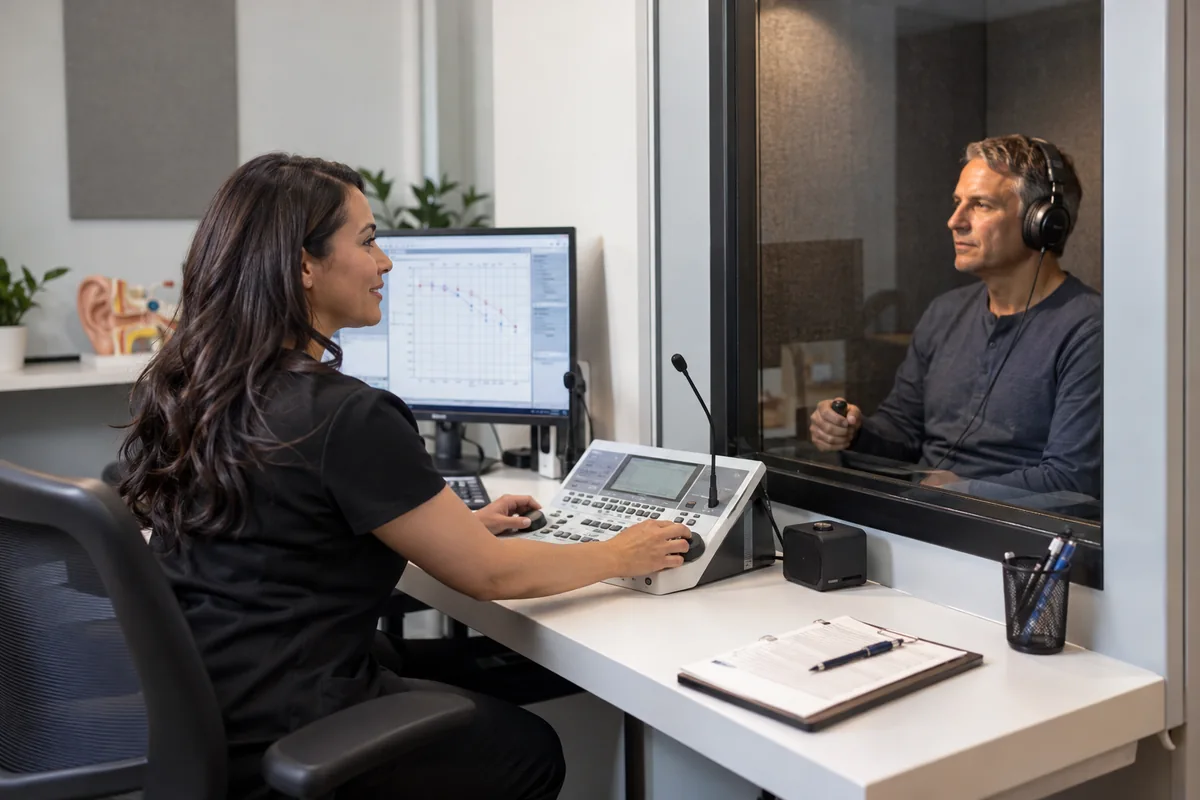
audiologist guiding an adult through a hearing test in a sound booth.

A day in the life

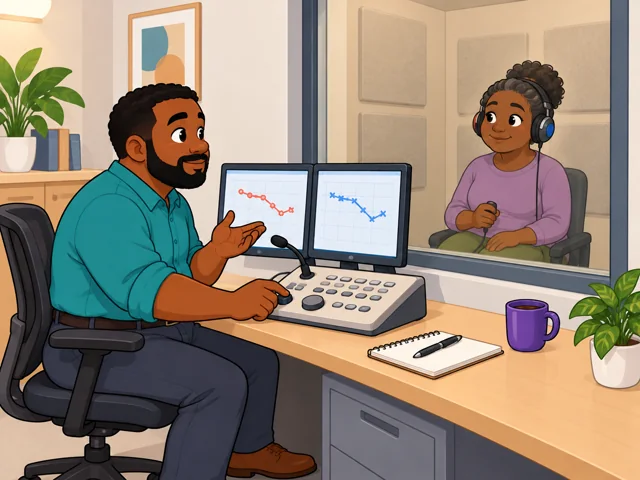
1An audiologist checks instructions with a woman wearing testing headphones after comparing differing hearing test responses.

Test tones and word understanding

When audiometer tone and word scores disagree, find out if your instructions or equipment swayed answers before interpreting.
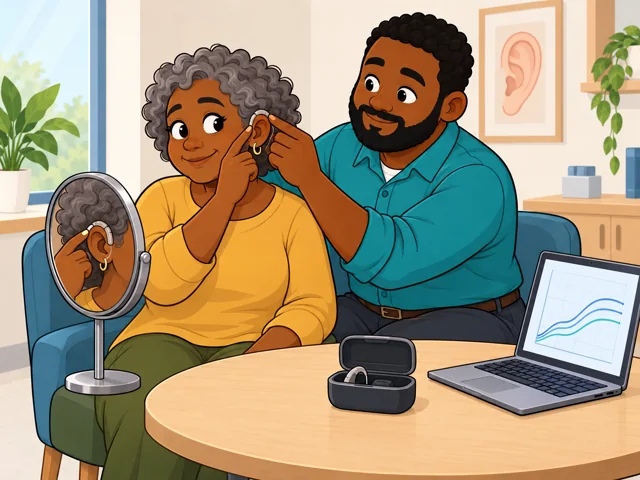
2An audiologist checks a woman's hearing aid placement while she practices finding its control using a mirror.

Fit a hearing aid

Make sure the hearing aid feels comfortable and works well, and teach the person to use it.

3An audiologist discusses communication difficulties and face-to-face conversation strategies with a woman and her family member.

Go over results with family

Ask when talking breaks down, explain the findings, and discuss strategies with the person and their family.
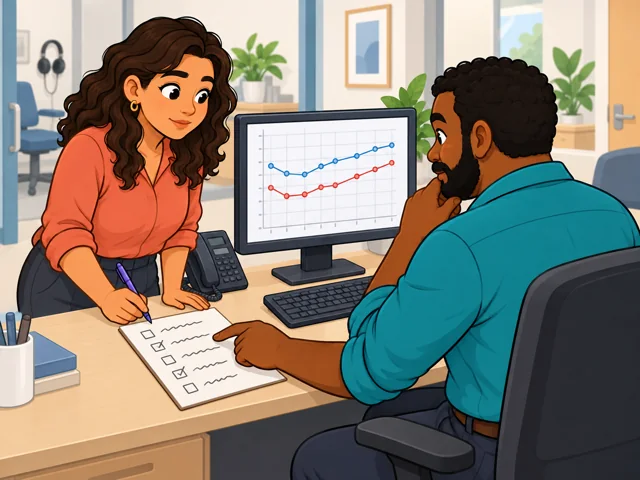
4An audiologist compares current and earlier hearing results, records progress, and coordinates follow-up with a coworker.

Track progress and refer onward

Compare new results with earlier chart entries, note gains, and refer for medical or educational help if needed.

Quick facts

Preparation

Clinical doctorate

United States

Pay

$95,780/year

United States · May 2025

Outlook

11% growth

United States · 2025–2035

Quick orientation

Preparation, pay & outlook

Preparation

Clinical doctorate

A Doctor of Audiology (AuD) generally takes 3–4 years of full-time graduate study.

Geography
United States
Period
Not applicable

Pay

$95,780/year

National median employee wage, equivalent to $46.05 an hour.

Geography
United States
Period
May 2025

Outlook

11% growth

Projected employment growth, with about 600 openings a year nationally.

Geography
United States
Period
2025–2035

Fit, tradeoffs & changing tools

Things to weigh

  • Patient conversations fill much of the day, and accurate records still need your attention between visits.
  • Hearing changes can be upsetting. You need patience for conversations about frustration and adjustment.
  • The education commitment extends beyond a bachelor's degree into doctoral coursework and clinical placements.

Where AI may help

Remote connections can let an audiologist program hearing aids while a trained helper handles physical tasks beside the patient.

What people still lead

You decide whether that setup suits the person, interpret their responses, and check that the visit produces useful results.

What we can’t predict yet

How many visits can move away from the clinic remains uncertain: equipment, reliable connections, and hands-on help still shape what works.

Pay in context

Earnings

Use the national figures as a reference when comparing offers, not as a starting salary promise.

The national midpoint

Audiologists earned a median $95,780 a year, or $46.05 an hour. Half of employee wages were above the median and half below.

Geography
United States
Period
May 2025
Pay basis
BLS employee wages for SOC 29-1181; excludes self-employed income.

The national spread

The 10th percentile was $64,610 and the 90th was $133,120 a year. These describe the wage distribution, not beginner and experienced pay grades.

Geography
United States
Period
May 2025
Pay basis
Annual employee wage percentiles for SOC 29-1181.

Openings over the decade

Employment is projected to grow 11%, with about 600 openings annually from growth and replacement needs. Local opportunities can differ.

Geography
United States
Period
2025–2035
Pay basis
Employment projection and annual average openings, not compensation.

Getting started

Begin with communication sciences

What the route involves
Earn a bachelor's degree in communication sciences and disorders, checking the prerequisites of your intended AuD programs.
What it can lead to
You build the subject foundation for applying to clinical doctoral programs.

Enter from another college major

What the route involves
Complete another bachelor's major and take any missing prerequisites before graduate study or within a program that includes them.
What it can lead to
You can pursue audiology without restarting your undergraduate degree; added coursework may extend the path.

Both undergraduate approaches below lead toward an AuD, which combines coursework with supervised clinical placements.

After entry

Career paths

This starts where the entry routes leave off: early work, growing capability, and advancement or specialization. This path also has a credential or licensing boundary; see the requirements and limits.

  1. Get established

    Build a dependable routine for testing, explaining results, and writing records another clinician can follow.

  2. Develop your judgment

    Use follow-up visits to sharpen hearing aid fitting and teaching skills as you learn what patients find effective.

  3. Specialize or lead

    Develop expertise in cochlear implants: assess candidates, program devices after surgery, and support learning to use them.

    • Move toward running an audiology program, including its staffing and service planning.

Where you can work

Medical ear clinics

In clinics with balance services, you may evaluate dizziness as well as hearing. Audiology testing connects with physician visits and decisions about further medical care.

  • Indoors

Schools

You work with teachers and the educational team on listening conditions. That can mean examining classroom noise and checking whether changes help students follow speech.

  • Indoors

Try it

See whether the job clicks before you commit to the path.

During an ordinary class, note which background sounds compete with the teacher's voice. Sketch one room change that might help, and explain how you would check its effect. Notice whether investigating listening conditions interests you.

Stay safe: Observe existing sounds; do not add loud noise or treat this as a hearing test.

Explore more careers

Sources

  1. O*NET OnLine. 29-1181.00 — Audiologists. Accessed 2026-10-09.
  2. U.S. Bureau of Labor Statistics. May 2025 Occupational Employment and Wage Statistics national estimates — supplied facts binding. Accessed 2026-09-29.
  3. U.S. Bureau of Labor Statistics. Employment Projections Table 1.2, 2025–2035 — supplied facts binding. Accessed 2026-09-29.
  4. American Speech-Language-Hearing Association. Planning Your Education in Communication Sciences and Disorders. Accessed 2026-10-09.
  5. American Speech-Language-Hearing Association. Hearing Loss in Adults. Accessed 2026-10-09.
  6. Center for Hearing and Speech in America. Who Are Audiologists, and What Do They Do?. Accessed 2026-10-09.
  7. American Speech-Language-Hearing Association. Scope of Practice in Audiology. Accessed 2026-10-09.
  8. American Speech-Language-Hearing Association. Telepractice. Accessed 2026-10-09.
  9. American Speech-Language-Hearing Association. 2020 Audiology Certification Standards. Accessed 2026-10-09.
  10. American Speech-Language-Hearing Association. Frequently Asked Questions About Business Practices. Accessed 2026-10-09.
  11. Johns Hopkins Medicine. Services at ENTAA Care: Audiology. Accessed 2026-10-09.
  12. American Speech-Language-Hearing Association. Classroom Acoustics. Accessed 2026-10-09.

Your message goes to the Great Jobs team. How we use your information