
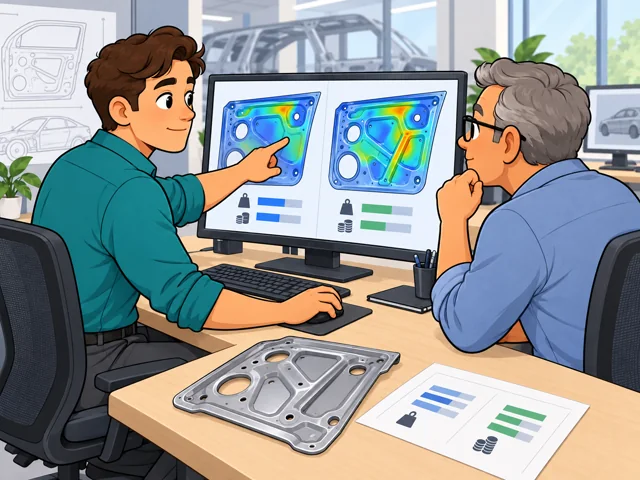
Update a body panel's design
Simulate each option's strength by computer, minding cost and weight, then discuss a change with the design engineer.
Career profile
Automotive engineers design vehicle systems, then test how well they work together.
How do you prove a change to a car's steering or structure works? Automotive engineers turn that question into designs, measurements and decisions.
Simulate each option's strength by computer, minding cost and weight, then discuss a change with the design engineer.
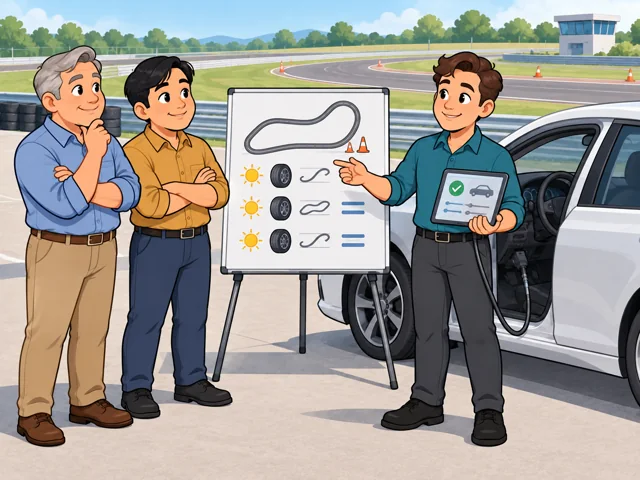
Set conditions, confirm the loaded software release, and brief the track crew so each run tests one question.
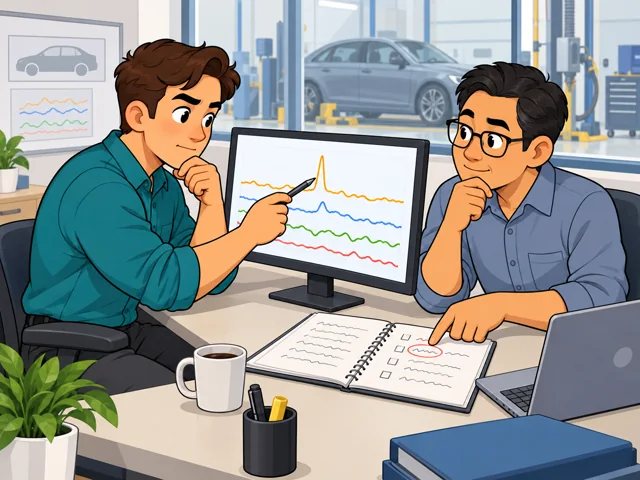
Match logged data against test notes, then choose to rerun or dig into the car's software and hardware.
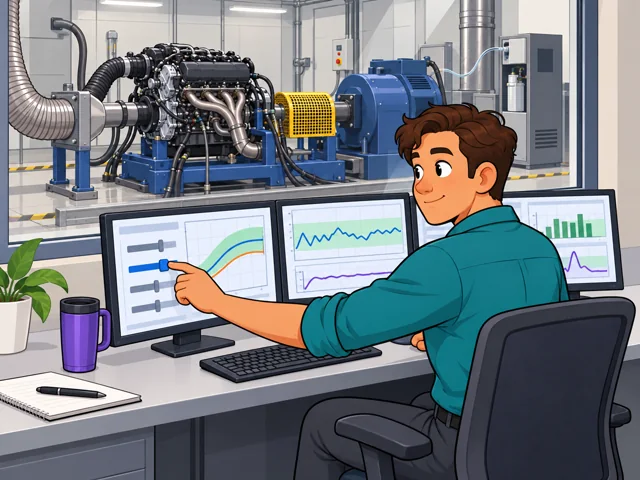
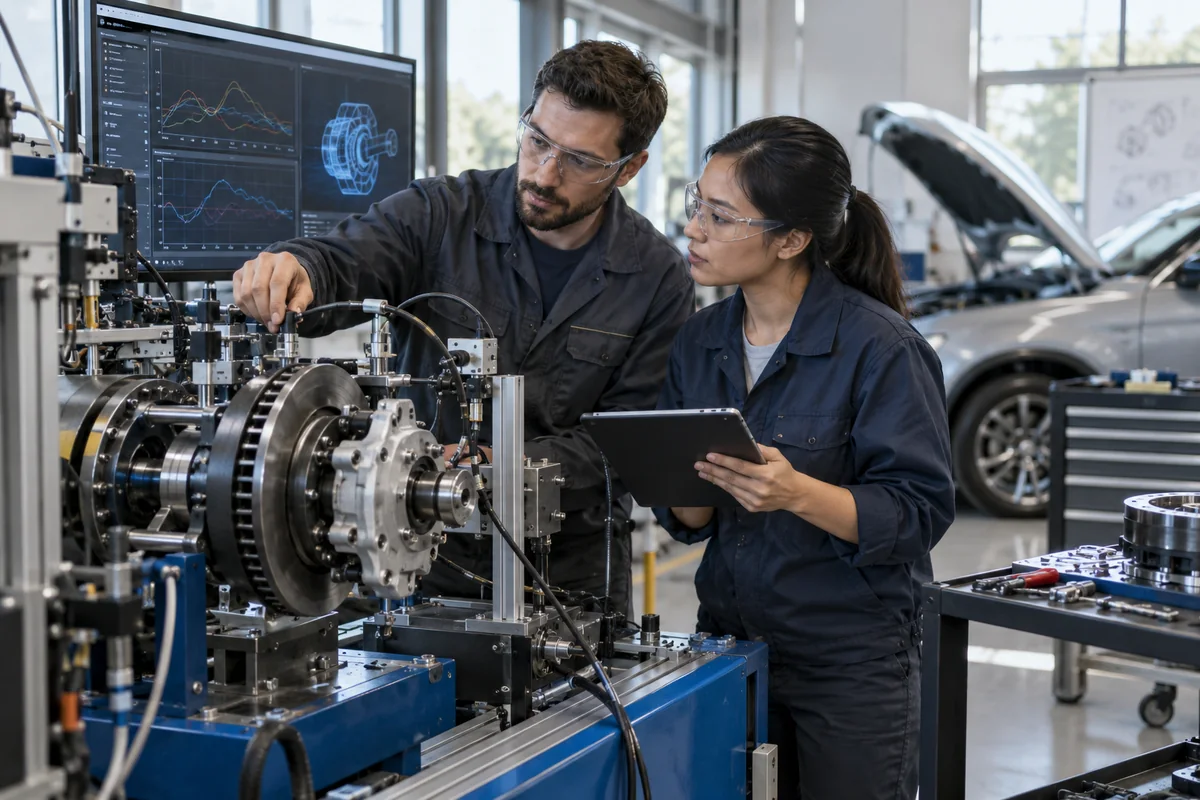
In calibration jobs, adjust control-software settings, then measure the engine's output on a dynamometer test stand.
United States
Pay depends on the particular engineering role and its experience requirements.
A national growth rate is not available for this specialty alone.
Quick orientation
Engineering study is the usual starting point.
Pay depends on the particular engineering role and its experience requirements.
A national growth rate is not available for this specialty alone.
Scripts can automate repeated bench and vehicle tests. Computer simulations help engineers compare designs before building them.
You still choose useful test conditions and decide what an unexpected result means for the next test or design change.
How much physical testing a simulation can replace depends on the vehicle system and how faithfully the model reproduces its behavior.
Pay in context
The broader mechanical-engineering field gives you useful pay context. These figures include specialties beyond automotive engineering.
U.S. mechanical engineers had a median wage of $104,110 a year, or $50.05 an hour. The 10th–90th percentile range was $73,990–$164,340 annually. Those endpoints describe lower- and higher-paid workers across the occupation, not starting and senior salaries.
For mechanical engineers, annual median pay was $105,560 in transportation equipment manufacturing, $103,440 in architectural, engineering, and related services, and $132,040 in scientific research and development services. These broad industry groups include work beyond vehicles; they do not predict what a particular employer will offer you.
Employment of mechanical engineers is projected to grow 11% from 2025 to 2035, with about 17,800 openings a year on average. Openings include replacing people who leave the occupation. These projections cover the whole mechanical-engineering field and do not isolate automotive jobs.
Build an engineering foundation, then apply it to vehicles through projects and work experience.
After entry
This starts where the entry routes leave off: early work, growing capability, and advancement or specialization.
Learn your team's test procedures and keep clear records so another engineer can reproduce your results.
Take deeper responsibility for a system. In engine calibration, learn how control settings affect performance and how to investigate results that miss the target.
Advance toward leading a design analysis or vehicle-testing effort, coordinating other people's work and explaining the evidence behind decisions.
Work with other engineers around computer models and design reviews, resolving competing performance, weight, and cost requirements.
In engine-management work, you translate a customer's performance targets into settings and tests. Expect contact with customer engineers, dynamometer work, and possible travel.
Closed test tracks put you beside real vehicles and recording equipment. Weather, vehicle readiness, and track access shape the working day.
Try it
Roll a toy car down a low cardboard ramp onto two different surfaces. Keep the release point fixed, repeat each trial, and measure stopping distance. Write what changed and what you would test next. Notice whether making the comparison fair interests you as much as the result.
Stay safe: Use a clear floor area and a toy car; this is not a test to perform with a real vehicle.