
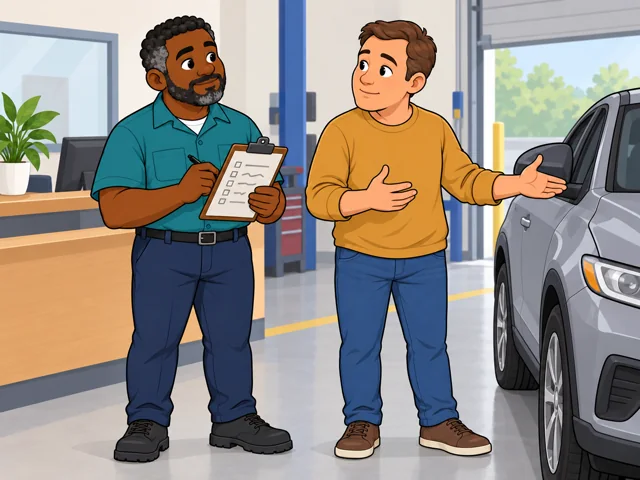
Pin down when it happens
Review the work order and ask whether the problem hits at startup, in turns, or after warm-up.
Career profile
Automotive technicians diagnose and repair cars and light trucks and keep them running.
What does "the engine hesitates" mean? The job is turning a driver's complaint into tests, tracking down the cause, then confirming the fix worked.
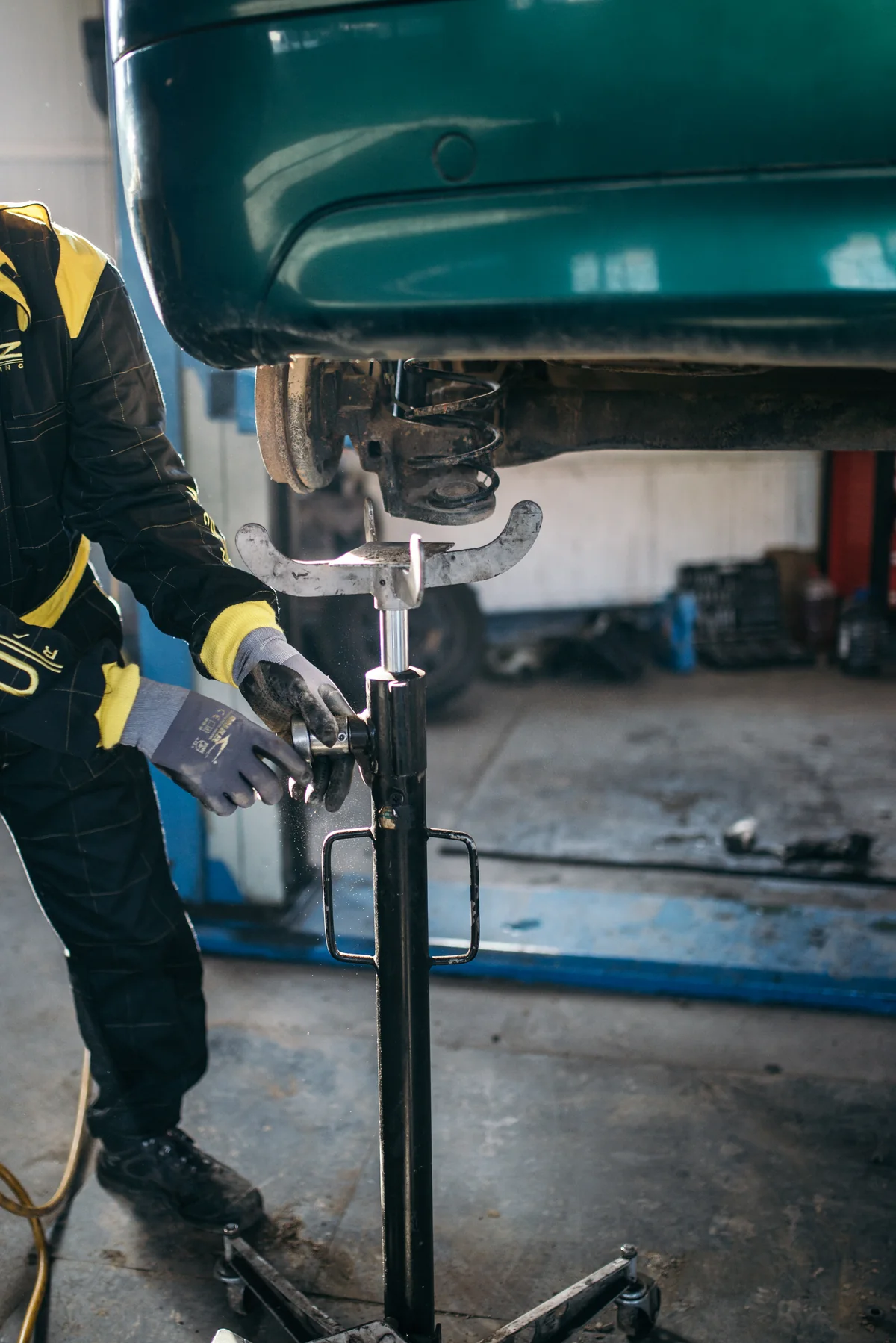
Review the work order and ask whether the problem hits at startup, in turns, or after warm-up.
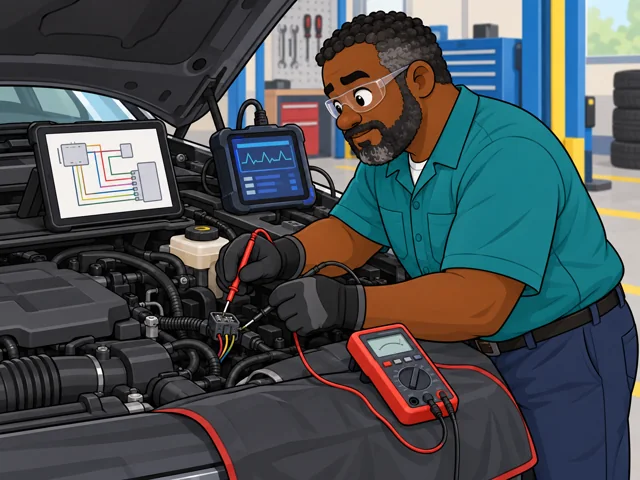
Read scan tool data, check repair information, and test the circuit with a multimeter before picking a fix.
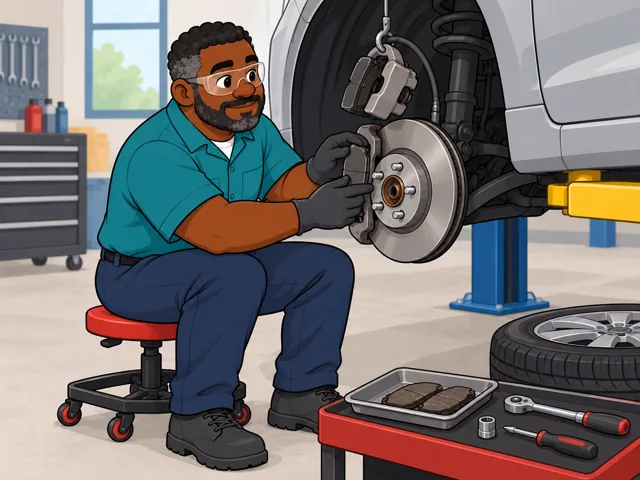
Check brake wear, remove worn-out pads or rotors, and install new ones that match the vehicle's specs.
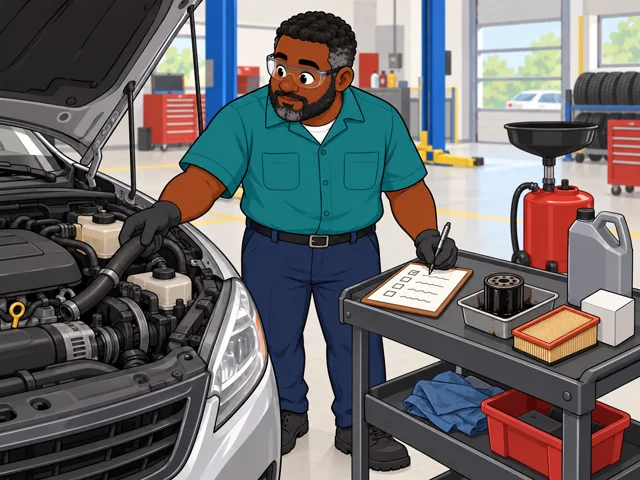
Change the oil and filters, then inspect belts, hoses and other parts, noting anything that needs follow-up.
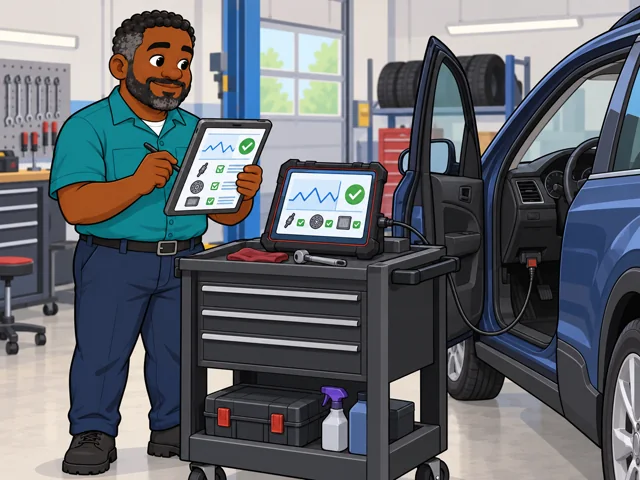
Retest the repaired system against specifications, then log labor and parts so the next person sees what changed.
United States
United States · May 2025
United States · 2025–2035
Quick orientation
A college or technical-school program is typical; some workers learn on the job after high school.
National median, equivalent to $24.34/hour; not starting pay.
About 66,200 openings a year are projected nationally, including replacement openings.
Computerized tests help you investigate faults and compare vehicle performance with specifications.
You choose what to test next, inspect the actual parts, and check the repair.
The balance of engine, battery, and driver-assistance sensor work will depend on which vehicles reach your shop and which services it takes on.
Pay in context
The national median was $50,620 a year, or $24.34 an hour, in May 2025. These employee wages exclude self-employed earnings.
The lowest-paid 10% earned under $34,660; the highest-paid 10% earned over $81,790. These are wage ranges, not beginner and experienced pay grades.
Annual medians were $59,920 at automobile dealers, $49,630 in mechanical and electrical repair shops, and $45,700 at parts, accessories, and tire retailers.
Some shops pay hourly; others pay by completed work. Ask how training and time waiting for parts are paid.
The 2025–35 projection is 5% employment growth and 66,200 openings annually. Many openings replace people leaving the occupation; they are not all newly created jobs.
You can enter through a training program or a shop willing to train you. Employers may prefer or require industry certification.
After entry
This starts where the entry routes leave off: early work, growing capability, and advancement or specialization. This path also has a credential or licensing boundary; see the requirements and limits.
Build consistency on routine service: complete inspections, check your work, and keep useful repair records.
Learn to connect test readings with symptoms. Use repair information to decide which component to test next, then verify the result.
Develop deeper skills in hybrid and electric vehicles or in diagnosing and calibrating driver-assistance cameras and sensors.
Build depth in a brand's vehicles through manufacturer training. Ford and Lincoln dealerships offer a route from sponsored student work toward specialist or shop leadership roles.
At a full-service chain, tire and oil work can sit alongside brake, suspension, cooling, and electrical repairs. The job can extend well beyond fitting tires.
Try it
Write a mock work order for “the car sometimes won't start.” List five questions you would ask the driver before testing anything. Notice whether narrowing a vague complaint makes you curious or impatient.
Stay safe: Keep this a paper exercise; you do not need to operate or take apart a vehicle.