
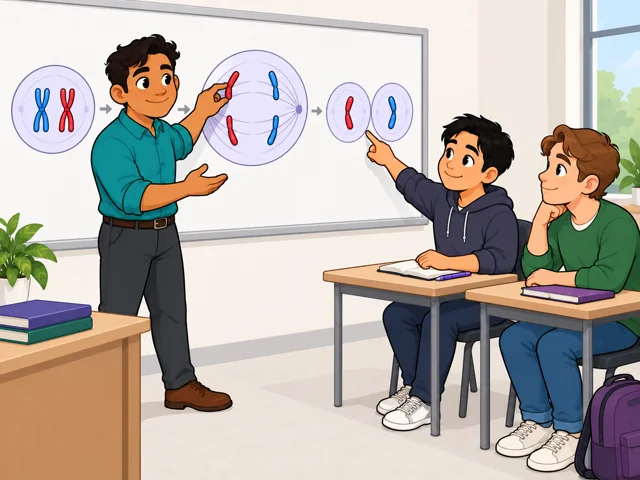
Teach the phases of cell division
Sketch chromosomes moving as a cell divides, and if students confuse phases, try another explanation and recheck understanding.
Career profile
College biology instructors teach how living things work and how to reason from biology data.
You might teach cell division, later showing one student why their result does not support their claim. Some jobs also leave time for your research.
Sketch chromosomes moving as a cell divides, and if students confuse phases, try another explanation and recheck understanding.
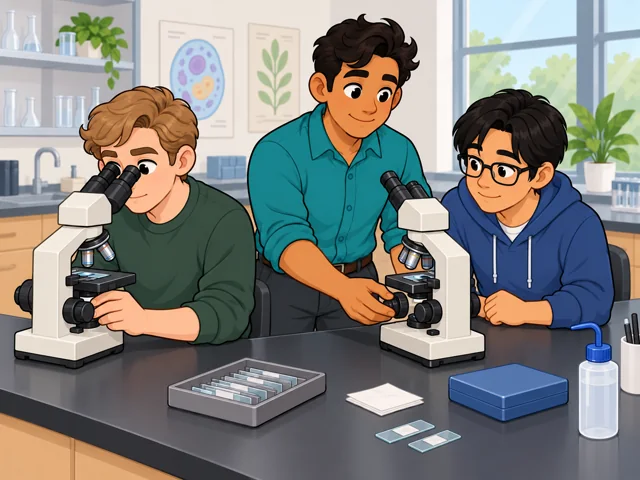
Confirm supplies, demonstrate one microscope technique, watch students try it, and fix handling mistakes before they become habits.
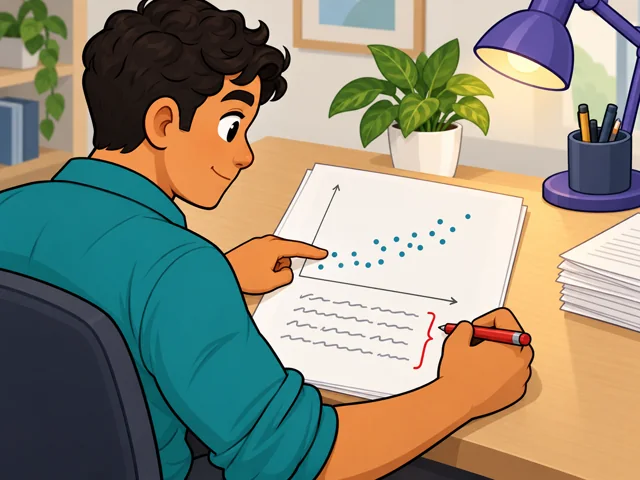
Compare a report's claim to its graph, flag where it outruns the data, and comment for future work.
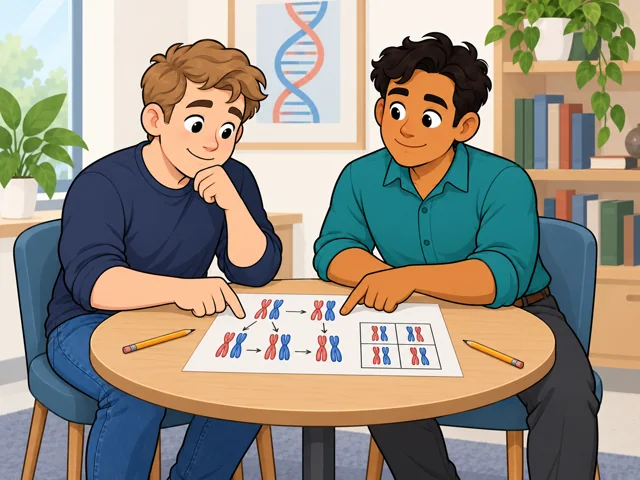
Have a student walk through their genetics exercise, pinpoint where the logic broke, and go over that spot.
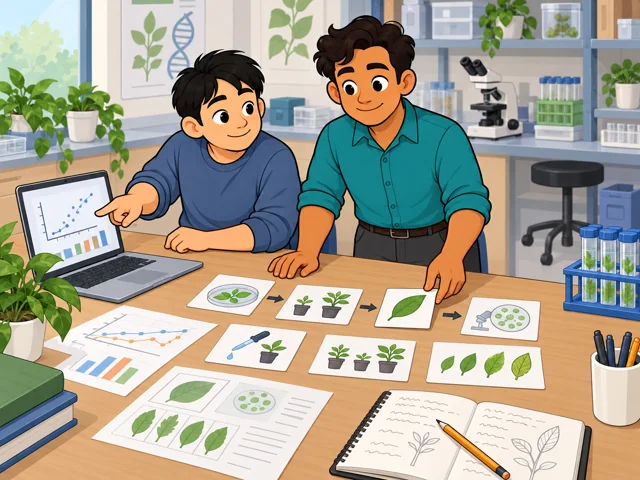
In jobs that include research, review students' results, plan the next study, and write papers or funding requests.
United States · 2026
United States · 2025
United States · 2025–2035
Quick orientation
A doctorate is typical; some community-college biology jobs accept a master's degree.
2025 national median for biological science teachers at colleges and universities.
For postsecondary biological science teachers, 2025–2035; about 4,700 openings per year.
Tools that generate text—generative artificial intelligence (AI)—can suggest assessment questions and draft grading criteria for you to review.
You decide whether a question tests biological understanding, check scientific accuracy, and set clear rules for students' use of AI.
How much feedback can be delegated while still revealing a student's own reasoning remains an open teaching challenge.
Pay in context
Check the appointment as well as the salary: a full-time academic-year contract and a part-time course appointment are different commitments.
The 2025 median was $84,620 annually for postsecondary biological science teachers. That equals about $40.70 an hour when divided by 2,080 hours, solely for comparison; faculty schedules and contract lengths vary.
The lowest-paid 10% earned $52,150 or less; the highest-paid 10% earned $169,900 or more. These are wage-distribution thresholds, not starting and experienced salaries.
About 4,700 openings per year are projected for 2025–2035, including growth and replacement needs. Total employment is projected to rise 7.3%; openings are not all new positions.
Build depth in biology and experience explaining it. The degree you need depends on the college and the teaching–research mix.
After entry
This starts where the entry routes leave off: early work, growing capability, and advancement or specialization.
Build a workable rhythm for lesson preparation, lab setup, grading, and office hours.
Use student work to spot recurring difficulties. Revise lessons and laboratory activities with colleagues.
Where the appointment allows, seek promotion to associate professor and then professor. Reviews weigh teaching, research, and contributions to the institution.
Your week can revolve around introductory courses, teaching labs, and advising. Some jobs include evening classes or travel between campuses.
Research appointments combine undergraduate and graduate teaching with a research group. Finding outside funding and mentoring student researchers compete for calendar space.
Try it
Choose a graph from your biology textbook. Prepare a five-minute explanation, then ask a friend what conclusion the graph supports. Revise your explanation around their response. Notice whether you enjoy diagnosing the misunderstanding as much as discussing the biology.