

Career profile

Biological Technician

Biological technicians prepare material from organisms and run tests that help scientists study life.

What you see happen inside a specimen ends up in your written records, and another researcher then puts them to use.
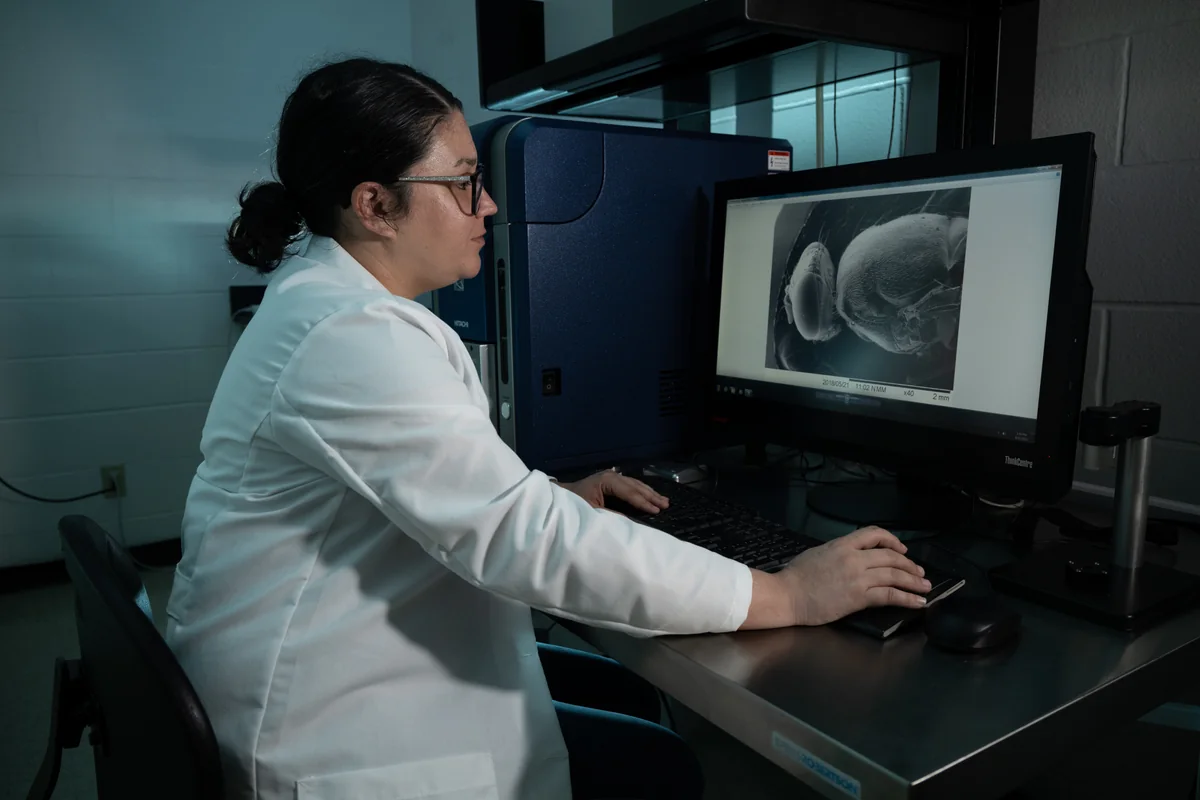
A biological technician studies a magnified specimen on a laboratory screen.
USDAgov / Public Domain

A day in the life

1A biological technician compares a specimen tube's identification marks with its record beside materials for preparing a microscope slide.

Match a tag to the log

Compare each sample's tag with its log entry, then prep it for examination.
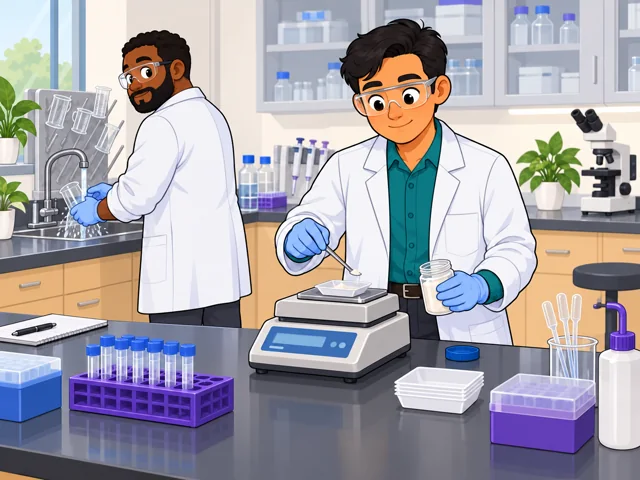
2The technician carefully weighs sample material while a coworker rinses glassware beside a drying rack, preparing the bench for the next test.

Get the bench ready

Wash the glassware, weigh out material from the samples, and set out equipment for the coming test.
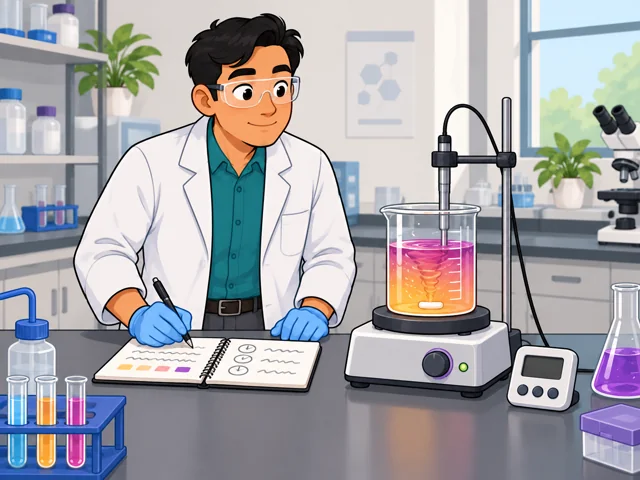
3The technician watches a specimen change color during a running experiment and records the observation and timing in a notebook.

Note changes as tests run

During the test, note what you see, and log any change in a specimen with the time.

4At a computer workstation, the technician enters results, compares measurements, and drafts a summary while an older coworker reviews the findings.

Turn numbers into a report

Enter results in the database, compare measurements against each other, and write a short report for the researcher.

Quick facts

Preparation

Usually a bachelor's degree

United States

Pay

$57,510 a year

United States · May 2025

Outlook

7% projected growth

United States · 2025–2035

Quick orientation

Preparation, pay & outlook

Preparation

Usually a bachelor's degree

Biology or a related field, with laboratory experience.

Geography
United States
Period
Not applicable

Pay

$57,510 a year

National median; hourly equivalent $27.65.

Geography
United States
Period
May 2025

Outlook

7% projected growth

About 9,400 openings annually, including replacement openings.

Geography
United States
Period
2025–2035

Fit, tradeoffs & changing tools

Things to weigh

  • Repeated hand movements and time standing at a bench can be tiring.
  • Some projects involve hazardous organisms or chemicals; contamination precautions shape how you work.

Where AI may help

In some drug-screening labs, robots move sample plates and dispense liquids while software records each run.

What people still lead

People keep these systems working and improve the testing process when equipment or methods need changes.

What we can’t predict yet

How much more hands-on preparation becomes automated will depend on whether systems can handle each lab's changing experiments.

Pay in context

Earnings

The median describes the middle worker's wage, not a starting offer.

The national spread

The 10th-percentile annual wage was $40,330; the 90th was $84,940. These are positions in the wage distribution, not beginner and senior salaries.

Geography
United States
Period
May 2025
Pay basis
Annual employee wages, biological technicians, SOC 19-4021

Workplace type matters

Annual medians were $62,060 in scientific research and development, $53,560 at private colleges and universities, and $53,330 at state colleges and universities.

Geography
United States
Period
May 2025
Pay basis
Industry-specific annual median employee wages for biological technicians

Openings include replacements

Many projected openings replace people who change occupations or leave the workforce.

Geography
United States
Period
2025–2035
Pay basis
Employment projections; not compensation

Getting started

Study biology with laboratory practice

What the route involves
Earn a biology or related bachelor's degree and build laboratory experience through coursework or internships.
What it can lead to
This is the usual preparation for biological technician positions.

Use a federal two-year study route

What the route involves
Complete two full years of postsecondary study, including 12 semester hours in relevant subjects such as biology, chemistry, or mathematics. At least six hours must directly relate to the position.
What it can lead to
This can meet the education substitution for U.S. Geological Survey biological science technician jobs at General Schedule grade 4 (GS-4).
What to check
This is a specific federal qualification route. Check the vacancy's requirements; meeting them does not guarantee selection.

Scientists typically direct and evaluate your research work.

After entry

Career paths

This starts where the entry routes leave off: early work, growing capability, and advancement or specialization.

  1. Learn your laboratory

    After hiring, learn the instruments your employer uses.

  2. Build a specialty

    In natural-resource work, develop species-identification skills and turn survey results into charts for reports.

  3. Take on part of a project

    Senior natural-resource technicians may run portions of research or restoration projects and develop better sampling methods.

Where you can work

Automated screening laboratories

In specialized drug-screening labs, work revolves around sample plates, liquid dispensers, and computer-controlled instruments. Equipment specialists help keep testing systems running.

  • Indoors
  • Lab

Natural-resource research teams

You may move between outdoor sampling sites and a laboratory. Weather and physical hazards affect field days; indoor work includes processing samples and records.

  • Outdoors
  • Field work
  • Lab
  • Physical demands

Try it

See whether the job clicks before you commit to the path.

Use five fallen leaves, a ruler, and a notebook. Give each leaf an identifier, define how you will measure its length, then measure each twice and record both results. Write instructions a classmate could repeat. Notice whether consistent measurements and careful records hold your interest.

Stay safe: Use familiar, non-irritating leaves from somewhere you have permission to collect.

Explore more careers

Sources

  1. U.S. Bureau of Labor Statistics. Biological Technicians — Occupational Outlook Handbook. Accessed 2026-10-03.
  2. O*NET OnLine / U.S. Bureau of Labor Statistics. National Wages: 19-4021.00 — Biological Technicians. Accessed 2026-10-03.
  3. O*NET OnLine. 19-4021.00 — Biological Technicians. Accessed 2026-10-03.
  4. U.S. Geological Survey. Biological Science Technician, GS-0404. Accessed 2026-10-03.
  5. U.S. Department of the Interior. Biological Science Technician — GS-0404. Accessed 2026-10-03.
  6. National Center for Advancing Translational Sciences. Automation. Accessed 2026-10-03.

Your message goes to the Great Jobs team. How we use your information