
Career profile

Diesel Mechanic

Bus and truck mechanics diagnose and repair engine, brake and electrical problems on heavy vehicles.

Curious why machines stop working right? Take a truck that has lost power: you hook up test gear, find the cause and repair what failed.
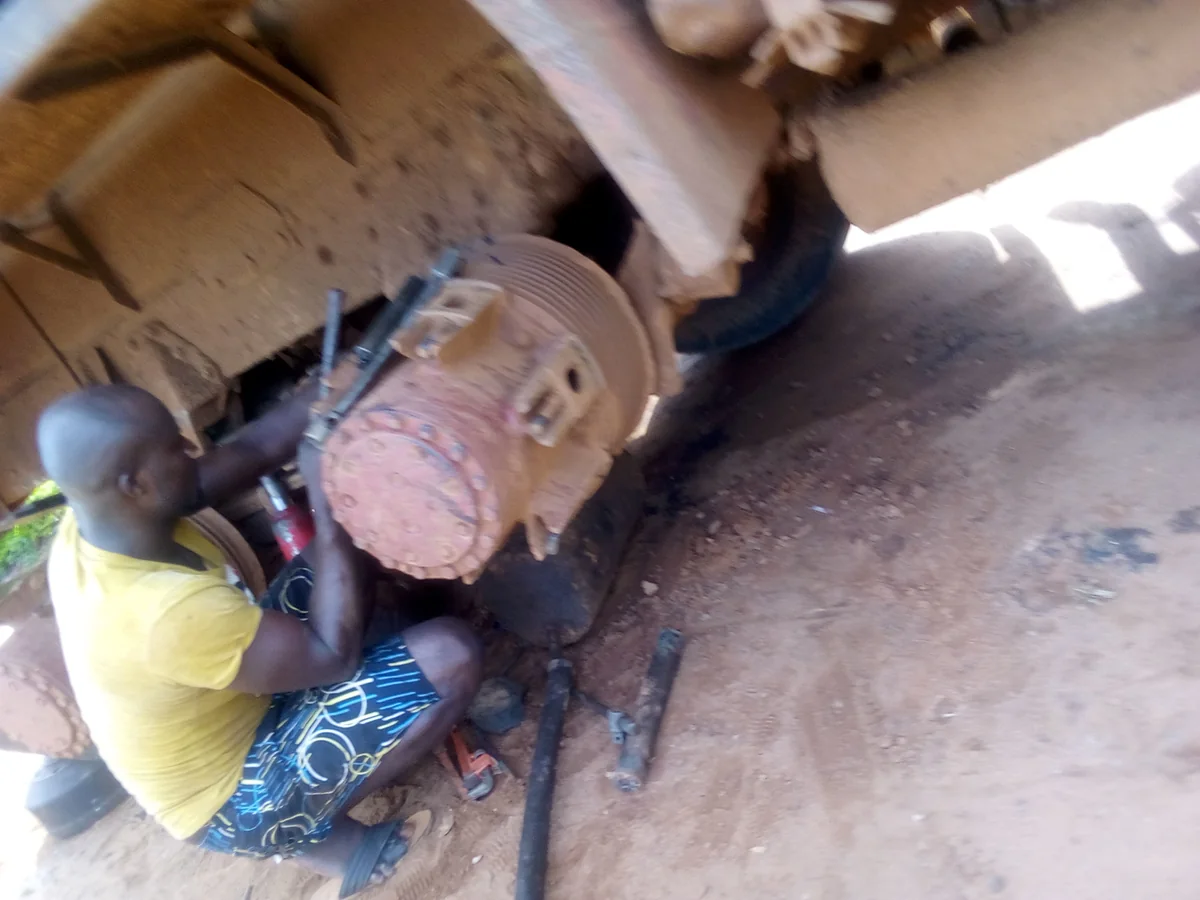
A truck mechanic works on a wheel assembly at a repair shop.
Eboysmart61 / CC BY-SA 4.0

A day in the life

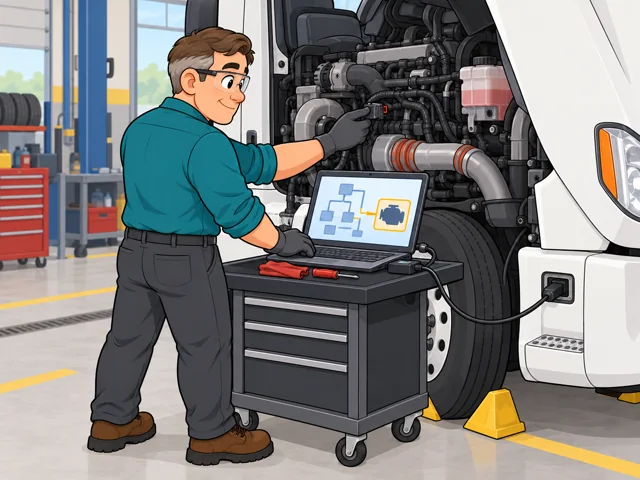
1A diesel mechanic consults a connected diagnostic laptop while inspecting an engine wiring connector beneath a truck's open hood.

Run engine diagnostics on a laptop

Plug in a diagnostic computer, read stored fault codes, then follow that engine's troubleshooting steps to the cause.
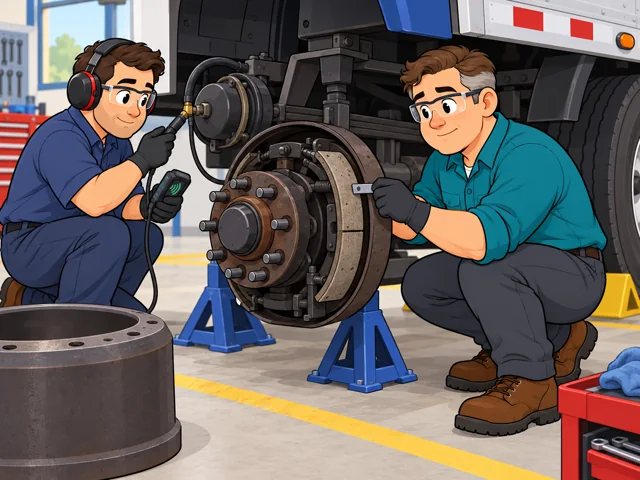
2A crouching mechanic measures exposed truck brake lining while a coworker checks an air-brake connection for leaks.

Inspect brakes for wear

Listen for leaking air and measure lining thickness to see which brake parts need repair or replacement.
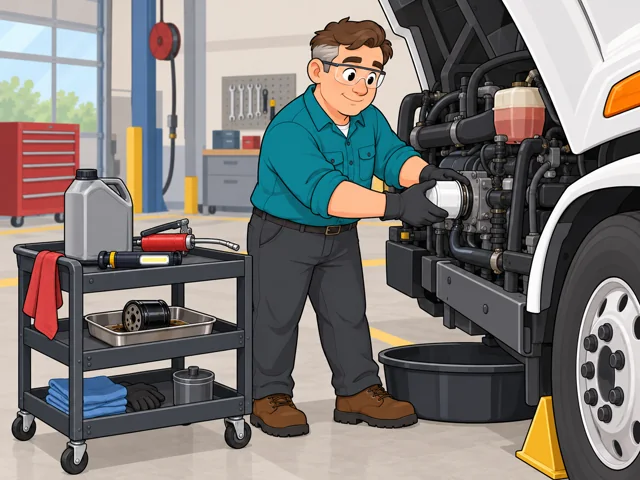
3A diesel mechanic installs a fresh oil filter during scheduled truck maintenance, with collected used oil and a grease gun nearby.

Catch problems before they show up

At a planned service, change oil and filters, grease the fittings and look for worn or loose parts.
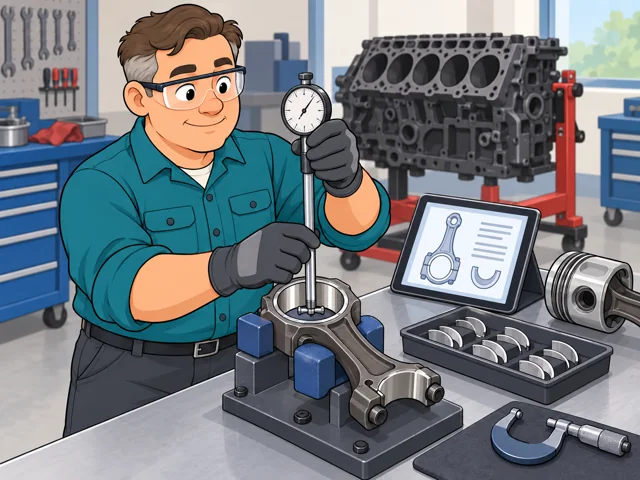
4A mechanic measures a connecting-rod bearing bore at a clean rebuilding bench, with replacement bearings and a disassembled diesel engine nearby.

Rebuild a worn engine

Some jobs include teardowns, where you swap worn bearings or pistons and measure clearances against factory specs.

5A diesel mechanic reviews diagnostic test results beside the repaired truck and records the repair in the shop's electronic work order.

Confirm the fix, close the job

First confirm the original complaint is gone, then record the repair in the shop's electronic work-order system.

Quick facts

Preparation

High school + workplace training

United States · 2025

Pay

$61,770/year

United States · May 2025

Outlook

3.6% projected growth

United States · 2025–2035

Quick orientation

Preparation, pay & outlook

Preparation

High school + workplace training

Expect substantial learning on the job.

Geography
United States
Period
2025

Pay

$61,770/year

National median, equivalent to $29.70/hour.

Geography
United States
Period
May 2025

Outlook

3.6% projected growth

About 24,400 openings annually, including replacement needs.

Geography
United States
Period
2025–2035

Fit, tradeoffs & changing tools

Things to weigh

  • Heavy parts, awkward positions, grease, and shop noise can make a shift physically tiring.
  • Some shops need evening or weekend coverage; some mechanics work more than 40 hours a week.

Where AI may help

Engine software can display fault information and guide troubleshooting. On Cummins engines, it can also bring up wiring and sensor-location diagrams.

What people still lead

You inspect the actual parts, interpret measurements, and carry out the repair.

What we can’t predict yet

As fleets add electric vehicles, the amount of diesel-engine work may shrink. How quickly your shop's vehicle mix changes remains uncertain.

Pay in context

Earnings

The national median is $61,770 a year, or $29.70 an hour. Half earn more and half earn less.

The national spread

The lowest-paid 10% earned below $44,530; the highest-paid 10% earned above $88,740. These are wage percentiles, not starting and senior salaries.

Geography
United States
Period
May 2025
Pay basis
Annual employee wages for bus and truck mechanics and diesel engine specialists

Workplace affects the comparison

Annual medians were $71,460 in local government, excluding education and hospitals; $60,330 in automotive repair and maintenance; and $59,820 in truck transportation.

Geography
United States
Period
May 2025
Pay basis
Industry median annual employee wages for the same occupation

Openings include replacing workers

Employment is projected to grow 3.6%. The estimated 24,400 annual openings also include people changing occupations or leaving the workforce.

Geography
United States
Period
2025–2035
Pay basis
Employment projection, not compensation

Getting started

Learn in an entry-level shop job

What the route involves
Train with experienced mechanics, starting with fluid checks, lubrication, tires, and basic repairs.
What it can lead to
Build toward a preventive-maintenance technician role with responsibility for inspections and routine repairs.

Complete a diesel program

What the route involves
Combine classroom study with hands-on work in engines, electrical systems, and diagnosis. Look for a heavy-truck focus.
What it can lead to
Earn a certificate or degree and meet the postsecondary preparation some employers prefer.

Most employers require high school completion. Some also require industry certification; test-driving large vehicles may require a commercial driver's license.

After entry

Career paths

This starts where the entry routes leave off: early work, growing capability, and advancement or specialization.

  1. Get dependable at routine service

    Build accuracy in inspections, lubrication, brake work, and tire repairs.

  2. Take on harder faults

    Develop electrical troubleshooting skills and tackle steering, suspension, and driveline repairs with greater independence.

  3. Become an advanced technician

    Build toward major engine and transmission rebuilds. Experienced mechanics may also mentor newer technicians.

Where you can work

Truck and bus repair shops

Work in a fixed shop with jacks, hoists, and repair bays. Some shops operate around the clock, so your shift may extend beyond daytime hours.

  • Indoors
  • Shift work
  • Physical demands
  • Safety-sensitive

Mobile fleet service

Travel in a service vehicle to work on customers' trucks. Some roles combine repairs with arranging visits and discussing estimates directly with the customer.

  • Field work
  • Travel
  • Vehicle
  • Physical demands
  • Safety-sensitive

Try it

See whether the job clicks before you commit to the path.

Find a manufacturer's truck-engine troubleshooting diagram. Pick one symptom and sketch how different test results would change your next check. Notice whether tracing the cause makes you want to keep going.

Stay safe: Keep this a paper exercise; do not run tests on a vehicle.

Explore more careers

Sources

  1. O*NET OnLine. 49-3031.00 — Bus and Truck Mechanics and Diesel Engine Specialists. Accessed 2026-10-02.
  2. U.S. Bureau of Labor Statistics. Occupational projections and worker characteristics, 2025–35. Accessed 2026-10-02.
  3. U.S. Bureau of Labor Statistics. Diesel Service Technicians and Mechanics. Accessed 2026-10-02.
  4. Cummins. QuickServe Online — INSITE. Accessed 2026-10-02.
  5. Ryder. Ryder Careers — Diesel Technician Roles. Accessed 2026-10-02.
  6. Ryder. Diesel Technician Mobile — Atlanta, Georgia. Accessed 2026-10-02.
  7. Texas State Technical College. Diesel Equipment. Accessed 2026-10-02.

Your message goes to the Great Jobs team. How we use your information