
Career profile

Cardiovascular Technologist

Cardiovascular techs run heart and blood-flow tests, watch patients closely, and make live readings useful.

Working beside patients and running the machines at once, you place sensors, confirm the signals, notice changes, and speak up when something seems off.
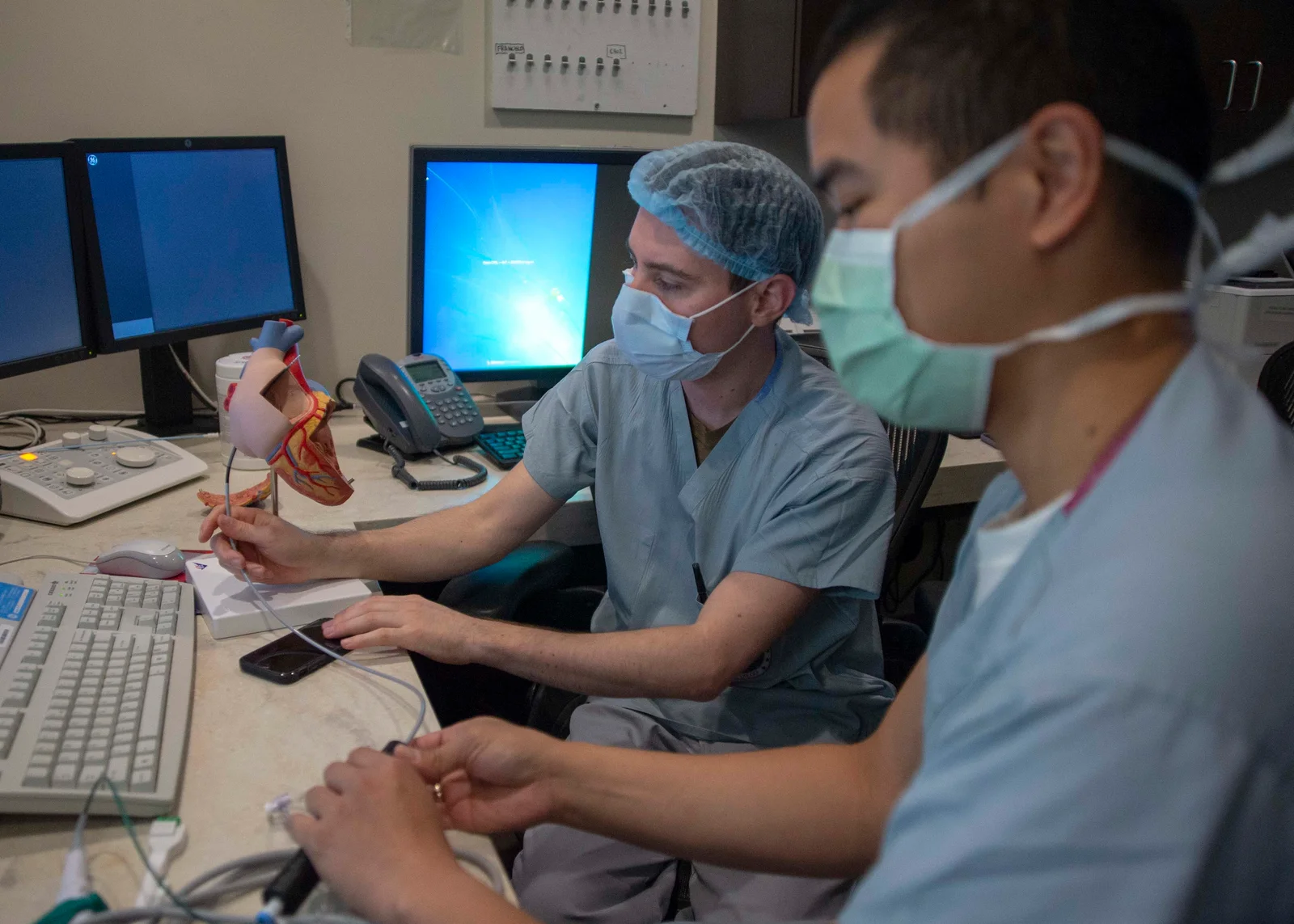
Two cardiovascular technologists discuss how to steer an electrophysiology catheter in a cardiac catheterization lab.
Seaman Luke Cunningham / U.S. Navy. Public domain U.S. Navy photo. No Department of Defense endorsement implied.

A day in the life

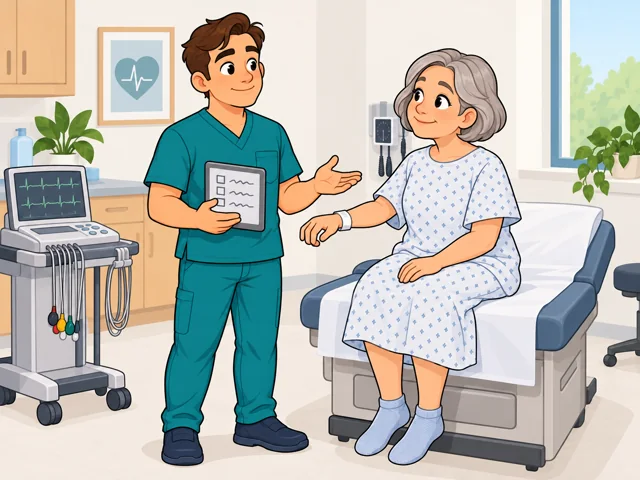
1A cardiovascular technologist explains an ECG to an older woman seated on an examination couch while checking her wristband against a tablet.

Prepare the patient and room

Explain the test, answer questions, confirm the patient's identity, set up the room, and position them correctly.
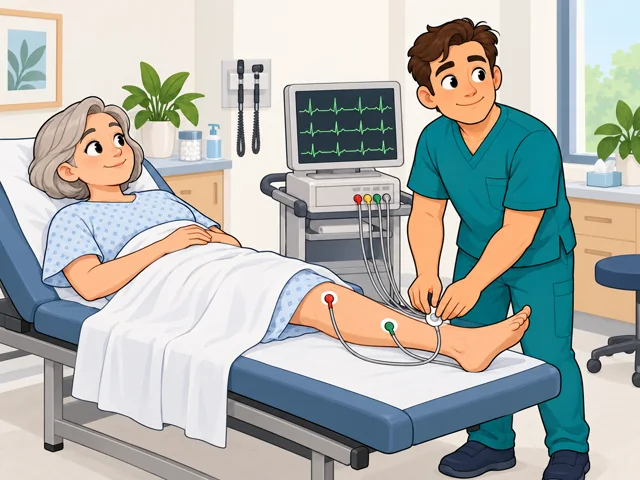
2The technologist secures an ECG electrode on a reclining woman's lower leg while checking the waveform on the connected monitor.

Run the test you're given

Attach sensors or run machines for ECGs, stress tests and more, then watch for interference or bad data.
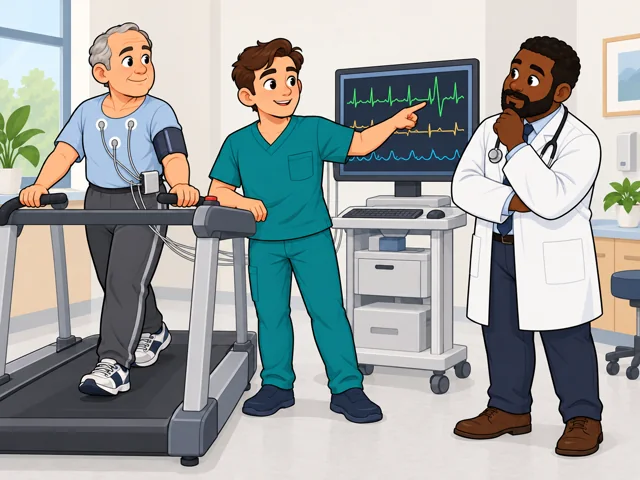
3The technologist watches an older man walking on a clinical treadmill and points out a change on the monitor to the supervising physician.

Track comfort and vital signs

Throughout testing or a procedure, watch comfort, blood pressure, heart rate and more, flagging changes for the doctor.
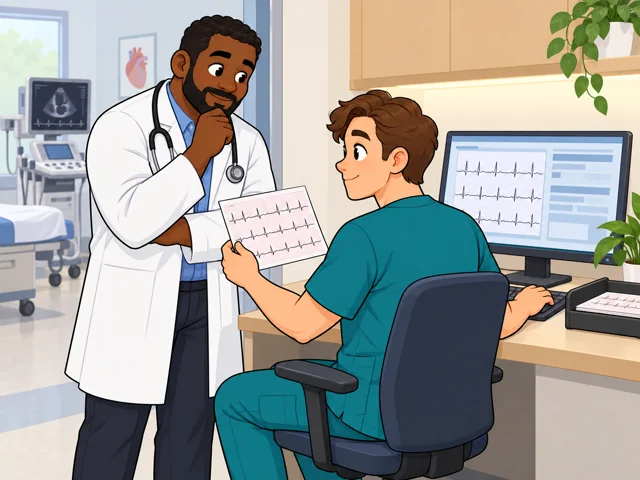
4At a workstation, the technologist reviews cardiac waveforms, updates the test record, and hands the recording to a physician.

Judge results and update records

Judge whether the recording works, note abnormal and other diagnostic findings, update the chart, and brief the doctor.
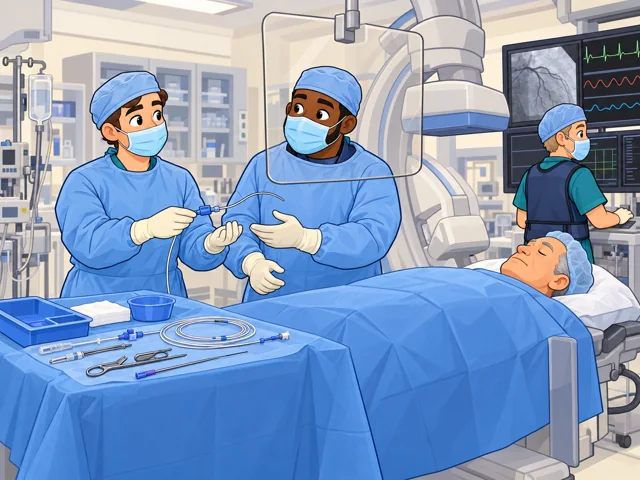
5In a catheterization laboratory, the technologist presents a sterile accessory to the physician while another coworker monitors the reclining patient's vital signs.

Help doctors with catheter procedures

As a cath-lab specialist, keep the field sterile, watch vitals, prep equipment and assist the doctor's catheter procedures.

Quick facts

Preparation

Associate degree or certificate

United States · Current as of 2026-09-22

Pay

$74,310 median

United States · May 2025

Outlook

4% growth

United States · 2025–2035

Quick orientation

Preparation, pay & outlook

Preparation

Associate degree or certificate

Workers typically complete formal cardiovascular or related training that includes clinical practice. The exact program should match the specialty.

Geography
United States
Period
Current as of 2026-09-22

Pay

$74,310 median

May 2025 national median annual wage for cardiovascular technologists and technicians across specialties.

Geography
United States
Period
May 2025

Outlook

4% growth

Projected employment growth from 2025 to 2035 for cardiovascular technologists and technicians combined.

Geography
United States
Period
2025–2035

Fit, tradeoffs & changing tools

Things to weigh

  • Accuracy carries real weight: the work can involve time pressure, close patient contact, infection exposure, and serious consequences if a change is missed.
  • Expect physical work. Long periods on your feet and helping lift, move, or turn patients may be part of the day.
  • Hospital jobs may include evenings, weekends, or overnights. Radiation exposure applies to some invasive or imaging specialties, not every role.

Where AI may help

Monitoring systems, medical software, and electronic records can capture, display, calculate, and store readings while helping staff check data quality.

What people still lead

People still position and reassure patients, maintain safe or sterile conditions, judge whether the data are usable, and alert the clinical team to changes.

What we can’t predict yet

Tools and workflows differ across ECG, cath-lab, electrophysiology, and other specialties.

Pay in context

Earnings

Treat the national figures as reference points, not starting salaries.

National median

The median was $74,310: half of workers in the combined cardiovascular technologist and technician occupation earned more and half earned less. The median hourly wage was $35.73.

Geography
United States
Period
May 2025
Pay basis
Median annual wage for employed cardiovascular technologists and technicians covered by OEWS

The national spread

In May 2025, the 10th-percentile annual wage was $39,000 and the 90th-percentile wage was $121,350. These are wage percentiles, not starting and senior salaries.

Geography
United States
Period
May 2025
Pay basis
National annual wage percentiles

Setting can affect pay

Among the major industries BLS listed, medians ranged from $69,970 in hospitals to $95,080 in outpatient care centers. The figures do not separate specialty, experience, shift, or location.

Geography
United States
Period
May 2025
Pay basis
Median annual wage by selected employing industry for the combined occupation

Employment outlook

BLS projects 4% growth and about 3,400 openings per year on average. Many openings are expected from workers leaving the occupation or labor force.

Geography
United States
Period
2025–2035
Pay basis
Employment projection, not compensation

Getting started

Cardiovascular technology program

What the route involves
Complete an associate degree or postsecondary certificate with anatomy, medical terminology, applied science, and supervised clinical work.
What it can lead to
Build the formal preparation BLS says workers typically need and documented clinical experience for entry-level applications.
What to check
Check the program's specialty. Cath-lab, electrophysiology, ECG, pulmonary, and cardiac-ultrasound preparation and credentials are not interchangeable.

Narrower EKG entry route

EKG certificate programs are generally completed in under a year.
What the route involves
Complete an EKG certificate, or pursue an employer that accepts a high school diploma for entry-level EKG training.
What it can lead to
A possible starting role focused on ECG recording, Holter monitoring, or stress testing.
What to check
This route does not by itself prepare you for invasive procedures, and employers may still prefer or require certification.

Choose a route that matches the work you want to perform. A path into ECG testing is not the same preparation as a path into a cardiac catheterization lab.

After entry

Career paths

This starts where the entry routes leave off: early work, growing capability, and advancement or specialization.

  1. Get established

    Complete employer orientation and meet any specialty-specific certification, CPR or basic life support, or state-license requirements.

  2. Build dependable technique

    Work with experienced team members while improving patient preparation, equipment setup, monitoring, data-quality checks, and documentation in your assigned specialty.

  3. Specialize or take on more responsibility

    Deepen one practice area—such as ECG testing, cardiac catheterization, or electrophysiology—and pursue the matching experience and credential pathway.

    • With experience, training or supervising other patient-care staff may become part of the job.

Where you can work

Invasive cardiac labs

In one Mayo Clinic cath-lab role, technologists scrub for procedures, monitor blood flow and pressure data, prepare and recover patients, and help with emergencies. That job also has weeknight and weekend call; other hospitals set their own procedure mix and schedule.

  • Indoors
  • Lab
  • On call
  • Physical demands
  • Safety-sensitive

ECG and monitoring services

A Mayo Clinic monitoring role follows heart rhythms at rest, during exercise, or after medication. It also includes equipment troubleshooting, patient instruction, documentation, and escalating critical changes; that Phoenix job has weekday shifts and rotating weekend call.

  • Indoors
  • Lab
  • On call
  • Safety-sensitive

Try it

See whether the job clicks before you commit to the path.

Use a public training ECG image and pretend you have 60 seconds to explain the test to a nervous patient. Then inspect the trace for breaks, drift, or messy sections—without trying to diagnose it. Notice whether calm explanation and precise visual checking hold your attention.

Stay safe: Use only public training material, not a real person's health data. This exercise cannot teach diagnosis or replace supervised clinical training.

Explore more careers

Sources

  1. U.S. Bureau of Labor Statistics. Cardiovascular Technologists and Technicians. Accessed 2026-09-22.
  2. O*NET OnLine. 29-2031.00 — Cardiovascular Technologists and Technicians. Accessed 2026-09-22.
  3. Cardiovascular Credentialing International. Credentials. Accessed 2026-09-22.
  4. Cardiovascular Credentialing International. Certified Cardiographic Technician (CCT). Accessed 2026-09-22.
  5. Cardiovascular Credentialing International. Registered Cardiovascular Invasive Specialist (RCIS). Accessed 2026-09-22.
  6. Cardiovascular Credentialing International. Registered Cardiac Electrophysiology Specialist (RCES). Accessed 2026-09-22.
  7. Mayo Clinic. Cardiovascular Technician - CV Tech. Accessed 2026-09-23.
  8. Mayo Clinic. Cardiac Monitor Interpretation Tech. Accessed 2026-09-23.

Your message goes to the Great Jobs team. How we use your information