
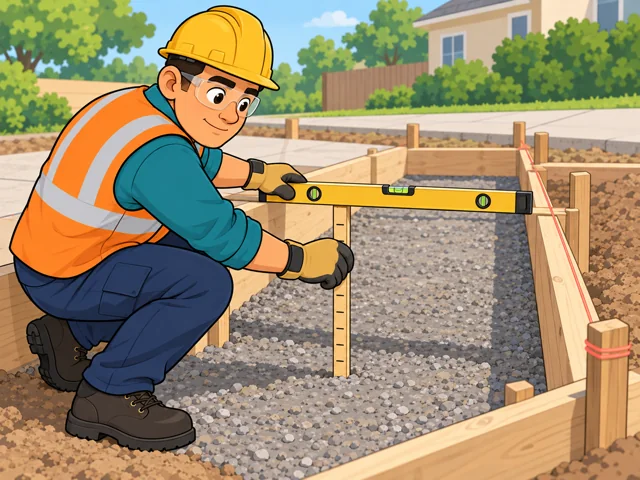
Inspect forms before concrete goes in
Make sure the forms line up and hold the required slope and depth.
Career profile
Concrete finishers shape wet, freshly placed concrete into floors, curbs and sidewalks.
Finishers decide the slope, smoothness and edges of the surfaces people walk on. It takes a steady hand and a close watch on hardening concrete.
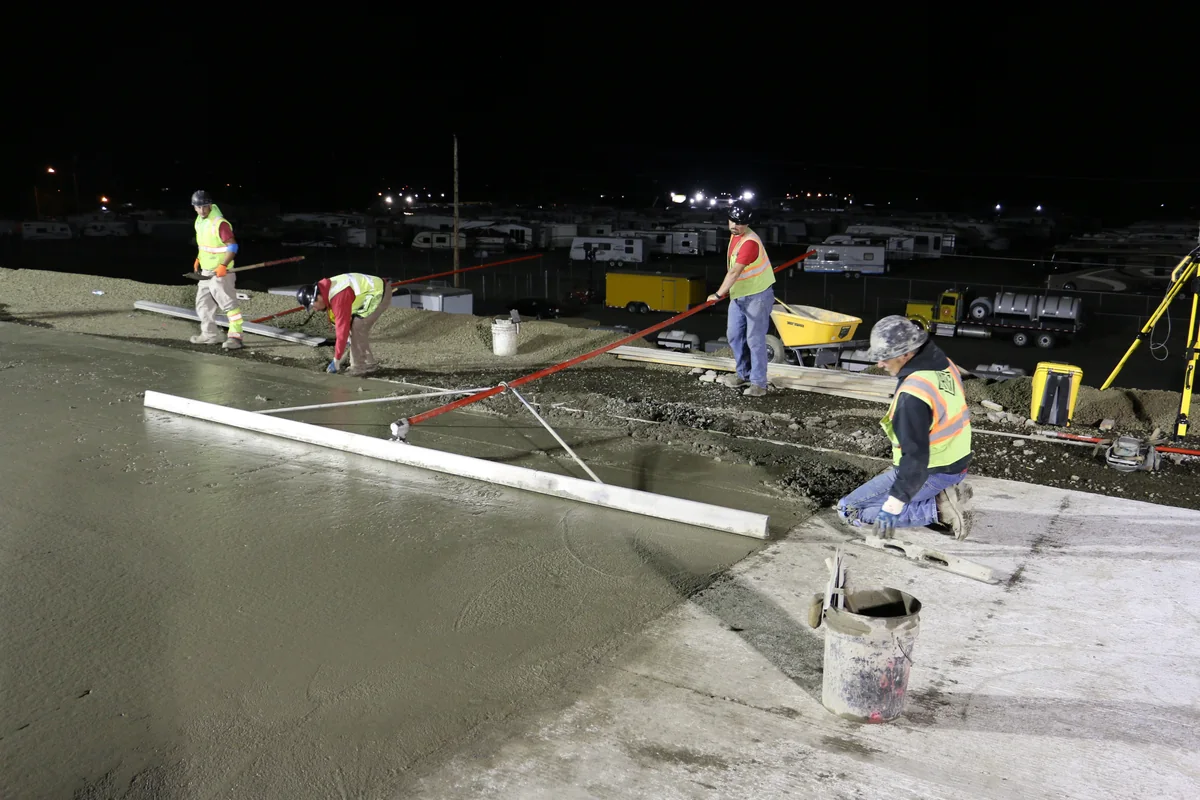
Make sure the forms line up and hold the required slope and depth.
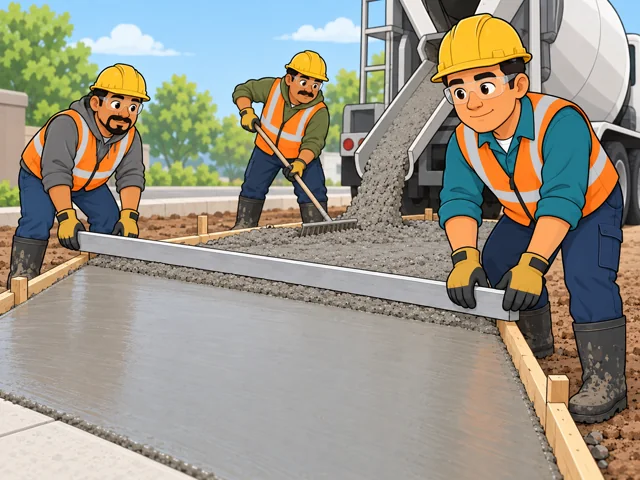
As the truck pours, work with its driver, rake the concrete around, then screed the top flat.
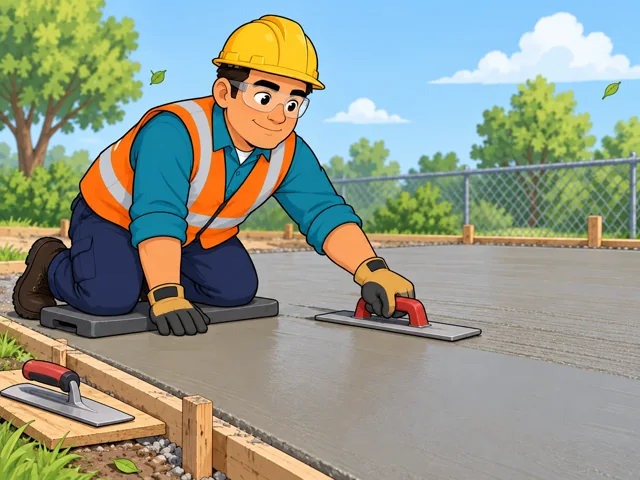
Float and trowel the surface as it stiffens, watching how heat, cold and wind change the work.
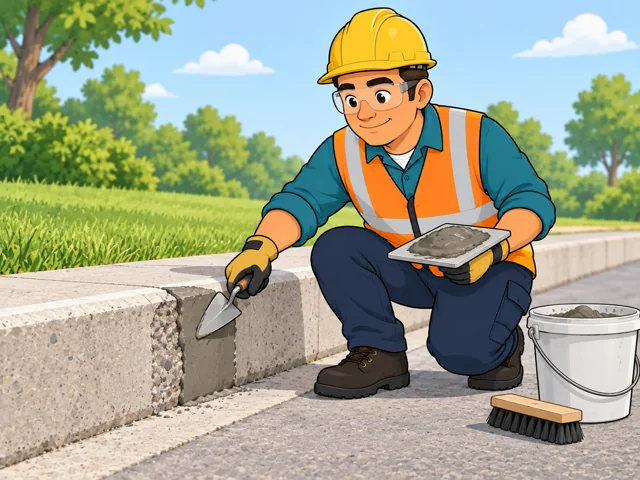
On restoration jobs, repair broken columns, walls or curbs by hand, and on slabs, mark and cut joints.
United States · 2025–2035
United States · 2025
United States · 2025–2035
Quick orientation
No formal educational credential is typical nationally; employers and apprenticeships set their own entry requirements.
The national median was $27.41 an hour in 2025.
About 13,600 openings a year are projected nationally over 2025–35.
Laser-guided machines called screeds can level and compact concrete in an automated pass on slab projects.
People still check forms, watch the concrete, and finish edges and surfaces.
How much leveling shifts to machines will vary with equipment access and the kinds of pours a crew handles.
Pay in context
Use the national figures as a comparison point when you look at a local offer.
The 2025 median was $57,020 a year, or $27.41 an hour. Half earned more and half earned less; this is not a starting wage.
The lowest-paid 10% earned $39,190 or less annually; the highest-paid 10% earned $85,480 or more. These are wage percentiles, not beginner and experienced pay bands.
In May 2023, concrete finishers averaged $26.98 an hour at foundation, structure, and building exterior contractors, compared with $29.57 in highway, street, and bridge construction. These older industry averages show a workplace difference; they are not current offers or starting rates.
Employment is projected to grow 1.6% over 2025–35, with about 13,600 openings annually. Openings include replacing workers who leave the occupation, so they exceed net job growth.
You can build skill through employment training or a formal apprenticeship. Check the actual employer or sponsor's requirements before applying.
After entry
This starts where the entry routes leave off: early work, growing capability, and advancement or specialization.
Build consistency in site preparation and placing concrete before taking on more of a pour.
Develop machine skills and learn the different demands of steps, curbs, gutters, and repairs.
Build toward repairing structural concrete, including columns, beams, and walls, where careful patching becomes a larger part of your work.
You remove and replace damaged sidewalks and curbs, haul repair materials, and work around existing streets. Some city jobs also include snow or emergency operations.
You may move between finishing floor slabs and patching concrete walls or columns. Some crews travel across a region as projects change.
Try it
Spend 15 minutes studying a finished sidewalk. Sketch its surface texture, rounded edges, and joint pattern. Which details look consistent, and where do they change? Notice whether examining that workmanship makes you curious about the tools behind it.
Stay safe: Use an open public walkway and stay outside construction barriers.