
Career profile

Chemist

Chemists study what substances are made of and develop methods to improve how they perform.

Every sample is a question about what's inside and how it acts. The evidence you gather also points to the next change worth trying.
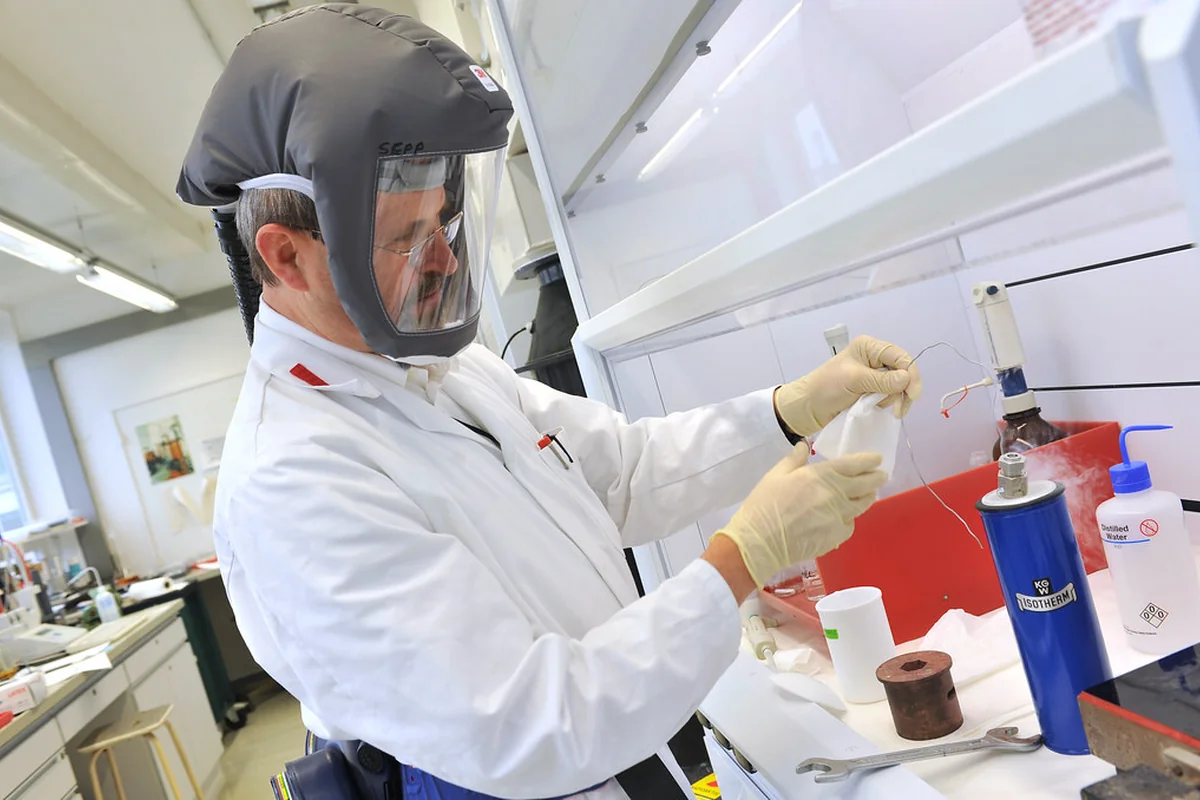
Chemist works with samples in an analytical laboratory.
IAEA Imagebank / Flickr, CC BY-SA 2.0

A day in the life

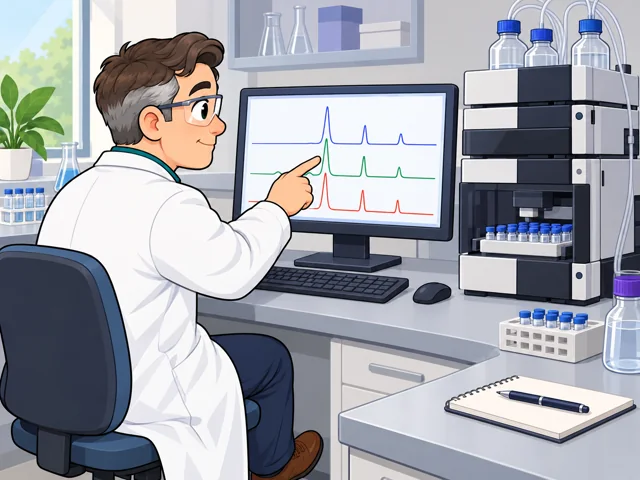
1A chemist compares peaks from a separated sample with reference traces beside a liquid chromatography instrument.

Separate a mixture by chromatography

Run chromatography to split the mixture into its parts, then read the instrument's output to name what's there.
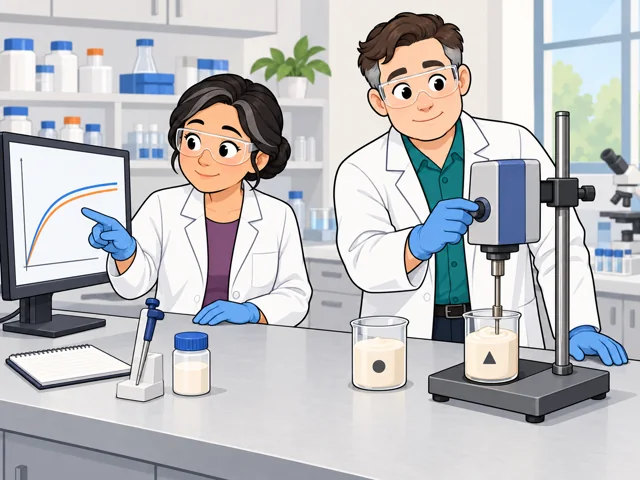
2A chemist measures a revised formulation while a coworker compares its flow results with those of the original.

Test a one-ingredient swap

In product development, swap one ingredient and compare, since any gain must leave the product's other traits intact.
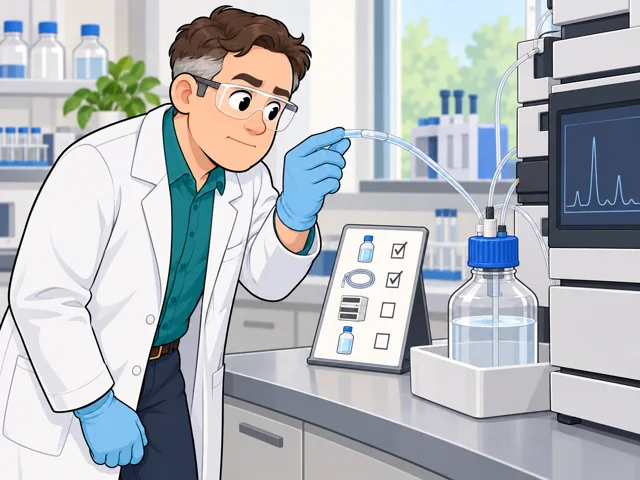
3A chemist checks chromatography solvent tubing and the test procedure while investigating an irregular instrument reading.

Track down an instrument fault

When results look off, retrace your test steps and fix any instrument fault before anyone trusts the numbers.

4A chemist discusses the methods and interpretation of a written report with another scientist.

Write up and discuss findings

Report your methods and results in writing, then discuss the data's meaning with another scientist or an engineer.

Quick facts

Preparation

Bachelor’s degree

United States · 2025

Pay

$91,240/year

United States · 2025

Outlook

6.4% growth

United States · 2025–2035

Quick orientation

Preparation, pay & outlook

Preparation

Bachelor’s degree

The typical education for entry into chemistry work.

Geography
United States
Period
2025

Pay

$91,240/year

National median for chemists in 2025; about $43.87 an hour.

Geography
United States
Period
2025

Outlook

6.4% growth

Projected employment growth for chemists from 2025 to 2035.

Geography
United States
Period
2025–2035

Fit, tradeoffs & changing tools

Things to weigh

  • Handling hazardous chemicals means protective equipment and careful safety procedures.
  • Time-sensitive experiments and deadlines can occasionally extend work beyond normal hours.
  • Quality control can involve repeating prescribed tests and documenting each result.

Where AI may help

Experimental robot systems can carry out sequences of laboratory steps and produce experiment logs. These are research demonstrations, not standard equipment in every lab.

What people still lead

You frame the chemical question, interpret results, and decide what needs investigating next.

What we can’t predict yet

How far robots can take over a changing experiment remains uncertain: adapting equipment and instructions to unfamiliar procedures is still difficult.

Pay in context

Earnings

The national median gives you a midpoint across working chemists, not an expected first salary.

The midpoint and spread

The 2025 median was $91,240 a year, about $43.87 an hour. The 10th-percentile wage was $58,460; the 90th was $160,830. Those are wage percentiles, not beginner and senior pay grades.

Geography
United States
Period
2025
Pay basis
Annual wage and hourly equivalent; national wage and salary employment

Workplace type matters

Chemists’ annual medians were $66,140 in testing laboratories and services, $88,890 in chemical manufacturing, and $105,930 in scientific research and development services. These groups contain different mixes of jobs and experience.

Geography
United States
Period
May 2025
Pay basis
Median annual wage by industry

Openings include replacements

About 5,900 openings a year are projected for chemists during 2025–2035, including replacement needs as well as growth. This is a national projection, not a count of current vacancies.

Geography
United States
Period
2025–2035
Pay basis
Employment projection; annual average occupational openings

Getting started

Build laboratory skills during a bachelor’s degree

What the route involves
Study chemistry or a related physical science, with laboratory courses, mathematics, and physics.
What it can lead to
This is typical preparation for quality control work testing materials and products.

Continue into a research specialty

What the route involves
After undergraduate study, pursue a master’s degree or Doctor of Philosophy (PhD), specializing in an area such as analytical or organic chemistry.
What it can lead to
Graduate study prepares you for research positions that require an advanced degree; some also require work experience.

A chemistry degree is the usual starting point; some research jobs require graduate study.

After entry

Career paths

This starts where the entry routes leave off: early work, growing capability, and advancement or specialization.

  1. Get established

    Learn your employer’s instruments from experienced chemists and build confidence using them correctly.

  2. Own a testing problem

    Develop a method, check that it works reliably, and investigate unusual results. Your responsibility grows from running tests to improving how the lab tests.

  3. Lead larger projects

    Take responsibility for more complex product development and guide other scientists’ work.

    • Move toward management, where more of your time goes to operations and business decisions.

Where you can work

Manufacturing quality laboratory

Established methods and product specifications shape your day. You test materials and finished products, with occasional trips into the plant to collect samples or investigate a problem.

  • Indoors
  • Lab

Product development laboratory

You work with engineers and business colleagues to turn a promising formula into a usable product. Cost, manufacturing limits, and launch schedules influence which experiments come next.

  • Indoors
  • Lab
  • Office

Try it

See whether the job clicks before you commit to the path.

On paper, plan how you would compare how quickly sugar dissolves in cool and warm water. Choose what to measure, what to keep the same, and how to check an unexpected result. Notice whether designing a fair test interests you as much as getting an answer.

Stay safe: Keep this a planning exercise; no materials or heating are needed.

Explore more careers

Sources

  1. O*NET OnLine. 19-2031.00 — Chemists. Accessed 2026-10-04.
  2. O*NET OnLine / U.S. Bureau of Labor Statistics. National Wages: Chemists — 2025. Accessed 2026-10-04.
  3. U.S. Bureau of Labor Statistics. Occupational projections and worker characteristics, 2025–2035. Accessed 2026-10-04.
  4. U.S. Bureau of Labor Statistics. Chemists and Materials Scientists — Occupational Outlook Handbook. Accessed 2026-10-04.
  5. American Chemical Society. Quality Assurance & Control. Accessed 2026-10-04.
  6. American Chemical Society. Research & Development. Accessed 2026-10-04.
  7. Darvish and colleagues / arXiv. ORGANA: A Robotic Assistant for Automated Chemistry Experimentation and Characterization. Accessed 2026-10-04.

Your message goes to the Great Jobs team. How we use your information