
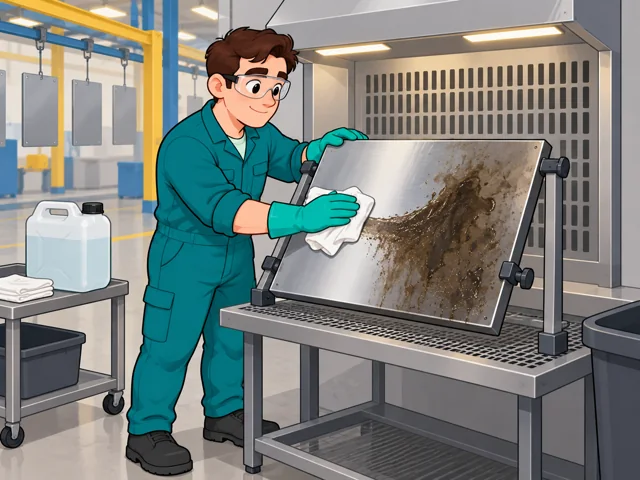
Strip surfaces before coating
Remove grease, rust, and old paint so the surface is ready for a fresh coat.
Career profile
Coating machine operators set up painting machines so parts, goods, and vehicle panels coat evenly.
Streaks can start with the surface, the paint, or the machine settings. Working out which, until a later piece comes out right, is your puzzle.
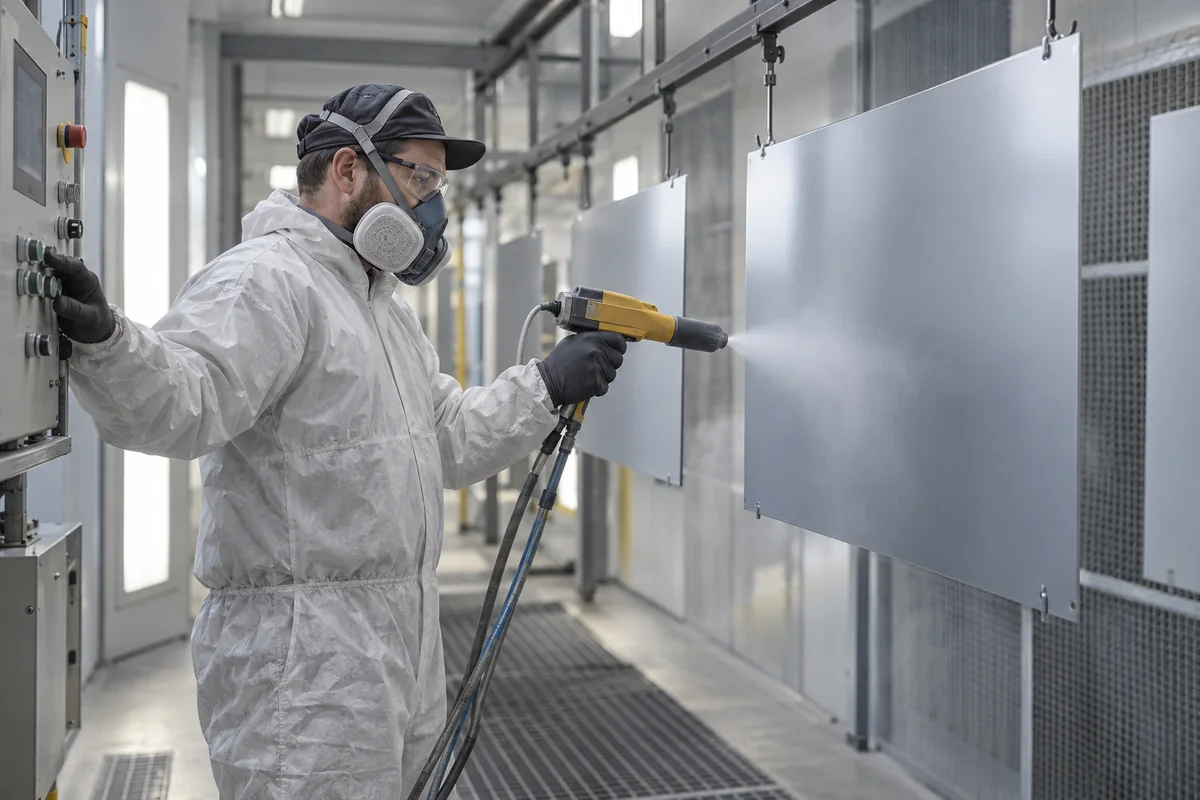
Remove grease, rust, and old paint so the surface is ready for a fresh coat.
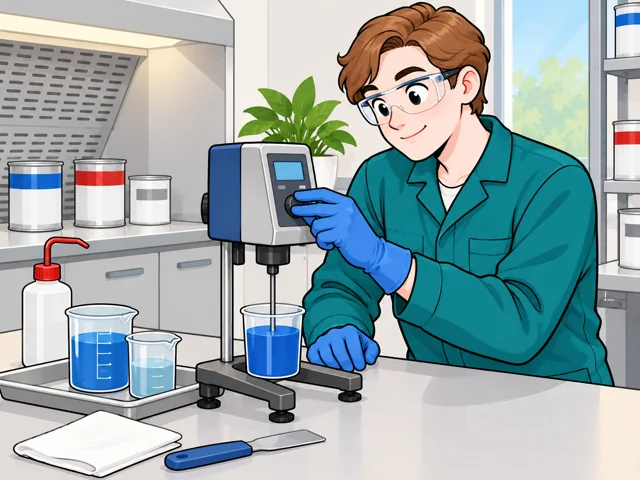
Measure a liquid coat's ingredients and gauge its thickness with a viscometer.
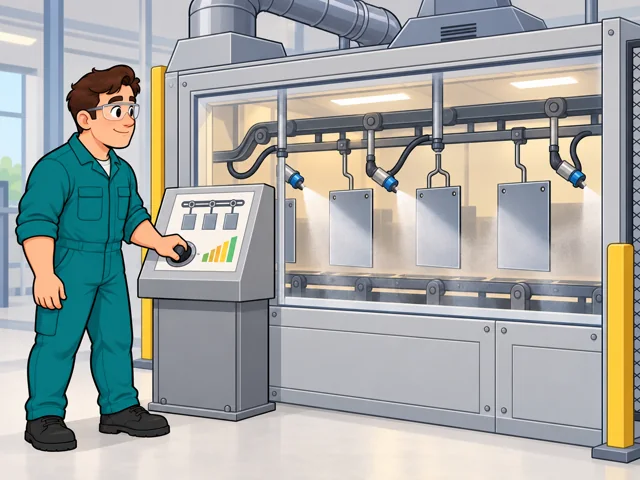
On a conveyor line, tune nozzles and flow to belt speed, with computer controls sometimes keeping machines synced.
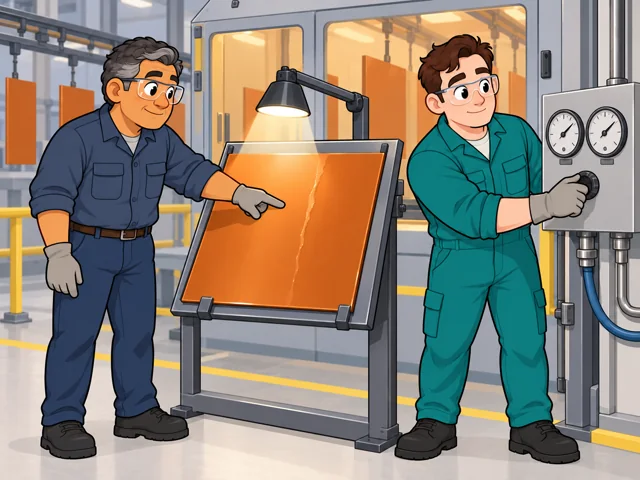
Scan finishes for streaks and blisters, read the gauges, and adjust the process whenever a coat misses standard.
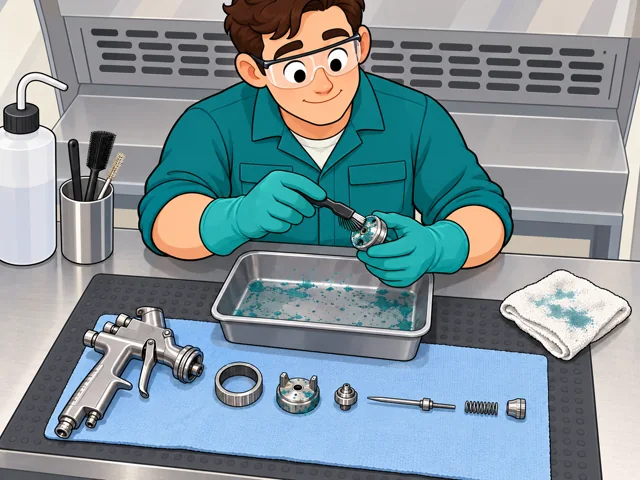
Scrub built-up coating off each sprayer piece, then reassemble it so it's ready to use again.
United States
United States · May 2025
United States · 2025–2035
Quick orientation
A diploma or equivalent is typical. Learning the equipment usually takes several months on the job.
National median pay, equivalent to $23.20 an hour.
About 15,300 openings a year are projected nationally, including replacement openings.
Automated painting systems can move spray guns and apply coatings as products pass through a line.
You set up the process, watch the equipment and investigate finishes that come out uneven.
How much hands-on spraying remains will vary by plant as automation expands. Some jobs may shift further toward setup and troubleshooting.
Pay in context
The national median was $48,250 a year, or $23.20 an hour, in May 2025. Half of workers earned more and half earned less; this is not a starting-pay promise.
The lowest-paid 10% earned under $36,260 annually; the highest-paid 10% earned over $74,730. These thresholds describe workers across jobs and locations, not beginner and senior pay grades.
Annual medians were $57,020 in automotive body, paint, interior and glass repair; $55,660 in transportation equipment manufacturing; and $45,690 in fabricated metal product manufacturing.
Employment is projected to grow 2.5% from 2025 to 2035, with about 15,300 openings annually. Openings include replacing workers who leave, so they are not all newly created jobs.
You can learn through an entry job or prepare for vehicle refinishing through a technical program.
After entry
This starts where the entry routes leave off: early work, growing capability, and advancement or specialization.
Build a dependable routine for preparing surfaces, running the coating process and cleaning the sprayer.
Develop your judgment about when to change coating flow, air pressure or conveyor speed after inspecting the results.
Build toward setting up and programming computer-controlled coating equipment. Additional programming training may be needed.
Products move through coordinated spray equipment. Your attention follows both the control panel and the finish on repeated pieces.
The work centers on vehicle panels: prepare repaired areas, match existing colors and spray in a ventilated booth. Each repair can present a different surface to finish.
Try it
Inspect a painted household object under a lamp from several angles. Sketch where you see uneven coverage, texture or drips, then write what makes each spot different. Notice whether this kind of close checking holds your attention.
Stay safe: Use an intact object and observe only; do not sand, strip or spray it.