
Career profile

Compliance Officer

Compliance officers check that organizations follow their standards, then say which fixes are needed.

A policy can look right on paper while daily work falls short. Spotting that gap means checking records against requirements, asking questions and suggesting fixes.

A compliance officer inspecting a workplace process against a checklist with an employee in a warehouse.

A day in the life

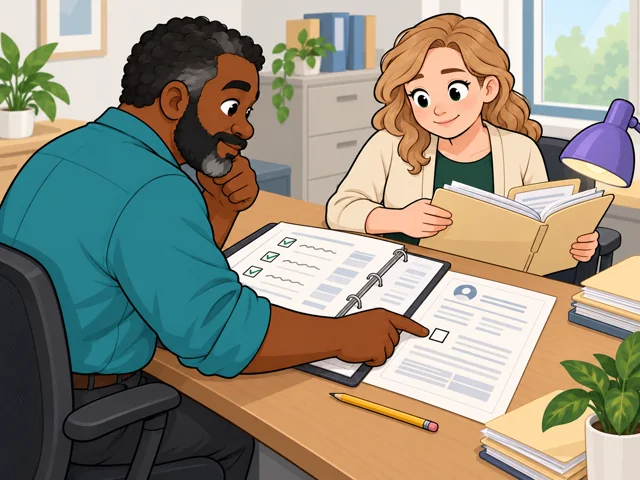
1A compliance officer compares a blank approval entry with a requirement while a coworker supplies records to help determine what happened.

Hold a record against its rule

Where a sign-off is missing, work out whether the step never happened or just went unrecorded.
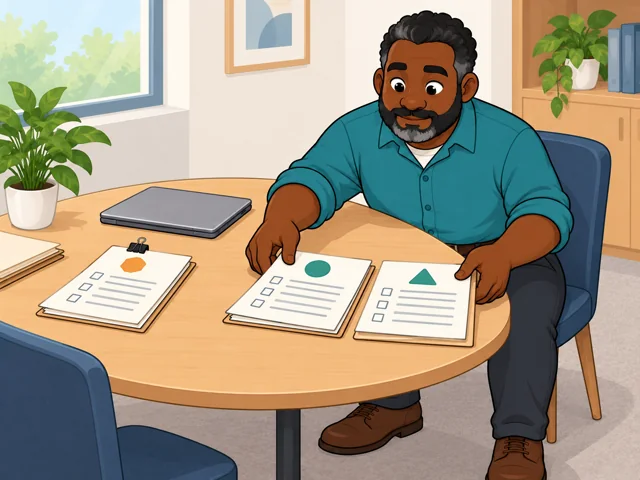
2A compliance officer compares a complaint with supporting records, grouping corroborating evidence and setting aside an unresolved detail.

Separate proof from open questions

Take a complaint and its records, and sort what the evidence already proves from what needs digging.
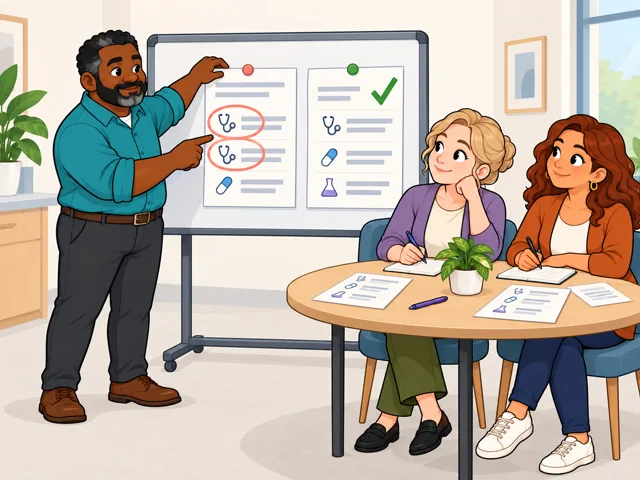
3A compliance officer develops a healthcare billing training example, showing two coworkers how to spot and remove a duplicated entry.

Turn billing errors into training

A healthcare records audit might find billing errors, so you make a staff training example to prevent repeats.
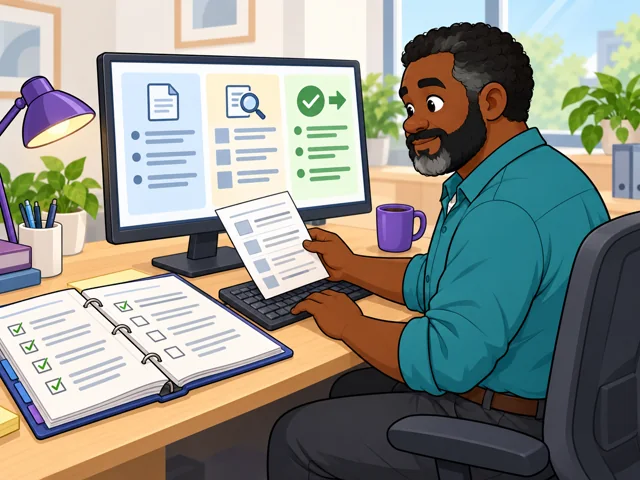
4A compliance officer checks a requirement and supporting evidence while drafting a report with a finding and a recommended change.

Write up findings for action

Draft a report for a manager or agency naming the rule, the evidence and a suggested change.

Quick facts

Preparation

Bachelor’s degree typical

United States · 2025–2035

Pay

$80,730/year

United States · May 2025

Outlook

3.8% projected growth

United States · 2025–2035

Quick orientation

Preparation, pay & outlook

Preparation

Bachelor’s degree typical

Training continues on the job.

Geography
United States
Period
2025–2035

Pay

$80,730/year

National median; equivalent to $38.81/hour.

Geography
United States
Period
May 2025

Outlook

3.8% projected growth

About 32,700 openings a year, averaged over the decade.

Geography
United States
Period
2025–2035

Fit, tradeoffs & changing tools

Things to weigh

  • Repeated document checks can feel tedious, and people may challenge your findings.
  • Most schedules are standard and full time, but investigations can mean longer hours.

Where AI may help

In corporate compliance, software can scan transaction data for patterns that deserve a closer look.

What people still lead

People investigate alerts, judge the evidence, and decide which changes address the problem.

What we can’t predict yet

How much checking artificial intelligence can take over depends on reliable data and whether its mistakes can be detected and corrected.

Pay in context

Earnings

These national figures cover compliance officers across specialties and experience levels.

The middle

The median was $80,730 a year, or $38.81 an hour. Half earned more and half less.

Geography
United States
Period
May 2025
Pay basis
Median annual and hourly wages

The spread

The 10th-percentile wage was $48,220; the 90th was $133,720. These are wage-distribution markers, not starting and senior salaries.

Geography
United States
Period
May 2025
Pay basis
Annual wage percentiles

Workplace matters

Industry medians were $91,960 in professional, scientific, and technical services and $72,580 in healthcare and social assistance.

Geography
United States
Period
May 2025
Pay basis
Median annual wages by employer industry

Openings ahead

Employment is projected to grow 3.8%, with 32,700 annual openings on average. Many replace people who leave the occupation.

Geography
United States
Period
2025–2035
Pay basis
Employment projection; not compensation or current vacancies

Getting started

Study a relevant subject

What the route involves
Earn a bachelor’s degree in a field such as business or a specialty-related science.
What it can lead to
Meets the typical education requirement for entry-level applications.

Bring related work experience

What the route involves
Build experience in the industry or in auditing before moving into compliance.
What it can lead to
Supports applications to employers seeking familiarity with their operations.
What to check
Experience does not automatically replace a degree requirement.

Choose an industry: employers differ in the education and experience they expect.

After entry

Career paths

This starts where the entry routes leave off: early work, growing capability, and advancement or specialization.

  1. Get established

    Learn your employer’s rules and how to handle problems that arise.

  2. Follow a review through

    Develop from spotting a problem to checking whether the corrective change worked.

  3. Lead a program

    One direction is healthcare compliance leadership: oversee the program, coordinate reviews, and report risks and resource needs to the board.

Where you can work

Healthcare organizations

Billing and patient-care operations meet here. You work with audit, quality, and administrative colleagues to investigate concerns and improve procedures.

  • Office
  • Indoors

Licensing and permit offices

Expect contact with applicants and license holders. Some positions include visits to establishments to check permits and licensing standards.

  • Office
  • Field work

Try it

See whether the job clicks before you commit to the path.

Choose a published school-club rule. Make a mock event plan, then create a checklist pairing each requirement with evidence that would prove it was met. Write one finding and a suggested fix. Notice whether you enjoy turning a rule into something checkable.

Stay safe: Use invented records, not classmates’ private information.

Explore more careers

Sources

  1. U.S. Bureau of Labor Statistics. Compliance Officers. Accessed 2026-10-03.
  2. O*NET OnLine. 13-1041.00 — Compliance Officers. Accessed 2026-10-03.
  3. O*NET OnLine / U.S. Bureau of Labor Statistics. National Wages: Compliance Officers. Accessed 2026-10-03.
  4. U.S. Bureau of Labor Statistics. Occupational Projections and Worker Characteristics. Accessed 2026-10-03.
  5. U.S. Department of Justice. Evaluation of Corporate Compliance Programs — September 2024. Accessed 2026-10-03.
  6. U.S. Department of Health and Human Services, Office of Inspector General. General Compliance Program Guidance — November 2023. Accessed 2026-10-03.

Your message goes to the Great Jobs team. How we use your information