
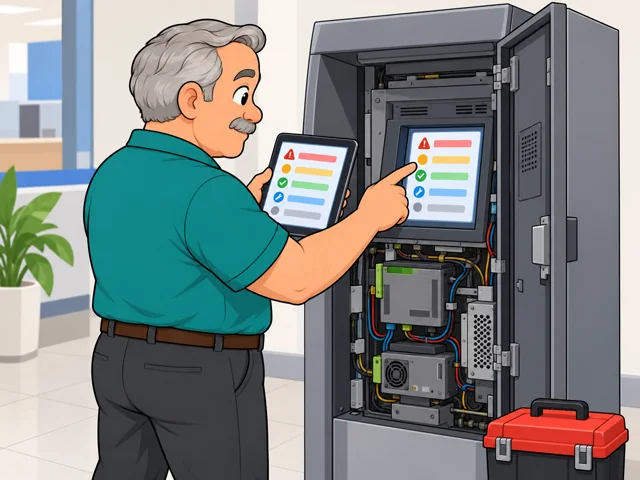
Match a machine's error log
On ATM jobs, match the machine's error log with the service app to decide where to inspect.
Career profile
Machine repairers diagnose office equipment, computers and automated teller machines (ATMs), then replace parts.
Take a printer that keeps jamming. Your job is to pin down which part is failing, fix it, and then make sure the fix worked.
On ATM jobs, match the machine's error log with the service app to decide where to inspect.
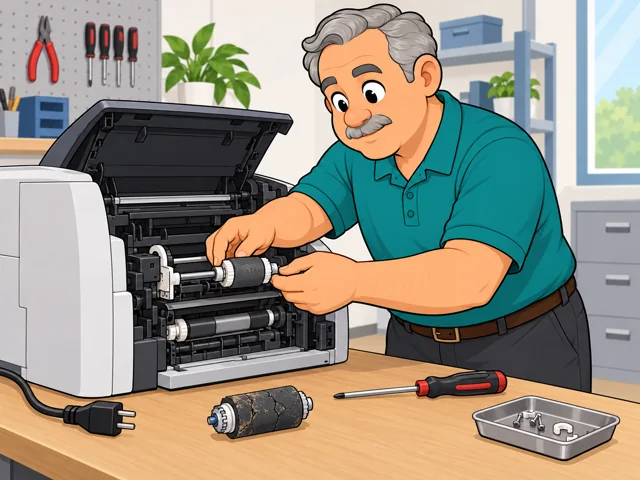
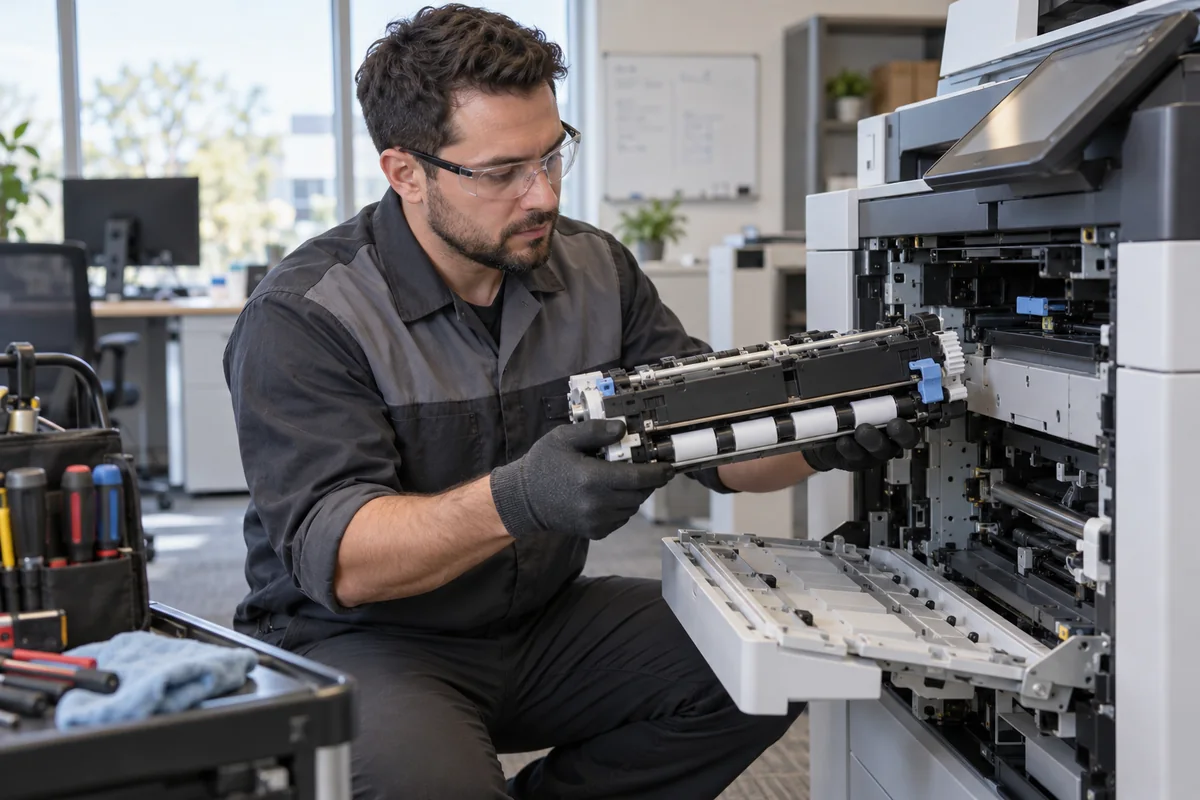
Take apart the printer with hand tools, inspect its moving parts and replace any worn or damaged piece.

Connect new computers or office machines, install their software and make sure each one runs properly.
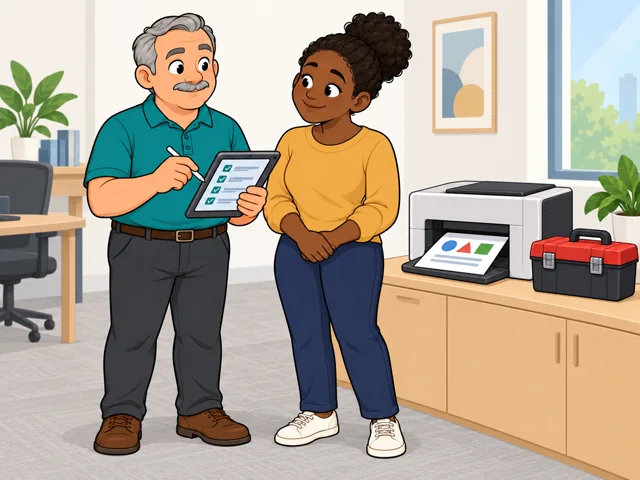
Log the fault and fix clearly so coworkers can answer later questions, then tell the customer the result.
United States · 2025
United States · May 2025
United States · 2025–2035
Quick orientation
Short-term training on the job is typical. Individual employers set their entry requirements.
National median, equivalent to $22.99 an hour.
About 6,100 openings a year are projected despite declining total employment.
Some connected ATM systems analyze machine data to suggest a likely fix and needed parts before a technician arrives.
You still carry out physical repairs and decide when a problem needs escalation.
How much diagnosis shifts to automated systems remains uncertain; the balance between investigating faults and carrying out suggested repairs may change.
Pay in context
The national median is $47,810 a year, or $22.99 an hour. That describes the middle of the workforce, not a starting offer.
In May 2025, the lowest-paid 10% earned $35,910 or less annually; the highest-paid 10% earned $71,730 or more. These are wage percentiles, not beginner and experienced pay scales.
In May 2023, annual mean pay was $43,540 in electronics and appliance retail and $51,090 at professional and commercial equipment wholesalers. These older industry averages show variation, not current offers or a guaranteed raise from switching workplaces.
Employment is projected to fall 3% from 2025 to 2035, while about 6,100 openings per year are projected. Openings and growth measure different things; a declining occupation can still have jobs to fill.
You can enter through employer training or build computer repair skills in a college certificate program.
After entry
This starts where the entry routes leave off: early work, growing capability, and advancement or specialization.
Learn service procedures and when to escalate an unfamiliar fault.
Use continuing training and repair experience to tackle less familiar computer problems and explain your recommendations.
Take on training responsibilities, showing newer technicians how to approach repairs.
Work inside a store with other technicians, helping customers in person and by phone. Repair notes and handoffs keep requests moving between coworkers.
Travel between customer sites, using a service app and keeping track of spare parts. Machines may be indoors or outdoors.
Try it
Find the manufacturer’s troubleshooting guide for a printer you can observe. Pick one symptom, such as paper not feeding, and write a short work note: what you would ask the user, what the guide says to check, and how you would confirm success. Notice whether you enjoy turning a vague complaint into a testable problem.
Stay safe: Keep this a reading and observation exercise; do not open service panels or handle internal parts.