
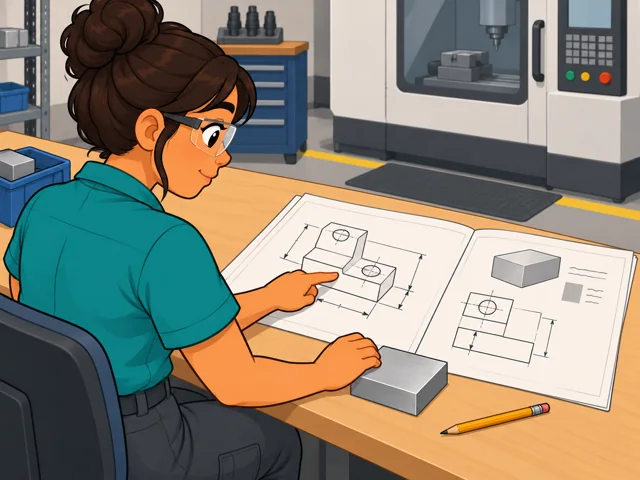
Study the next part's drawing
From the job packet and drawing, note the material, sizes and tolerance, or how far measurements may vary.
Career profile
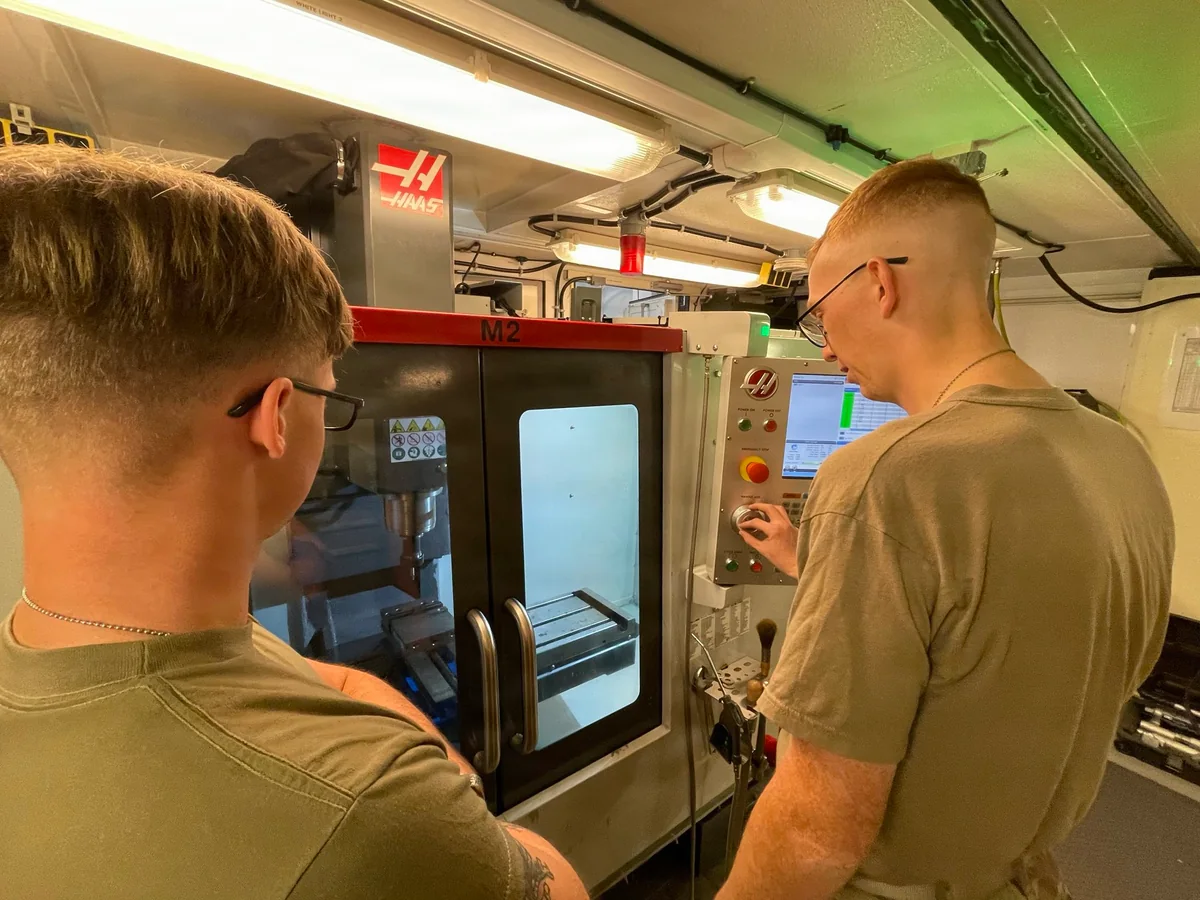
CNC operators run computer-controlled machines that cut and shape parts, then inspect the finished pieces.
A part can look finished and still measure wrong. Your job is to catch the mismatch before another batch gets made.
From the job packet and drawing, note the material, sizes and tolerance, or how far measurements may vary.
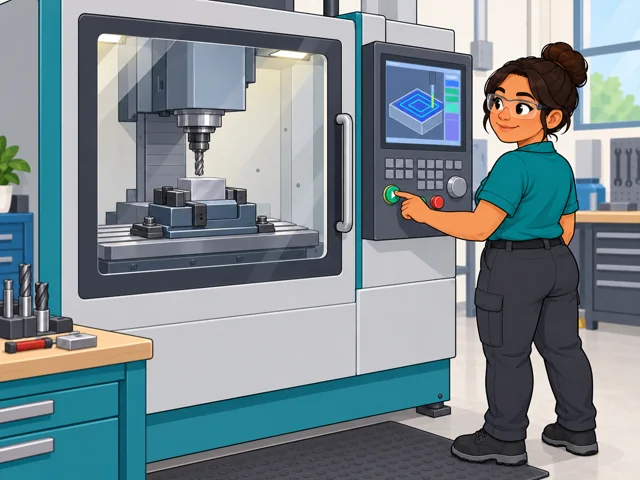
Set the workpiece in place, clamp it tight, and watch the control screen as the preset program runs.
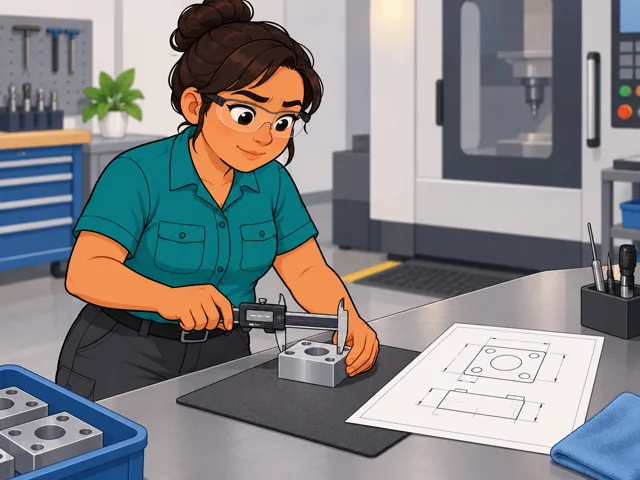
Measure the cut piece with a micrometer or calipers, and look into any size past the drawing's tolerance.
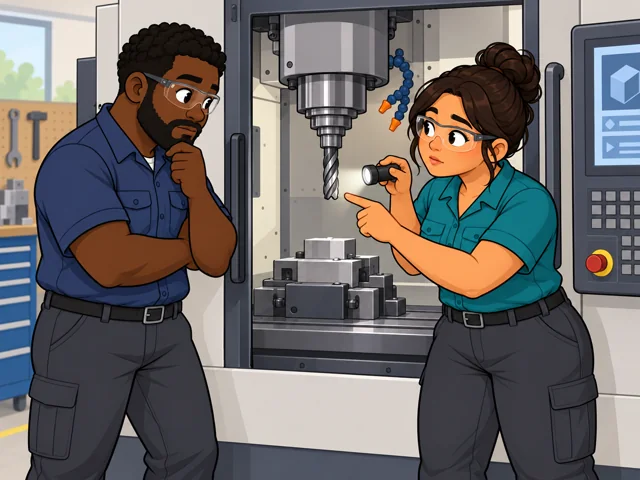
Stop the machine before you swap tooling, and call the programmer if the trouble keeps going.
United States · 2025
United States · May 2025
United States · 2025–2035
Quick orientation
A diploma or equivalent is typical; you learn the machines on the job.
$24.37 an hour nationally for CNC tool operators.
About 12,500 openings a year are projected nationwide, even as total employment falls.
The machine's program already controls cutting movements, repeating a sequence without hand-guiding each cut.
You still check dimensions and work out why parts are coming out wrong.
As factories add robots and other automation, how much loading and monitoring remains with operators will depend on the equipment and parts.
Pay in context
Use the national median as a comparison point when you look at an offer.
CNC tool operators earned a median $50,690 a year, or $24.37 an hour. Half earned more and half less; this is not a starting wage.
The lowest-paid 10% earned $38,140 a year or less ($18.34 an hour); the highest-paid 10% earned $73,890 or more ($35.53 an hour). These describe the wage spread, not a progression from beginner to experienced operator.
In May 2023, CNC tool operators averaged $24.25 an hour in machine shops and turned-product, screw, nut, and bolt manufacturing, compared with $29.35 in aerospace product and parts manufacturing. These older industry averages are context, not current offers or starting rates.
A high school diploma or equivalent is the usual starting point. You can learn through employment or build shop skills in a certificate program.
After entry
This starts where the entry routes leave off: early work, growing capability, and advancement or specialization.
Build reliable habits for loading material, checking parts, and matching your work to the drawing.
Develop skill in changing tools and adjusting cutting speeds, then learn to prepare a machine for a different job.
With more training and experience, pursue programming work that creates the instructions machines run.
Some shops move among small batches and trial parts for new designs. You may track time by job and work with a quality lab to inspect unfamiliar parts.
In some shops cutting aerospace metals, inspection comes with paperwork that lets the company trace parts through production. Keeping those records is part of finishing the job.
Try it
Try a paper inspection: a fictional part must measure 20.00 millimeters, with 0.05 millimeters allowed either way. Check readings of 19.94, 20.03, and 20.06. Which pass? Notice whether you enjoy making a precise accept-or-reject decision.