
Career profile

CNC Programmer

CNC (computer numerically controlled) programmers turn a part's drawing into commands the machine can run.

Which way does the cutter travel, and what does it remove first? You decide, then confirm the program makes the part as designed.
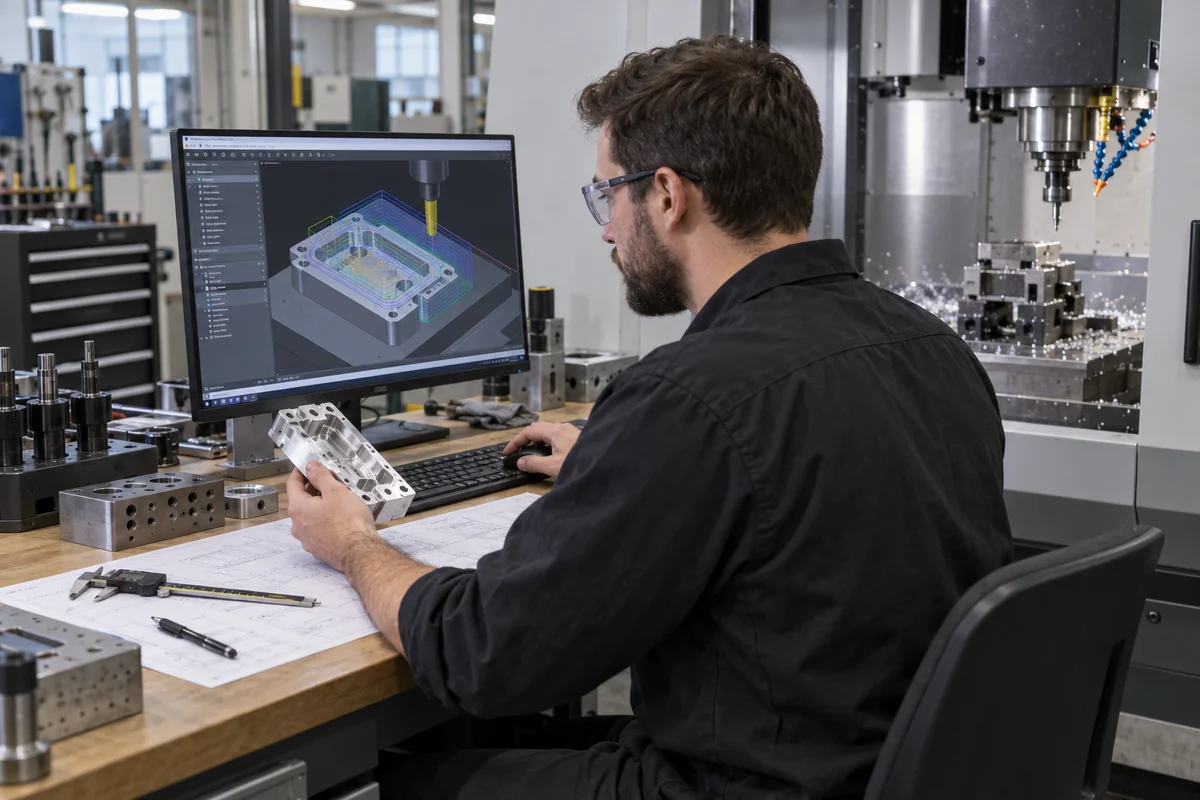
CNC programmer studies a machining toolpath beside a milling machine.

A day in the life

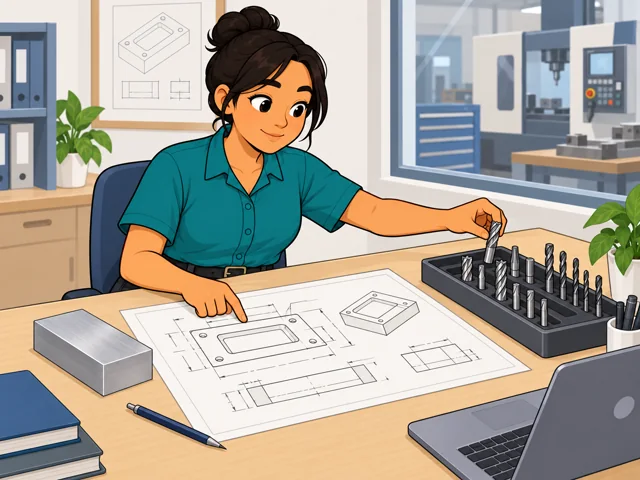
1A CNC programmer studies a part drawing and selects a cutter while planning how to machine its pocket and holes.

Plan cutters and cutting order

Study the drawing's dimensions and allowed deviations, then pick cutters and the order for faces and holes.
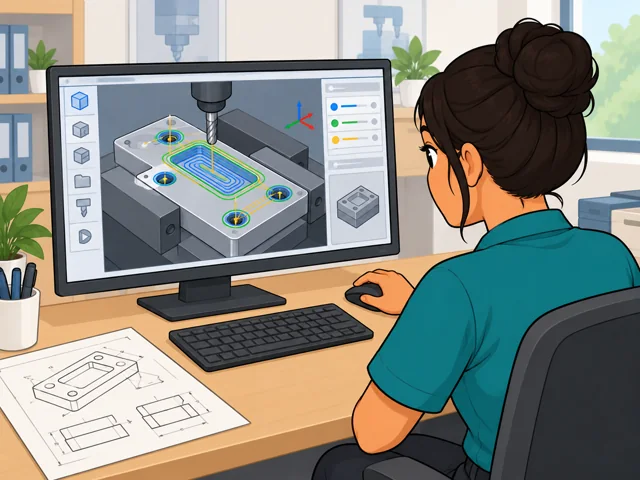
2The programmer builds a cutter route in CAM software, accounting for the vise holding the part.

Lay out the tool's paths

Using CAM (computer-aided manufacturing) software, you set the tool's paths around how the piece is held in place.
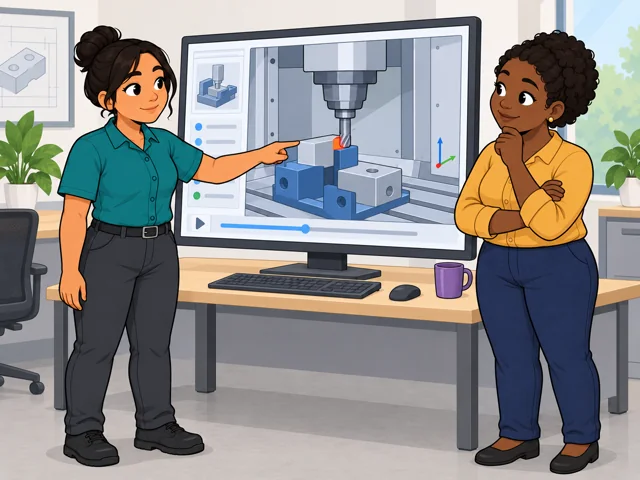
3The programmer and a coworker examine a simulated collision between the tool holder and the fixture before machining.

Run the program on screen

Simulate the program before cutting so a machine model, if set up, flags fixture hits or out-of-range moves.
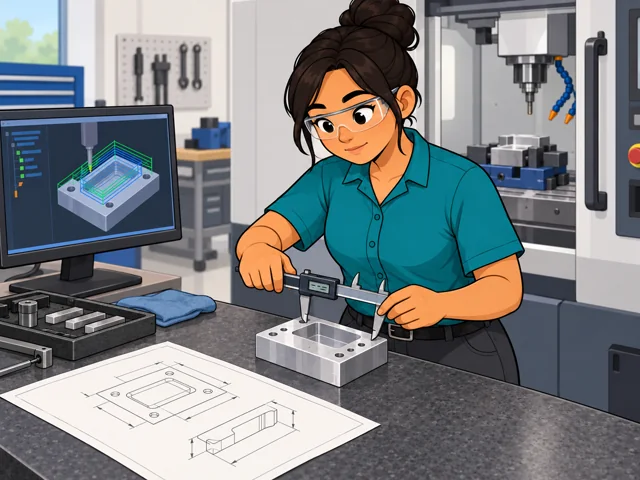
4The programmer measures the first machined part against its drawing while investigating the setup and program for a correction.

Prove out the first part

When the finished part misses the drawing, investigate setup and program, fix the cause, and compare again.
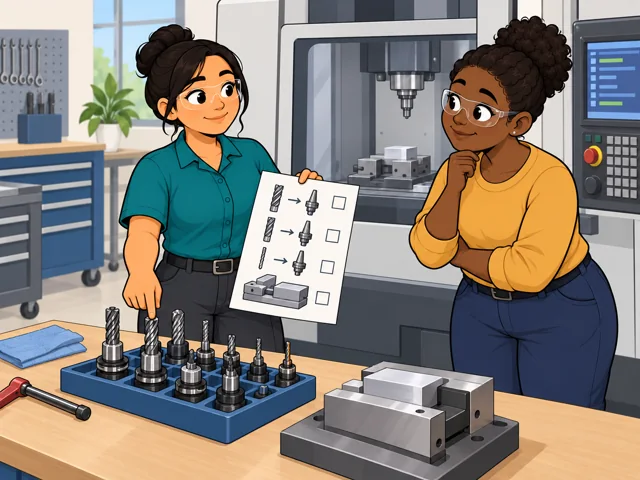
5The programmer walks an operator through illustrated setup instructions and the matching tools for the next run.

Leave a record for repeat runs

Record the tooling and setup steps, then explain the program to the operator in person.

Quick facts

Preparation

Certificate + workplace training

United States · 2025

Pay

$68,120/year

United States · 2025

Outlook

5.9% projected growth

United States · 2025–2035

Quick orientation

Preparation, pay & outlook

Preparation

Certificate + workplace training

A postsecondary nondegree award is typical; employers also provide training on the job.

Geography
United States
Period
2025

Pay

$68,120/year

National median for CNC tool programmers, equivalent to $32.75 an hour.

Geography
United States
Period
2025

Outlook

5.9% projected growth

About 2,700 openings per year are projected nationally across the decade.

Geography
United States
Period
2025–2035

Fit, tradeoffs & changing tools

Things to weigh

  • Shop work can mean distracting noise and protective equipment, while deadlines still demand careful checks.
  • Some production jobs require overtime or weekends when the schedule needs it.

Where AI may help

Software can preview material removal and check for collisions. Some multi-axis tools can also tilt the cutter automatically to avoid the part.

What people still lead

You still choose the machining approach and check whether the real setup and finished part match the plan.

What we can’t predict yet

How much of a new part’s programming becomes automatic remains uncertain, especially when unusual shapes or setups need a different approach.

Pay in context

Earnings

Compare the work and experience requirements alongside the pay. Location, machining skills, and responsibility can affect an offer.

The national middle and spread

The 2025 median was $68,120 a year, or $32.75 an hour. The 10th-percentile wage was $47,530 and the 90th was $100,320. These describe the workforce’s pay spread, not beginner and senior pay grades.

Geography
United States
Period
2025
Pay basis
National annual and hourly wages for computer numerically controlled tool programmers

Experienced pay in two settings

In Southern California, a senior role machining first versions of defense parts lists $47.60–$70.67 an hour; a nuclear-fuel manufacturer's programmer role lists $40–$70. Both require at least five years of programming experience. These base-pay ranges illustrate particular jobs, not industry averages or starting pay.

Geography
Costa Mesa and Los Angeles, California
Period
Listings accessed 2026-10-04
Pay basis
Advertised hourly base pay; benefits and equity excluded

Openings include replacement hiring

Employment is projected to grow 5.9% from 2025 to 2035, with about 2,700 openings annually. Openings include replacing workers who leave the occupation, so they exceed the number of newly added jobs.

Geography
United States
Period
2025–2035
Pay basis
Employment projection; not compensation

Getting started

Learn machining and programming together

What the route involves
Study shop safety, technical math, drawing reading, manual machining, and CNC mill and lathe programming. Waubonsee Community College combines these in its CNC Programmer Certificate of Achievement.
What it can lead to
Build the foundation to write programs for mills and lathes and pursue work using those skills.

Add programming to machining experience

What the route involves
Bring basic machining experience into an intermediate program such as Oakton College’s CNC/CAM Programming Certificate, studying advanced setup and programming.
What it can lead to
Expand from basic machine work toward technical positions programming turning and milling centers.
What to check
This program is designed for students who already have basic machining or CNC experience.

Choose training that matches your starting point: some certificates teach machining fundamentals, while others expect shop experience.

After entry

Career paths

This starts where the entry routes leave off: early work, growing capability, and advancement or specialization.

  1. Get established

    Learn your shop’s machine controls and program-checking routine. Build confidence revising and retesting existing programs.

  2. Improve the process

    Take on complete programs and improve cutting time, tool life, and repeatability without losing the required dimensions or finish.

  3. Handle harder parts

    Develop toward senior programming work on machines that move through several axes, or lead process improvements and coach machinists through difficult setups.

Where you can work

Shops making first versions of parts

Small batches bring frequent new setups. In a hands-on role making parts for engineers to test, you may work closely with those engineers and carry a part from programming through machining and inspection.

  • Indoors
  • Physical demands
  • Safety-sensitive

Precision production facilities

As parts move into repeat production, consistent results matter across runs. You coordinate with quality engineers and maintain setup records that let others trace how each part was made.

  • Indoors
  • Shift work
  • Safety-sensitive

Try it

See whether the job clicks before you commit to the path.

On graph paper, draw a rectangular part with two holes. Pick a starting point and write numbered moves that take a pencil to each hole, including when to lift it. Have someone follow your instructions literally. Notice whether you enjoy finding and fixing ambiguous moves.

Stay safe: Keep this exercise on paper; these instructions are not a machine program.

Explore more careers

Sources

  1. O*NET OnLine. Computer Numerically Controlled Tool Programmers. Accessed 2026-10-04.
  2. O*NET OnLine / U.S. Bureau of Labor Statistics. National Wages: Computer Numerically Controlled Tool Programmers. Accessed 2026-10-04.
  3. U.S. Bureau of Labor Statistics. Occupational projections, 2025–35, and worker characteristics, 2025. Accessed 2026-10-04.
  4. Waubonsee Community College. CNC Programmer — Certificate of Achievement. Accessed 2026-10-04.
  5. Oakton College. CNC/CAM Programming Certificate. Accessed 2026-10-04.
  6. Anduril Industries. Senior CNC Programmer — Costa Mesa. Accessed 2026-10-04.
  7. General Matter. CNC Programmer (Mill, Lathe & Swiss). Accessed 2026-10-04.
  8. Autodesk. Simulation for manufacturing. Accessed 2026-10-04.
  9. Autodesk. Avoid collisions in a toolpath. Accessed 2026-10-04.

Your message goes to the Great Jobs team. How we use your information