

Career profile

Computer Systems Analyst

Systems analysts study how an organization works, then plan better computer systems for its needs.

Some people enjoy asking users exact questions, mapping tangled processes and weighing options before anything is built. That way of thinking is the job.
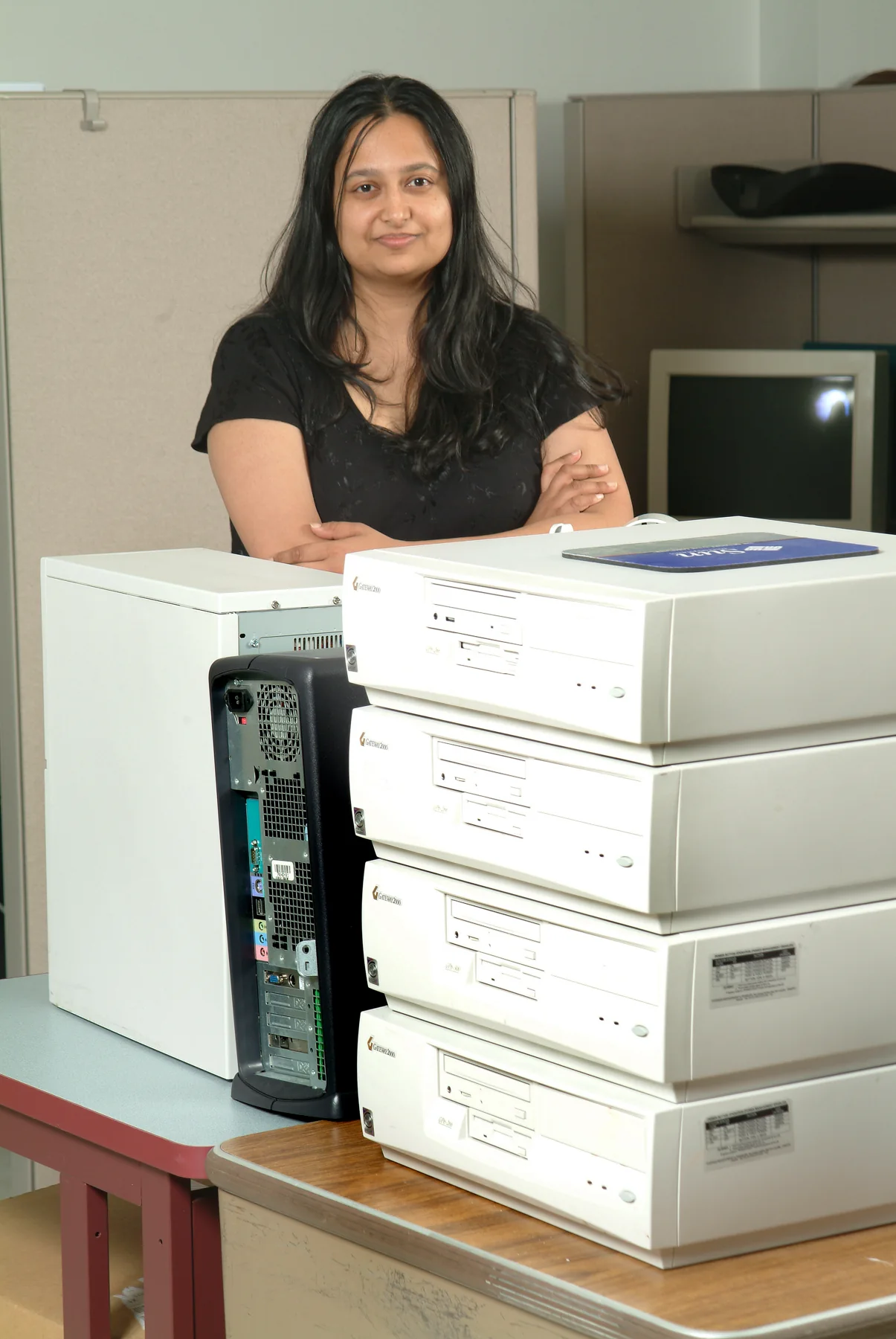
A computer systems analyst sits beside a stack of older computers.
U.S. Department of Labor / Wikimedia Commons, Public domain

A day in the life

1A systems analyst watches a coworker enter information from a paper form and sketches the workflow, circling a repeated entry.

Map how the work really flows

Interview users or watch a workflow to trace each stage's inputs and outputs and flag delays or errors.

2The analyst draws a system flow linking inputs, processing, storage, and another system while a coworker follows along.

Spell out what the system needs

Decide what systems must input, output, store and link, then diagram or write requirements for programmers and engineers.

3The analyst explains two software options to coworkers using a visual comparison of costs and capabilities.

Weigh software and hardware options

Research software or hardware options, weigh cost against payoff and lay out tradeoffs for managers to choose from.

4The analyst identifies a missing element in a test result and revises the system plan beside the computer.

Run test cases against requirements

Write test cases, feed in realistic inputs, check results against requirements and revise the plan if something's missing.

5The analyst guides a coworker through a new application while another coworker checks the computer setup.

Help roll out the change

Some analysts coordinate installation, document procedures, brief users on the change and help tech staff fix configuration trouble.

Quick facts

Preparation

Bachelor's degree typical

United States

Pay

$105,850 median

United States · May 2025

Outlook

8% projected growth

United States · 2025–2035

Quick orientation

Preparation, pay & outlook

Preparation

Bachelor's degree typical

Computer or information technology is common, but related fields and other degrees paired with relevant technical skills can also lead in.

Geography
United States
Period
Not applicable

Pay

$105,850 median

National median annual wage for computer systems analysts; this is not a typical starting offer.

Geography
United States
Period
May 2025

Outlook

8% projected growth

BLS projects 8% employment growth and about 32,900 openings per year on average for computer systems analysts.

Geography
United States
Period
2025–2035

Fit, tradeoffs & changing tools

Things to weigh

  • The job mixes people work with technical detail: you may need to reconcile conflicting requests while keeping requirements exact.
  • Deadlines can stretch the schedule. In O*NET responses, 56% reported a typical workweek longer than 40 hours.
  • You must keep learning as tools, systems, and the employer's industry change.

Where AI may help

Requirements, diagramming, data-analysis, project, and testing software can organize evidence, model processes, and run repeatable checks.

What people still lead

Analysts still question users, define goals, weigh costs and consequences, recommend an option, and explain it to the people who decide and build.

What we can’t predict yet

BLS expects expanding IT use, including AI, to create systems-analysis work. How AI divides the analysis, coding, and testing tasks will vary by system and employer.

Pay in context

Earnings

Use the national median as context, not as a promise about a first job.

National median

Half of U.S. computer systems analysts earned more than $105,850 and half earned less. The median hourly wage was $50.89.

Geography
United States
Period
May 2025
Pay basis
Median annual wage from the BLS Occupational Employment and Wage Statistics program

The national spread

In May 2025, the 10th-percentile annual wage was $67,340 and the 90th-percentile wage was $167,710. These are wage percentiles, not starting and senior salaries.

Geography
United States
Period
May 2025
Pay basis
National annual wage percentiles

Why offers differ

Experience, responsibility, performance, tenure, location, and employer context can all change earnings.

Geography
United States
Period
Not stated
Pay basis
Annual wage context; individual employer offers may differ

Getting started

Technology or related bachelor's degree

What the route involves
Study computer or information technology, mathematics, management information systems, or a related field; include business coursework and projects that connect systems to real processes.
What it can lead to
This matches the occupation's typical entry education and prepares you to apply for analyst roles that expect a bachelor's degree.

Other bachelor's degree plus technical skills

What the route involves
Pair a business or liberal-arts degree with relevant programming, database, systems, or other technical expertise.
What it can lead to
Some firms consider this combination when the candidate can connect organizational knowledge with technical work.
What to check
BLS describes this as an option used by some firms, not a route accepted by every employer.

Registered apprenticeship, where offered

Paid
What the route involves
Apply to a registered Computer Systems Analyst or IT Analyst apprenticeship and combine paid, mentored work with related instruction.
What it can lead to
Completion provides paid work experience and a portable Registered Apprenticeship credential that can support later job applications.
What to check
Programs and openings are offered by individual employers or sponsors, so occupation and local availability must be checked before relying on this route.

Employers use more than one preparation route, but each route must show that you can understand both technical systems and organizational needs.

After entry

Career paths

This starts where the entry routes leave off: early work, growing capability, and advancement or specialization.

  1. Get established

    Learn the employer's workflow, current systems, industry vocabulary, and documentation rules while contributing to bounded requirements and test work.

  2. Build capability

    Take ownership of larger requirement sets, option comparisons, process and data-flow diagrams, tests, and rollout coordination; keep studying new technology.

  3. Lead or specialize

    With experience, move into project leadership or lead a team of analysts; some analysts later advance toward broader IT management.

    • A programmer-analyst track adds more software design, coding, and debugging to the systems-analysis work.

Where you can work

Inside one organization

Work with the same organization's managers, users, and IT teams, building detailed knowledge of its systems and business processes.

  • Indoors
  • Office

IT services or consulting firm

Work as a contractor on client systems projects, learning each client's requirements and collaborating with its staff and your own technical team.

  • Indoors
  • Office

Industry-specialized organization

In settings such as banking or healthcare, learn the field's processes and vocabulary so the system plan reflects how that organization operates.

  • Indoors
  • Office

Try it

See whether the job clicks before you commit to the path.

Choose one small school or club process, such as signing up for an event. Ask one user how it works, draw the current steps and information flow, mark one failure point, propose two changes, and write three tests that would show whether your preferred change works. Notice whether you enjoyed turning an unclear process into requirements and checking tradeoffs.

Stay safe: Use a made-up or school-approved process, avoid private information, and do not access or change any system you do not own or have permission to use.

Explore more careers

Sources

  1. U.S. Bureau of Labor Statistics. Occupational Outlook Handbook: Computer Systems Analysts. Accessed 2026-09-28.
  2. O*NET OnLine. 15-1211.00 — Computer Systems Analysts. Accessed 2026-09-28.
  3. Apprenticeship.gov, U.S. Department of Labor. Career Seekers. Accessed 2026-09-28.

Your message goes to the Great Jobs team. How we use your information