
Career profile

Customs and Border Protection Officer

Customs and Border Protection officers screen people and cargo entering the country at official crossings.

Passports, interviews and shipping papers can each raise questions. You weigh them together before admitting people or goods, or enforcing the law.
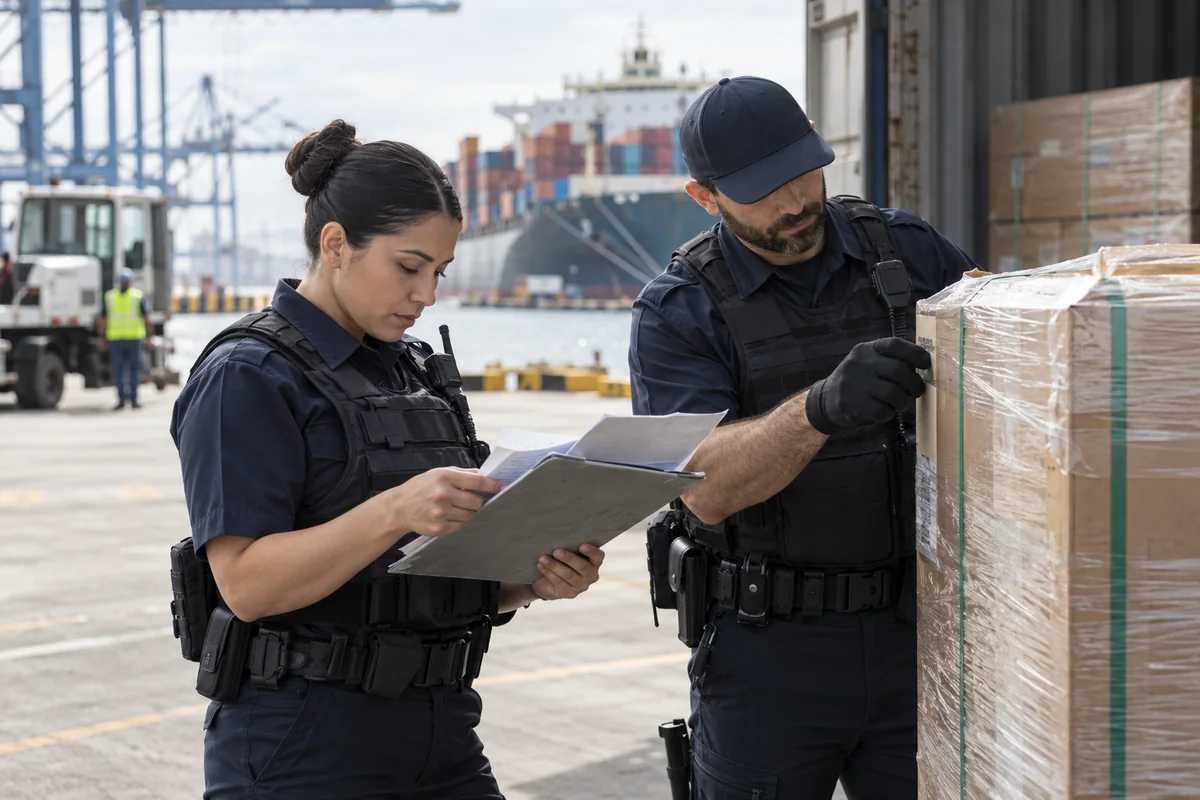
An adult customs and border protection officer inspecting cargo documents and a sealed shipment with a colleague at a border port, no insignia or readable writing.

A day in the life

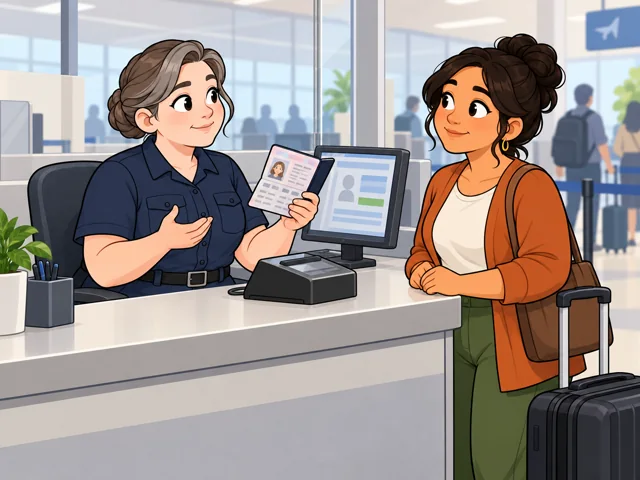
1A customs officer studies a passport and asks a traveler a follow-up question at an inspection booth.

Question travelers at the booth

Read each passport and visa, ask about the trip, and follow up when an answer leaves a gap.
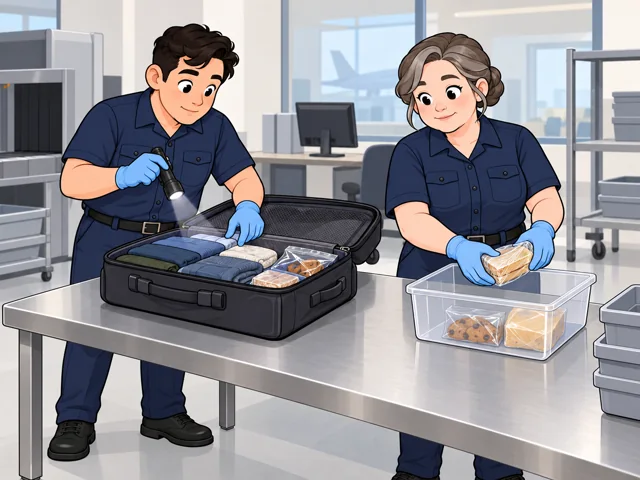
2A customs officer separates an item from an inspected suitcase while a coworker examines the remaining goods.

Search bags and cargo

Go through luggage and cargo for customs violations, and seize anything that is prohibited.
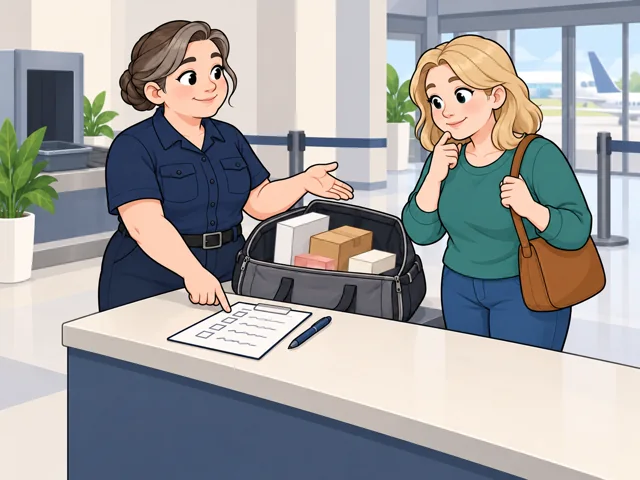
3A customs officer explains a declaration requirement by pointing to a traveler's purchases and a form.

Explain declarations and duty

You tell a traveler why goods need declaring, or why duty is owed on them.

4A customs officer enters inspection findings into a computer while a coworker reviews the case record.

Write up the inspection

Enter findings and decisions in the inspection record so another officer can pick up and understand the case.

Quick facts

Preparation

Experience or college, then academy

United States · 2026

Pay

Not displayed

See Earnings for the federal hiring range.

Outlook

Not displayed

Hiring depends on available positions and duty locations.

Quick orientation

Preparation, pay & outlook

Preparation

Experience or college, then academy

Qualify for federal hiring, pass selection, and complete officer training.

Geography
United States
Period
2026

Pay

Not displayed

See Earnings for the federal hiring range.

Geography
United States
Period
Not applicable

Outlook

Not displayed

Hiring depends on available positions and duty locations.

Geography
United States
Period
Not applicable

Fit, tradeoffs & changing tools

Things to weigh

  • Irregular hours and difficult encounters can make the work tiring even when inspections seem routine.
  • This is armed law enforcement. Physical searches can involve lifting, climbing, and cramped spaces.

Where AI may help

At international arrivals, facial comparison software checks a new traveler photo against existing government photos, reducing manual identity checks.

What people still lead

Officers still inspect travelers who cannot be matched and handle questions about eligibility to enter.

What we can’t predict yet

How much routine checking shifts to automated systems will depend on reliable matches and how arrival procedures develop. Exceptions can still require a longer conversation.

Pay in context

Earnings

Federal grade and location shape your salary.

Read the hiring range carefully

The 2026 nationwide General Schedule (GS) 5–9 hiring range is $41,863–$127,464 annually, excluding overtime and incentives. It is not typical starting pay; your final offer sets your salary.

Geography
United States
Period
2026
Pay basis
Advertised annual salary range across grades and locations; excludes overtime and incentives

Check the available locations

Recruitment is active, but your preferred duty location may be unavailable.

Geography
United States
Period
October 2026
Pay basis
Recruitment availability, not a wage or projected openings estimate

Getting started

Build qualifying work experience

What the route involves
Accumulate three years of qualifying general experience, including one equivalent to GS-4, dealing with people and learning and applying rules.
What it can lead to
This can meet the experience requirement for GS-5 consideration.
What to check
Duties determine credit. Customer-service work explaining requirements may count; purely repetitive filing or copying does not.

Qualify through college

What the route involves
Complete an accredited bachelor’s degree or full four-year bachelor’s course in any field.
What it can lead to
This meets GS-5 education requirements.

U.S. Customs and Border Protection (CBP) requires citizenship, a valid driver’s license, and residency eligibility. Referral generally must precede age 40; exceptions apply. Selection includes an entrance exam for grades 5–7, interview, background investigation, medical and fitness checks, drug testing, and usually a polygraph. Hired officers must complete the academy.

After entry

Career paths

This starts where the entry routes leave off: early work, growing capability, and advancement or specialization.

  1. Learn the work after hiring

    Practice inspections and law-enforcement skills at the Field Operations Academy through classroom lessons, physical training, and practical exercises.

  2. Handle more involved inspections

    Build skill in resolving document discrepancies, questioning travelers, and deciding when a case needs further examination.

  3. Move up the officer ladder

    The career ladder reaches GS-12. Promotions require agency approval.

Where you can work

International airport arrivals

You meet passengers at the inspection point. Passport review and facial comparison support the conversation about their entry.

  • Indoors
  • Safety-sensitive

Land border crossings

Travelers arrive through vehicle and pedestrian lanes. Inspections can put you near moving vehicles and outdoors in heat or cold.

  • Indoors
  • Outdoors
  • Vehicle
  • Safety-sensitive

Seaport cargo facilities

Shipping documents and freight take more of your attention. Inspecting cargo can mean lifting items or climbing onto loads.

  • Outdoors
  • Physical demands
  • Safety-sensitive

Try it

See whether the job clicks before you commit to the path.

Make a fictional packing list for a suitcase containing five ordinary objects. Have a friend change one item, then compare the contents with the list. Write a neutral follow-up question and a two-sentence discrepancy report. Notice whether careful checking and calm questioning hold your interest.

Stay safe: Use your own objects and invented details; do not use anyone’s passport or personal records.

Explore more careers

Sources

  1. O*NET OnLine. Customs and Border Protection Officers, 33-3051.04. Accessed 2026-10-03.
  2. U.S. Customs and Border Protection. Customs and Border Protection Officer — CBPO DH 27-1. Accessed 2026-10-03.
  3. U.S. Office of Personnel Management. Customs and Border Protection Series 1895. Accessed 2026-10-03.
  4. U.S. Office of Personnel Management. Administrative Work in the Inspection, Investigation, Enforcement, and Compliance Group, 1800. Accessed 2026-10-03.
  5. U.S. Customs and Border Protection. What is Simplified Arrival?. Accessed 2026-10-03.
  6. U.S. Customs and Border Protection. What is the CBP Field Operations Academy?. Accessed 2026-10-03.

Your message goes to the Great Jobs team. How we use your information