
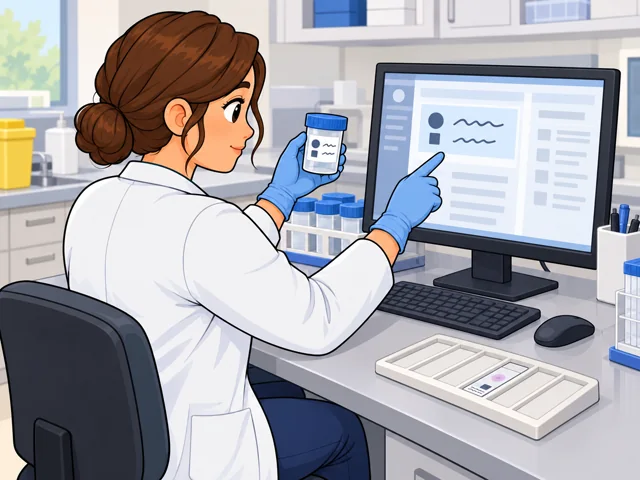
Match the label to the chart
Confirm the specimen label matches the patient's chart before you look at a slide under magnification.
Career profile
Cytotechnologists examine cells one by one, searching for signs of cancer or other diseases.
Careful looking drives this lab-based medical job. You study how cells are shaped and arranged, then tell others which need a second look.
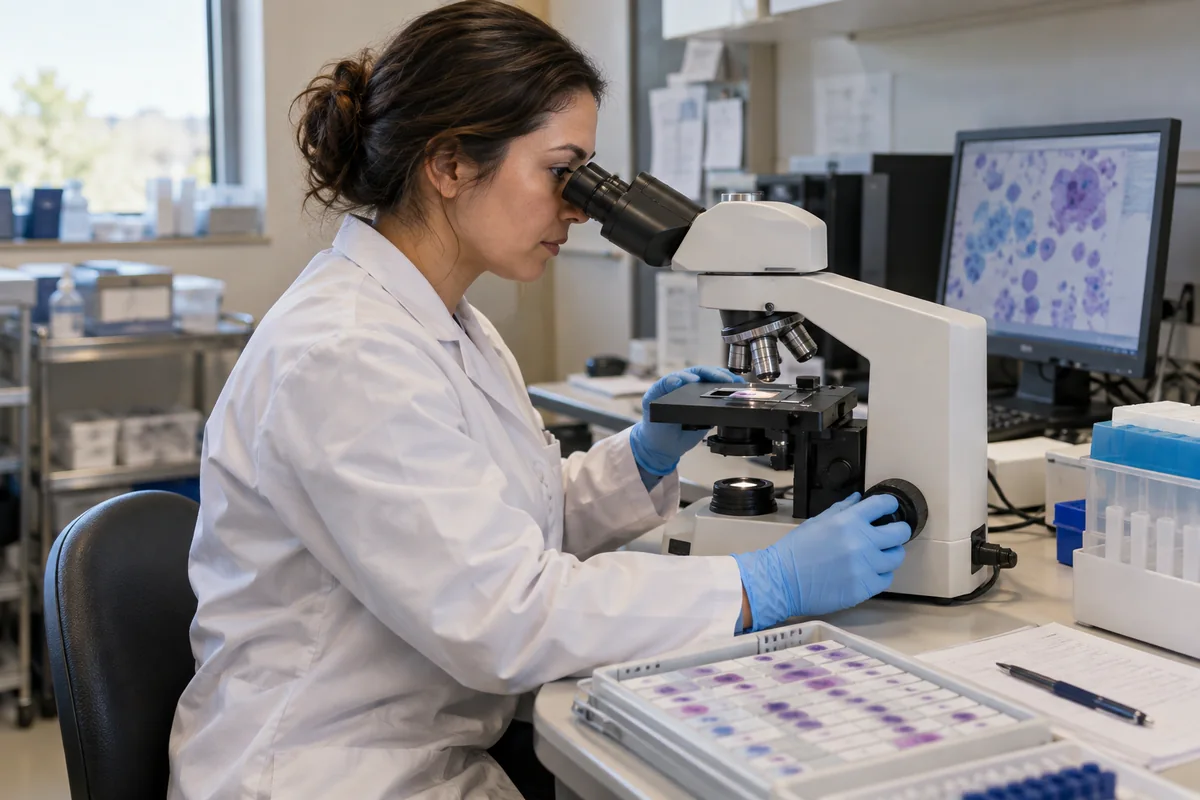
Confirm the specimen label matches the patient's chart before you look at a slide under magnification.
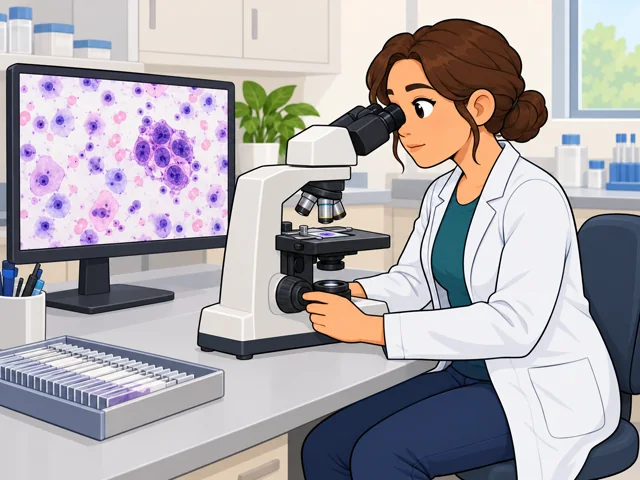
You compare cell size, shape and color under the microscope, watching for odd clusters among normal-looking cells.
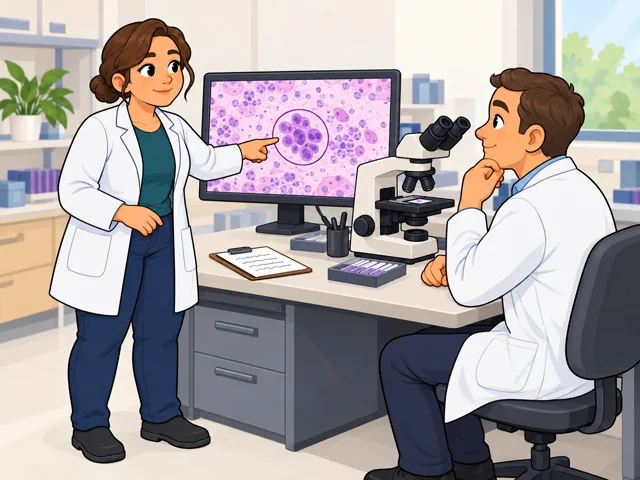
Mark worrying cells, report what you found and hand abnormal-looking cases to the pathologist for a closer look.
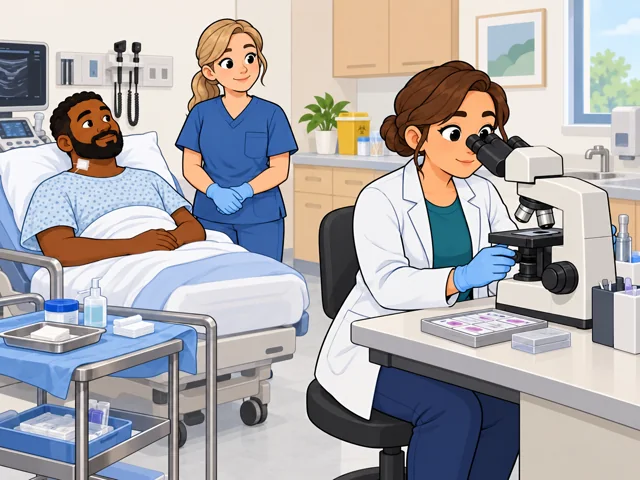
In some hospital jobs, you examine cells mid-procedure to judge whether a thin needle drew enough good material.
United States · 2026
A national median is not reported separately for cytotechnologists. Broader laboratory wages appear below.
National growth and annual openings are not reported separately for this title.
Quick orientation
A bachelor's degree and accredited cytology program form a domestic certification route; programs are transitioning toward master's degrees.
A national median is not reported separately for cytotechnologists. Broader laboratory wages appear below.
National growth and annual openings are not reported separately for this title.
For certain cervical screening slides, artificial intelligence (AI) can select cell images for a reviewer to inspect on screen.
Cytologists and pathologists interpret those images alongside patient history. Uncertain findings may require returning to the glass slide.
How much searching will shift from people to software remains uncertain, especially beyond cervical screening. The balance between microscope work and screen review may change.
Pay in context
Cytotechnologist-only national pay is not reported. The closest official benchmark covers the broader clinical laboratory workforce.
Clinical laboratory technologists and technicians had a May 2025 median of $62,930 annually—about $30.25 an hour using 2,080 hours. The lowest 10% earned below $38,910; the highest 10% earned above $100,990. These are not cytotechnologist-specific or starting-pay figures.
The same broader group is projected to grow 3% from 2025 to 2035, with about 20,800 openings annually, including replacement needs. Cytology's share is not reported.
Look for cytology programs accredited by the Commission on Accreditation of Allied Health Education Programs (CAAHEP). Two education structures can lead toward certification.
After entry
This starts where the entry routes leave off: early work, growing capability, and advancement or specialization. This path also has a credential or licensing boundary; see the requirements and limits.
Learn your laboratory's screening routines, reporting software, and workload records so each case stays traceable.
Build experience with different specimen types. Your laboratory may train you in sample adequacy checks or digital image review.
Move toward training students, quality improvement, or coordinating laboratory work as your experience grows.
Some roles connect the laboratory with needle-biopsy teams and student teaching. Procedure support adds interaction beyond slide screening; rotating weekend coverage may be part of the schedule.
Work can center on specimens sent to the laboratory, combining manual and image-assisted screening. You record screening workloads and may also cover specimen processing when needed.
Try it
Try comparing two labeled cell images in a biology textbook. Cover the captions and describe differences in cell shape, size, and arrangement, then check the explanations. Notice whether careful visual comparison holds your attention.
Stay safe: Use educational images only; this is observation practice, not a way to diagnose disease.