
Career profile

Dermatologist

Dermatologists diagnose and treat skin, hair and nail problems, from stubborn acne to skin cancer.

A tiny spot can force a hard call about testing. A close look, the patient's history and sometimes a tissue sample guide your next step.
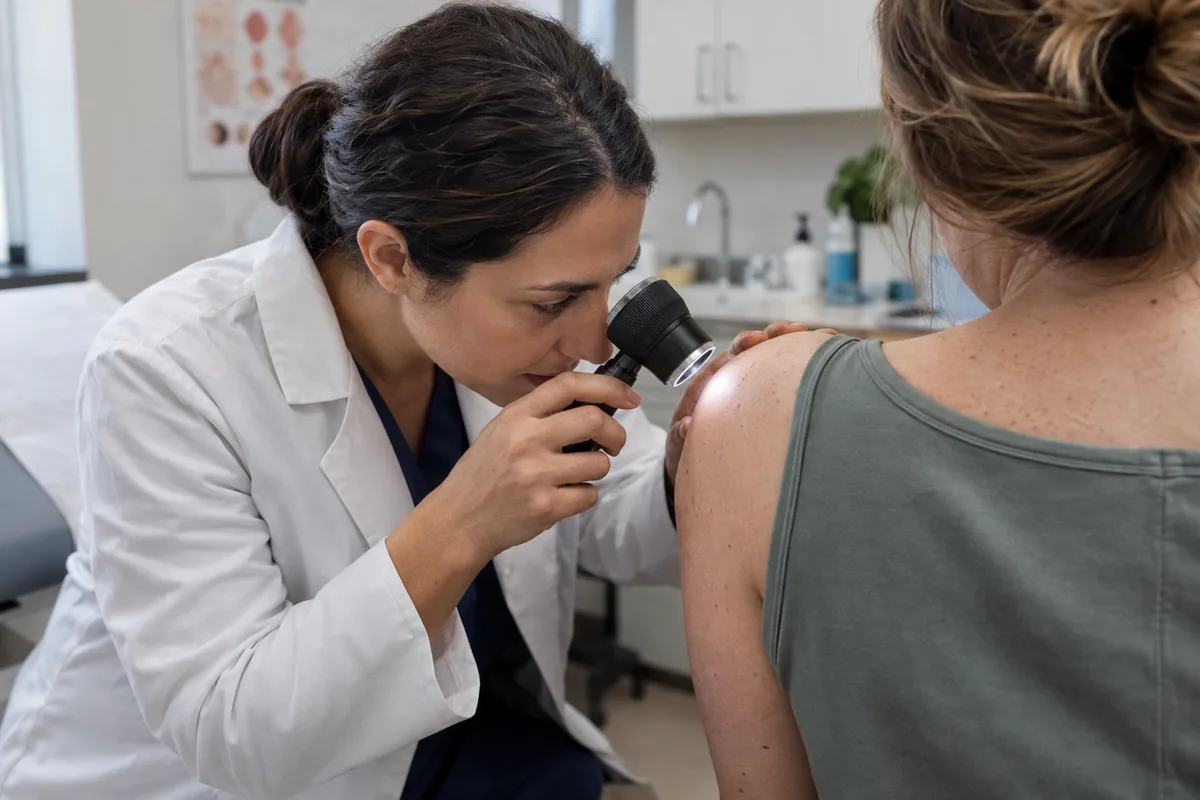
dermatologist examining a small skin area with a handheld dermatoscope in a clinic.

A day in the life

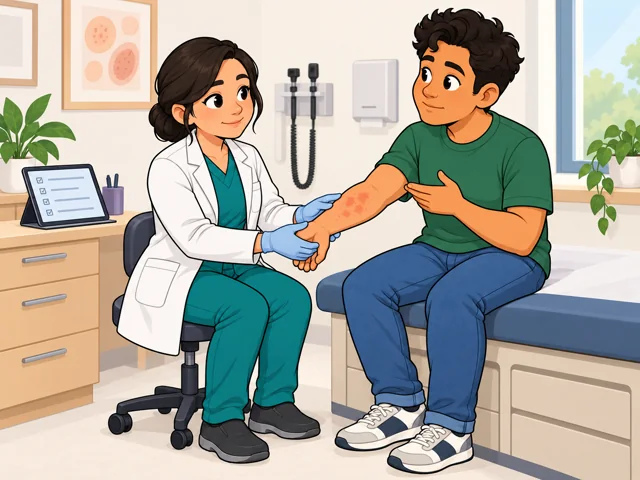
1A dermatologist listens to an adult patient while examining a rash on his forearm, with his health record open nearby.

Track down a rash's cause

Learn when the rash began, review health records, examine the skin and decide if tests come before treatment.
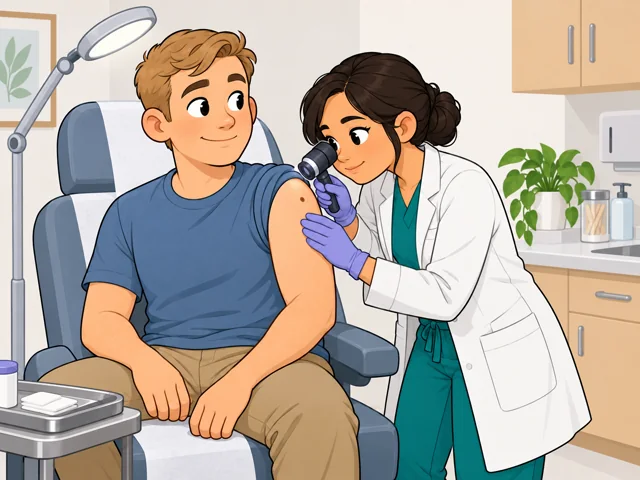
2A dermatologist examines a small spot on an adult patient's upper arm with a handheld dermatoscope.

Study a worrying spot up close

Magnify the spot with a dermatoscope and weigh that view with symptoms and history to decide on biopsy.
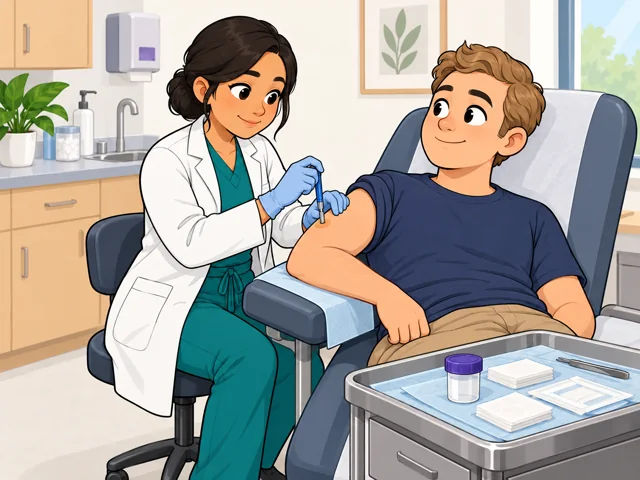
3A gloved dermatologist takes a small skin biopsy from an adult patient's supported upper arm, with a specimen container and dressings nearby.

Take a small biopsy

Cut a tiny skin sample with the biopsy tool, send it to the lab and explain wound care.
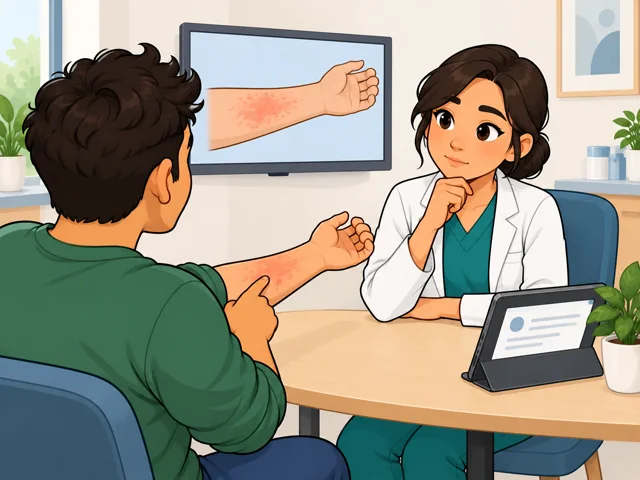
4A dermatologist compares a patient's persistent forearm rash with an earlier photograph while listening to his account of the treatment.

Rethink a treatment that isn't working

Match the skin to old visit photos, ask about changes and, if it's reacting badly, reconsider the prescription.

5A dermatologist explains a biopsy report to an adult patient and discusses the next steps in his care.

Walk through biopsy results

Review the lab report, explain it to the patient and talk over more treatment or a later checkup.

Quick facts

Preparation

Medical school + specialty training

United States

Pay

$328,730/year

United States · May 2025

Outlook

6.8% projected growth

United States · 2025–2035

Quick orientation

Preparation, pay & outlook

Preparation

Medical school + specialty training

Usually college and medical school, followed by an internship year and three years of dermatology residency.

Geography
United States
Period
Not applicable

Pay

$328,730/year

National dermatologist median, equivalent to $158.04 an hour.

Geography
United States
Period
May 2025

Outlook

6.8% projected growth

About 400 openings a year nationwide, including replacement openings.

Geography
United States
Period
2025–2035

Fit, tradeoffs & changing tools

Things to weigh

  • The usual education and training sequence takes about 12 years after high school, before any additional fellowship.
  • You may face time pressure while making decisions where an error can seriously affect a patient.
  • Procedures involve cutting skin and managing bleeding; comfort with close-up visual work matters.

Where AI may help

Secure photo sharing and video visits let you assess some concerns and follow ongoing treatment without bringing the patient into the office each time.

What people still lead

You decide when a picture is not enough and arrange an in-person examination, biopsy, or removal.

What we can’t predict yet

How much diagnostic work artificial intelligence can take on remains uncertain. Image-based tools need dependable accuracy across skin tones and uncommon conditions before clinicians can rely on them more heavily.

Pay in context

Earnings

The national median is a useful reference for dermatologist pay, but it is not a starting salary.

The national pay spread

In May 2025, the median was $328,730 a year, equivalent to $158.04 an hour. The 10th and 90th percentiles were $102,810 and $578,560. Those describe the wage distribution, not beginner and expert salaries. The hourly equivalent uses a standard 2,080-hour year.

Geography
United States
Period
May 2025
Pay basis
Gross wages for dermatologist employees; annual wages and statistical hourly equivalent.

Read the whole offer

Location and experience can affect earnings. These wage figures include production incentives but exclude employer benefits and self-employed income. Compare the guaranteed pay, incentive terms, and benefits when looking at an offer.

Geography
United States
Period
May 2025 wage definitions
Pay basis
Employee wage measure; not total compensation or practice-owner profit.

Openings over the next decade

Dermatologist employment is projected to grow 6.8% from 2025 to 2035, with about 400 openings annually from growth and replacement needs. These are national projections, not a count of jobs available near you.

Geography
United States
Period
2025–2035
Pay basis
Employment projection; not a compensation measure.

Getting started

Earn a medical degree

Typically four years of college and four years of medical school.
What the route involves
Complete college preparation, then a Doctor of Medicine (MD) or Doctor of Osteopathic Medicine (DO) program. Study medical science and work with patients in supervised clinical rotations.
What it can lead to
A medical degree provides the foundation for postgraduate clinical training and the dermatology residency pathway.
What to check
A medical degree does not guarantee a dermatology residency position; you still need to be selected by a training program.

Complete dermatology residency

An approved internship year, followed by three years of dermatology residency.
What the route involves
Train with experienced physicians in clinics and hospitals, learning medical treatment, skin procedures, and interpretation of tissue findings.
What it can lead to
Residency completion and passing the four CORE examination modules satisfy major prerequisites for the American Board of Dermatology (ABD) APPLIED examination. Full eligibility also requires the board’s license and final evaluation conditions.

The usual path has two major steps: medical education, then dermatology training. Both are needed; the cards below are successive steps.

After entry

Career paths

This starts where the entry routes leave off: early work, growing capability, and advancement or specialization. This path also has a credential or licensing boundary; see the requirements and limits.

  1. Get established

    Build a reliable routine for checking biopsy reports, contacting patients, and making sure needed follow-up happens.

  2. Deepen your judgment

    Discuss difficult cases with colleagues and study treatment advances. Use continuing learning to sharpen decisions when a familiar-looking problem behaves unexpectedly.

  3. Develop a specialty

    After general dermatology training and certification, you could pursue a year of fellowship training in pediatric dermatology to focus on children’s skin conditions.

Where you can work

Outpatient dermatology clinic

You see patients who come in for appointments, combining medical consultations with office procedures. Work continues between visits as biopsy reports return and patients need follow-up.

  • Indoors
  • Office

Skin cancer center

The caseload centers on skin cancer, including difficult or high-risk cases. You work within a service that connects skin surgery with oncology care, rather than a broad mix of routine skin concerns.

  • Indoors
  • Safety-sensitive

Try it

See whether the job clicks before you commit to the path.

Read the American Academy of Dermatology’s “Melanoma diagnosis and treatment” page. Make a short map of what the doctor asks, examines, and sends to the laboratory. Notice whether figuring out what evidence is needed interests you.

Stay safe: Use the published explanation for this exercise; do not try to diagnose your own or someone else’s skin.

Explore more careers

Sources

  1. O*NET OnLine. 29-1213.00 — Dermatologists. Accessed 2026-10-09.
  2. U.S. Bureau of Labor Statistics. May 2025 national Occupational Employment and Wage Statistics — pinned SOC 29-1213 values. Accessed 2026-09-29.
  3. U.S. Bureau of Labor Statistics. Employment Projections Table 1.2, 2025–2035 — pinned SOC 29-1213 values. Accessed 2026-09-29.
  4. American Academy of Dermatology. What is a dermatologist?. Accessed 2026-10-09.
  5. American Board of Dermatology. Dermatology Training Pathway. Accessed 2026-10-09.
  6. American Board of Dermatology. What does it mean to be Board Certified?. Accessed 2026-10-09.
  7. American Board of Dermatology. How do I qualify to take the APPLIED Exam?. Accessed 2026-10-09.
  8. American Academy of Dermatology. Skin cancer types: Melanoma diagnosis and treatment. Accessed 2026-10-09.
  9. American Academy of Dermatology. What is a skin biopsy?. Accessed 2026-10-09.
  10. American Academy of Dermatology. How to take pictures of your skin for your dermatologist. Accessed 2026-10-09.
  11. American Academy of Dermatology. What is telemedicine?. Accessed 2026-10-09.
  12. American Academy of Dermatology. Health and wellness apps that dermatologists do and don’t recommend. Accessed 2026-10-09.
  13. University of Michigan Medical School. Dermatology Patient Care. Accessed 2026-10-09.
  14. American Board of Dermatology. Residents and Fellows. Accessed 2026-10-09.
  15. U.S. Bureau of Labor Statistics. Technical Notes for May 2025 OEWS Estimates. Accessed 2026-10-09.
  16. U.S. Bureau of Labor Statistics. Physicians and Surgeons — preparation and qualitative pay context. Accessed 2026-10-09.

Your message goes to the Great Jobs team. How we use your information