
Career profile

Oil and Gas Derrick Operator

Derrick operators keep drill pipe moving and drilling mud circulating on oil and gas rigs.

You work between the tall derrick and the mud pumps. It suits people who enjoy machines, stay focused and coordinate hands-on work with the crew.
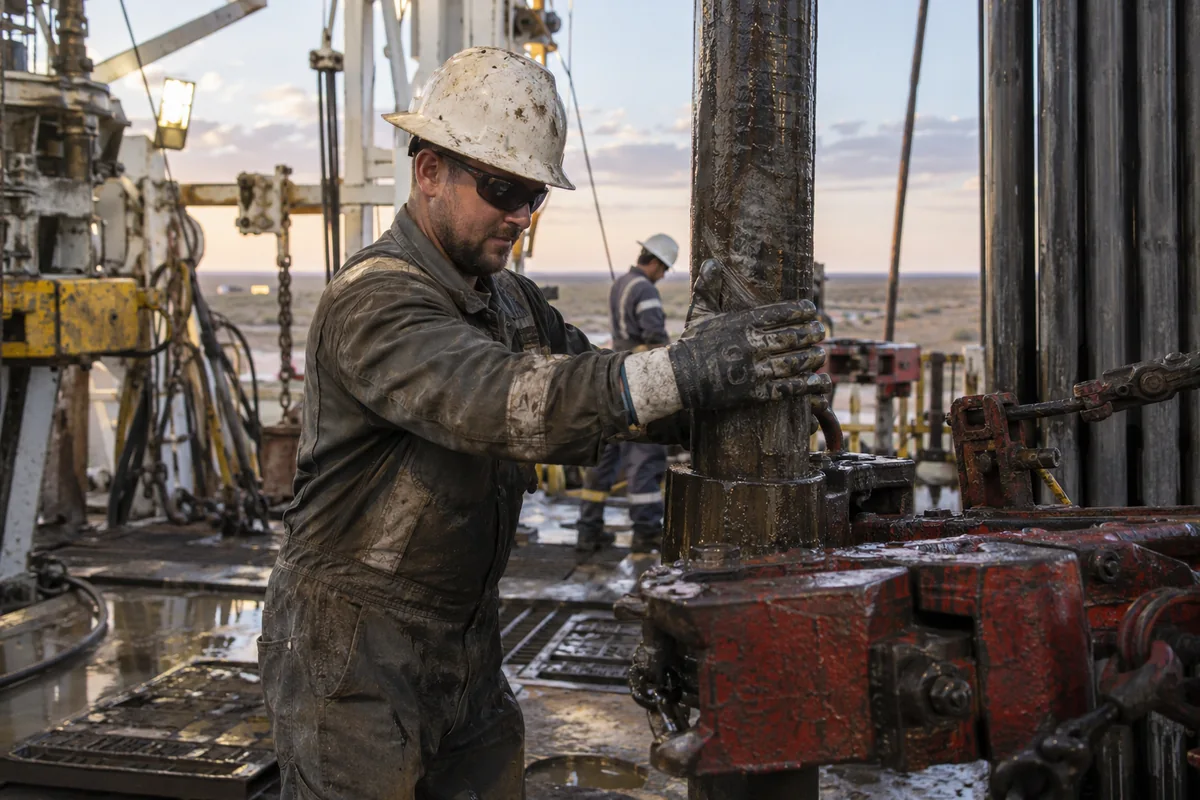
Oil and gas derrick operator handling drill pipe on a rig platform with other equipment visible.

A day in the life

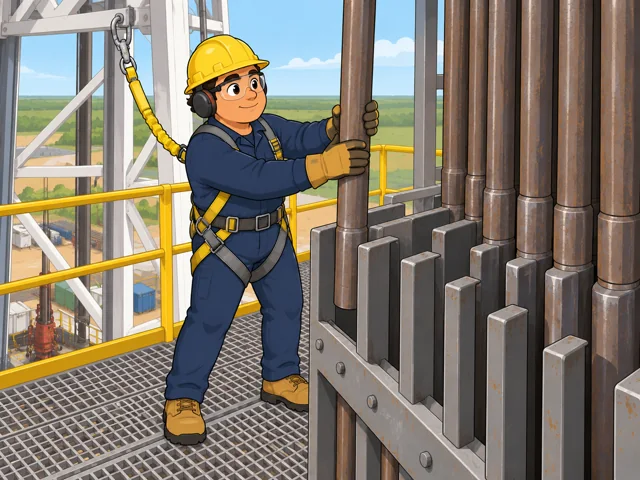
1A derrick operator secured by a safety harness guides an upright drill-pipe stand into an elevated storage rack.

Rack drill pipe up high

On rigs with manual pipe handling, you guide upright drill pipe into its rack high above the floor.
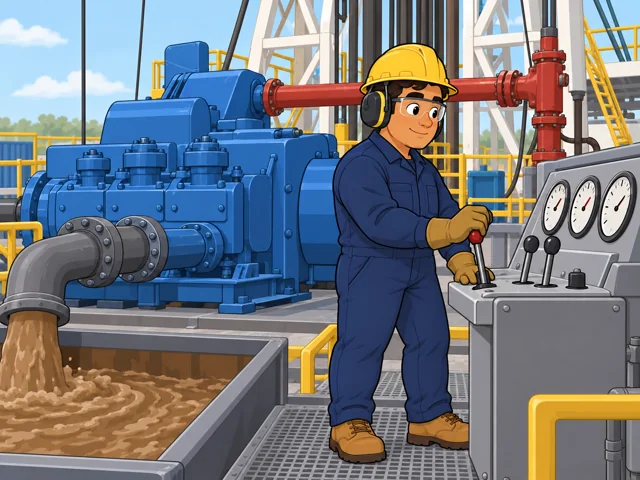
2The operator adjusts a mud-pump control and watches gauges as the pump circulates drilling fluid through connected piping.

Run the mud pumps

Run the pumps that send drilling mud down the pipe, cooling the bit and lifting rock cuttings away.
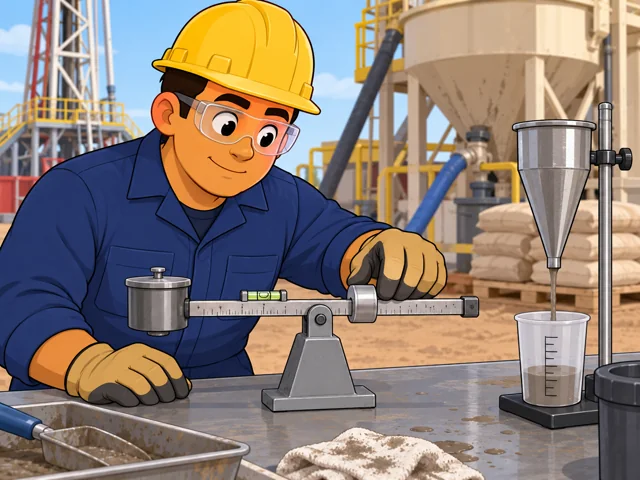
3The operator checks a drilling-fluid sample on a mud balance beside a viscosity funnel and fluid-mixing supplies.

Test and adjust the mud

Measure the mud's weight and thickness first, then blend in clay, water and additives to adjust them.
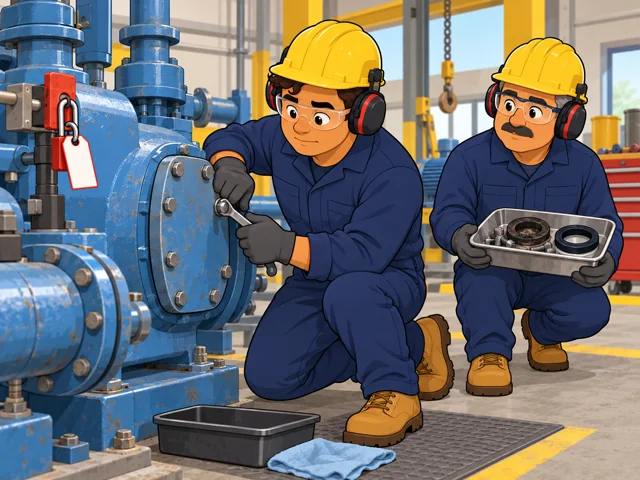
4The operator works on an isolated mud pump while an older coworker holds a tray containing a worn seal and removed parts.

Fix worn or faulty pump parts

You listen for odd pump sounds and check vibration, then fix any worn or faulty equipment.
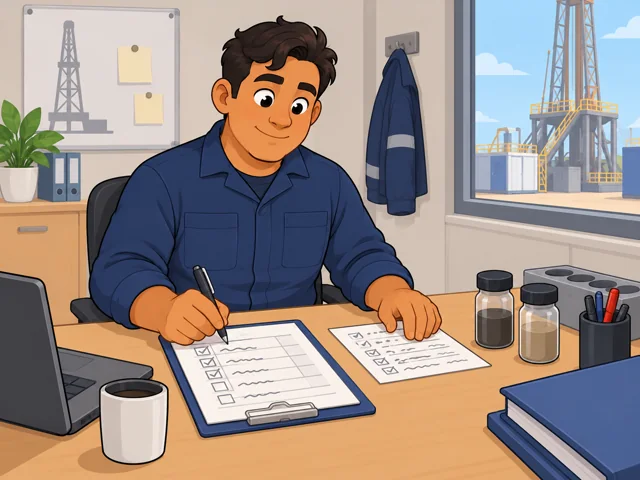
5Seated in the rig cabin, the operator reviews mud-test notes and records the fluid conditions on a report.

Write up the mud report

Fill in the mud report, giving the crew a written record of the fluid's condition from your checks.

Quick facts

Preparation

Learn on the job

United States · 2025–2035

Pay

$58,620/year

United States · May 2025

Outlook

1.6% growth

United States · 2025–2035

Quick orientation

Preparation, pay & outlook

Preparation

Learn on the job

No formal educational credential is typical; employers may require a diploma or related experience.

Geography
United States
Period
2025–2035

Pay

$58,620/year

National median for derrick operators, equivalent to $28.18 an hour.

Geography
United States
Period
May 2025

Outlook

1.6% growth

About 900 openings a year are projected nationally, including replacement openings.

Geography
United States
Period
2025–2035

Fit, tradeoffs & changing tools

Things to weigh

  • Climbing, noise, heavy equipment, and outdoor weather make this physically demanding work.
  • Remote and offshore assignments can mean weeks away from home and long shifts.

Where AI may help

On equipped rigs, powered machines transfer and rack pipe. Automated controls can coordinate pipe movements and track where individual sections are located.

What people still lead

Operators still oversee the surrounding operation and control its pace and execution, even when machines perform the movement sequence.

What we can’t predict yet

How much pipe handling remains manual will depend on the rig and future upgrades. The balance between climbing, operating controls, and watching machinery may keep changing.

Pay in context

Earnings

Use the national figures as a starting point. When comparing offers, ask about the hourly rate, scheduled hours, and how overtime is paid.

The national pay range

The median was $58,620 a year, or $28.18 an hour. The 10th–90th percentile range was $43,380–$81,800 annually. These are wage-distribution points, not starting and senior pay rates.

Geography
United States
Period
May 2025
Pay basis
National employee wages for SOC 47-5011, Derrick Operators, Oil and Gas; annual and hourly estimates.

Openings despite slow growth

Employment is projected to grow 1.6% over 2025–2035, with about 900 openings annually from growth and replacement needs. Openings are not all newly created jobs.

Geography
United States
Period
2025–2035
Pay basis
Employment projection, not compensation.

Getting started

Start on the rig floor

What the route involves
Enter as a floorhand, maintaining the rig floor and helping the derrickhand and other crew members.
What it can lead to
Build familiarity with drilling equipment and crew routines toward taking on derrickhand responsibilities.

Build experience as a roustabout

What the route involves
Clean equipment, organize tools, and help assemble or repair oilfield equipment in a role that typically accepts beginners.
What it can lead to
Gain related experience that can help you qualify for derrick-operator work.

Build rig experience before taking on derrick work. You learn from experienced workers, and the driller directs derrick operations. Check each employer’s education and safety-training requirements.

After entry

Career paths

This starts where the entry routes leave off: early work, growing capability, and advancement or specialization.

  1. Get established

    Learn your rig’s pipe-handling equipment and mud-system checks until the routines become dependable.

  2. Build troubleshooting skill

    Get better at connecting changing fluid readings or pump behavior to the checks and repairs needed.

  3. Work toward driller

    With further training and experience, aim for driller responsibilities: operating drilling controls and supervising the crew.

Where you can work

Land drilling rigs

You may travel long distances to a remote rig and stay in a work camp. Rotating shifts shape both your workday and time away.

  • Outdoors
  • Field work
  • Travel
  • Shift work
  • Physical demands
  • Safety-sensitive

Offshore rigs

Assignments can involve weeks offshore with long daily shifts. Pipe handling may use mechanized racks and transfer systems, depending on the rig.

  • Outdoors
  • Field work
  • Travel
  • Shift work
  • Safety-sensitive

Try it

See whether the job clicks before you commit to the path.

Sketch a drilling-fluid loop: tank, pump, drill pipe, bit, and return to the surface. Mark where you would want a reading or observation to notice a change. Does tracing a moving system hold your interest?

Stay safe: Keep this a paper exercise; it is not a guide to operating rig equipment.

Explore more careers

Sources

  1. O*NET OnLine. Derrick Operators, Oil and Gas — 47-5011.00. Accessed 2026-10-09.
  2. U.S. Bureau of Labor Statistics. Oil and Gas Workers — Occupational Outlook Handbook. Accessed 2026-10-09.
  3. U.S. Bureau of Labor Statistics. May 2025 Occupational Employment and Wage Statistics — national estimates, SOC 47-5011. Accessed 2026-09-29.
  4. U.S. Bureau of Labor Statistics. Employment Projections Table 1.2, 2025–2035 — SOC 47-5011. Accessed 2026-09-29.
  5. Ensign Energy Services. Oilfield Jobs in U.S.. Accessed 2026-10-09.
  6. Patterson-UTI. A Day in the Life — Floorhand. Accessed 2026-10-09.
  7. NOV. Pipe Handling Systems. Accessed 2026-10-09.
  8. NOV. Pipe-Handling Automation. Accessed 2026-10-09.

Your message goes to the Great Jobs team. How we use your information