
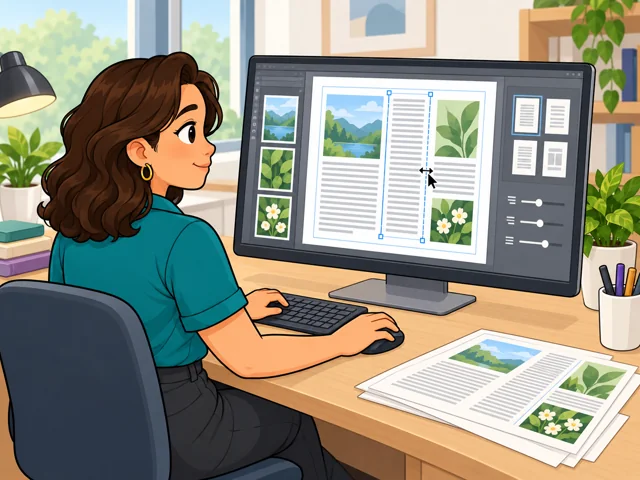
Put the page together
Pull the writing and pictures into layout software, then tune columns, type size and spacing into one design.
Career profile
Desktop publishers lay out writing and pictures on pages so they're ready for publication.
A brochure's writing and pictures arrive separately, and you put them together into one layout. Then you catch small errors before any reader sees them.

Pull the writing and pictures into layout software, then tune columns, type size and spacing into one design.
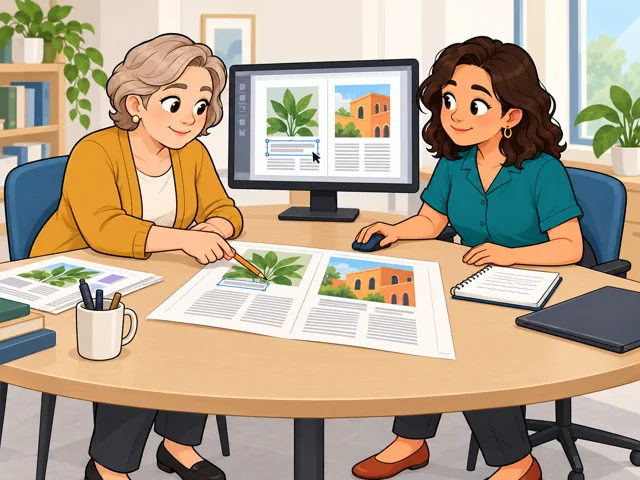
Review the draft proof with an editor, move a misplaced caption, and update the design after comments return.
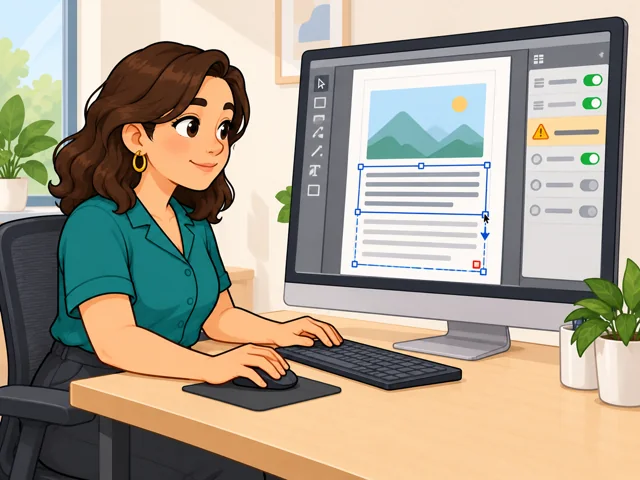
Turn on preflight, Adobe InDesign's automatic production check, then chase its warnings: overflowing text, unavailable fonts, low-resolution pictures.

Convert the finished publication into the file type that printing or web posting calls for.
United States · 2025–2035
United States · May 2025
United States · 2025–2035
Quick orientation
Typical entry education; employers' requirements vary.
National median employee wage, equivalent to $26.58 an hour.
Employment is projected to shrink, with about 300 openings a year on average.
Automatic production checks can flag technical problems while you work. What they catch depends on the checks you enable.
You still judge whether the page reads clearly and whether revisions match the editor's intent.
Some layout work is shifting to editors and designers. How much remains a dedicated desktop-publishing job will vary by workplace.
Pay in context
Use national wages as a reference when comparing offers. Location, employer, and the complexity of the work can affect pay.
The median was $55,290 a year, or $26.58 an hour. Half of workers earned more and half earned less; this is not a starting-pay promise.
The 10th-percentile wage was $35,680 a year and the 90th-percentile wage was $96,170. These mark the lower and upper ends of the middle 80% of wages, not beginner and experienced pay grades.
Employment is projected to decline 14.5% over the decade. About 300 openings are projected each year on average; openings and total employment change measure different things.
Build page-layout skills through college study or relevant experience.
After entry
This starts where the entry routes leave off: early work, growing capability, and advancement or specialization.
After hiring, learn from an experienced publisher how the workplace prepares and checks documents.
Build skill with long reports: keep tables, captions, and cross-references consistent, and improve reusable templates.
Learn to repair document headings and reading order for assistive technology. Experienced specialists may also teach colleagues better production methods.
Technical reports can involve scientists, editors, and federal reviewers. Some roles combine layout with accessibility checks and careful tracking of revisions.
You fit translated text into existing documents and graphics while preserving their design. Translators and project managers help resolve language and client-review questions.
Try it
Using software you already have, make a two-page newsletter with your own text and pictures. Then add a paragraph and repair the layout without dropping any content. Check captions, spacing, and page breaks. Notice whether you enjoy the careful revision as much as the first design.