
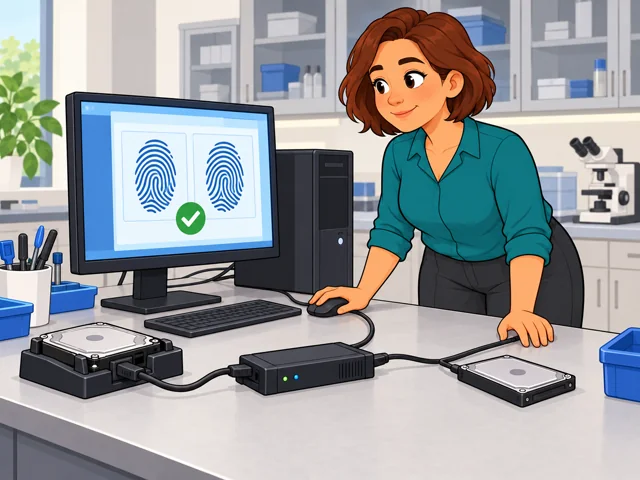
Block writes, then copy a drive
Attach a write blocker so the original drive can't change, then make a working copy and verify it.
Career profile
Digital forensics analysts preserve evidence and piece together what happened on computers, phones or networks.
What traces are left of a missing file, and what can they truly show? Analysts study them and report conclusions without altering the original evidence.
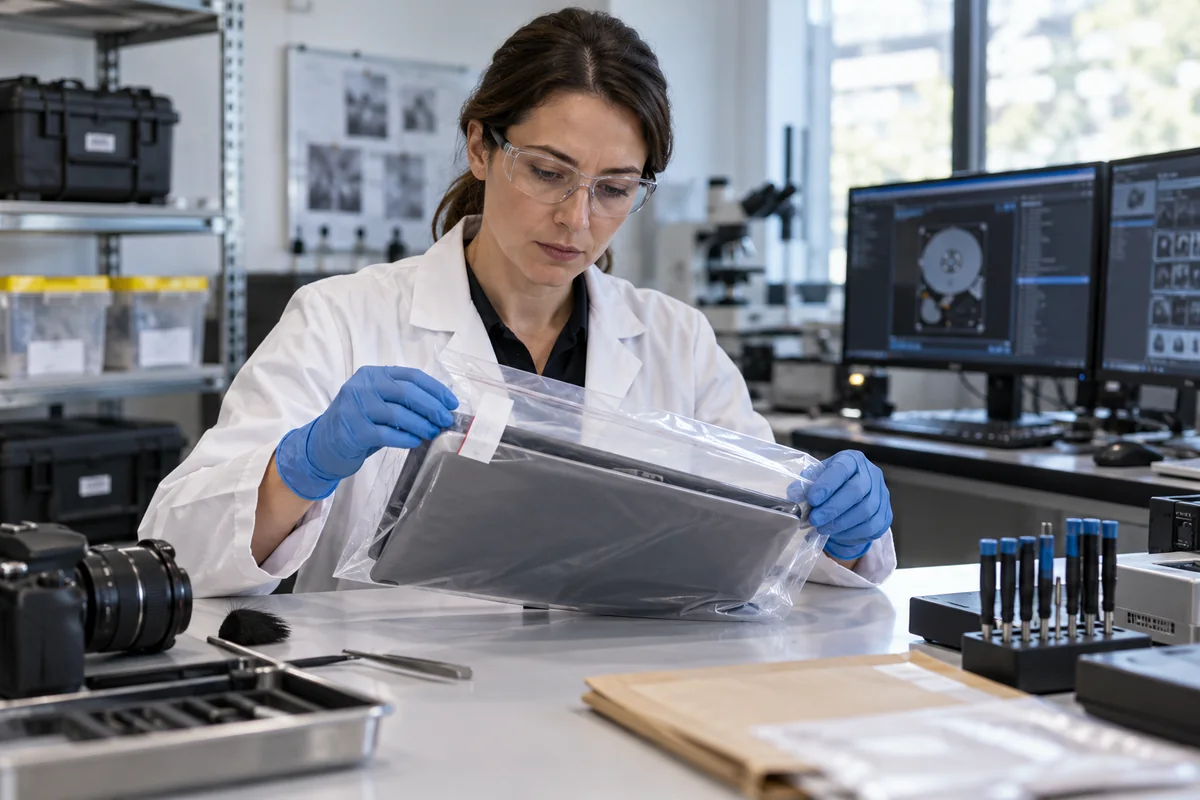
Attach a write blocker so the original drive can't change, then make a working copy and verify it.
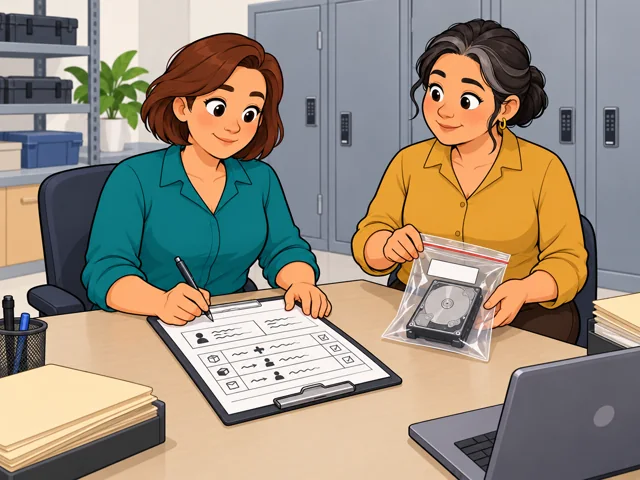
Note the material's source and each hand-off so someone else can follow its path to your computer.
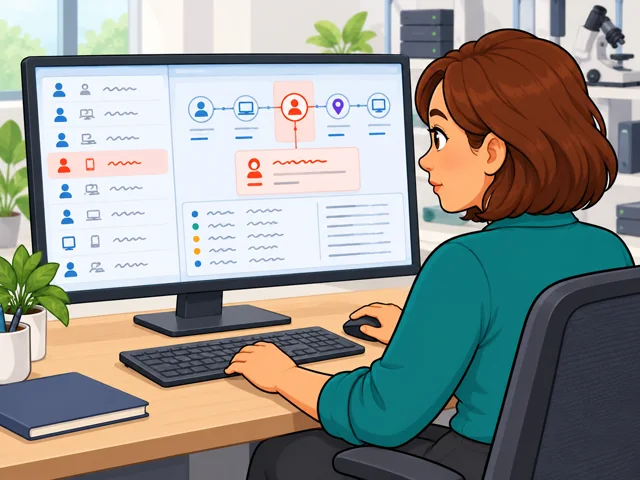
Search logs for the login, then check nearby events, sometimes using a script to sift huge record sets.

Keep observations apart from interpretation, and in court, explain your exam and answer questions on its limits.
United States
Compare the salary range and starting-pay rules for the specific employer.
Explore openings by examiner title, location, and required experience.
Quick orientation
Build substantial computing knowledge; employers differ on acceptable education and experience.
Compare the salary range and starting-pay rules for the specific employer.
Explore openings by examiner title, location, and required experience.
Software can sort large records and attempt to recover deleted files, reducing repetitive processing.
You check what a result means and whether recovered material belongs in the explanation.
As apps change, the traces they leave can change too. How much interpretation tools can reliably automate remains unsettled.
Pay in context
Pay ranges depend on the employer and role requirements. These public-sector figures give concrete reference points.
Pennsylvania’s June 2026 Digital Forensic Examiner 1 recruitment listed $67,736–$102,905 annually. New Commonwealth employees started at $67,736.
Hillsboro, Oregon, lists $85,356–$108,948 annually. Its qualification standard includes a related bachelor’s degree plus two years using complex software in criminal justice, or equivalent preparation.
These Pennsylvania entry routes lead to supervised examiner work. Both require residency eligibility, a driver’s license, screening, Certified Forensic Computer Examiner certification within 18 months, and Commonwealth Law Enforcement Assistance Network certification during probation. Other employers set different requirements.
After entry
This starts where the entry routes leave off: early work, growing capability, and advancement or specialization.
Learn examination tools alongside senior examiners and make evidence records another person can follow.
Examine harder file and log questions. Learn to recognize when a tool’s output needs checking against the underlying data.
Develop expertise in mobile devices or cloud investigations, where changing platforms demand specialized methods.
Work with investigators and prosecutors preparing criminal cases. Lab examinations may alternate with collecting devices during searches and explaining results in court.
Support clients handling investigations or litigation. Evidence may span phones, computers, and cloud accounts; cloud-provider controls can shape what you can collect.
Try it
Create a few harmless text files, noting when you create, edit, and rename them. Later, use their visible file details to reconstruct the sequence. Write a short report separating what you observed from what you inferred. Notice whether you enjoy checking the gaps.
Stay safe: Use only files you create for this exercise, and keep a copy of your notes for comparison.