

Weigh a pitch for your audience
Read a pitch or proposal with your audience in mind, then recommend accepting, requesting revisions or declining.
Career profile
Editors pick what an outlet publishes and help authors shape pieces an audience will want.
Careful reading meets judgment about what earns space. You might catch a confusing draft that skips context, or see your audience needs a certain piece.

Read a pitch or proposal with your audience in mind, then recommend accepting, requesting revisions or declining.
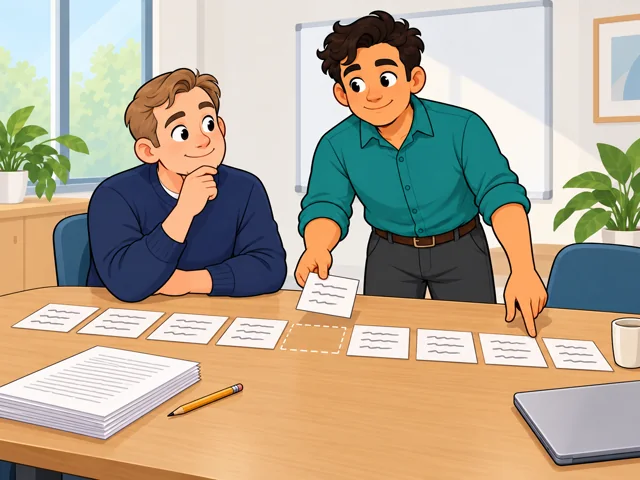
Suggest moving late-arriving key context nearer the start, then talk the change over with the writer.
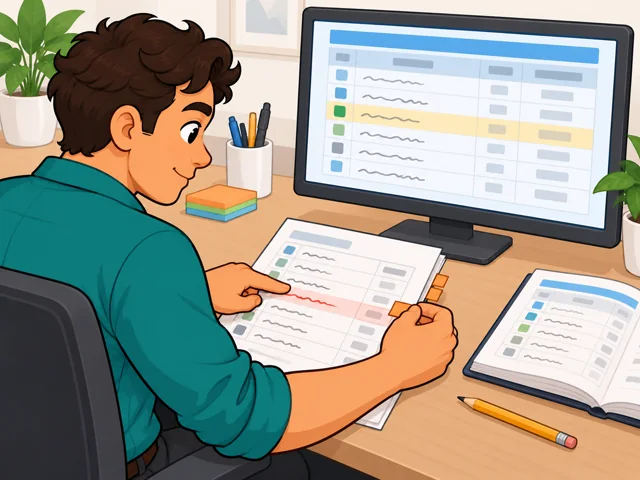
Hold each date and figure against reference sources and flag mismatches so they're fixed before the piece runs.

Rewrite muddled phrasing and fix misspellings in Microsoft Word, checking the outlet's style guide so usage stays uniform.

In certain roles, you and the layout team fix page-proof problems before you sign off on the page.
United States
United States · May 2025
United States · 2025–2035
Quick orientation
Writing and proofreading experience also matter.
National median; equivalent to $37.46 an hour.
About 7,900 openings yearly, all from replacing workers who leave the occupation or workforce.
In some newsrooms, artificial intelligence (AI) tools suggest headlines and grammar changes. That gives editors options to review.
Editors still judge whether wording is accurate and fair. A fluent suggestion needs checking before it reaches readers.
How much revision shifts to AI remains unsettled. The balance between making edits yourself and checking machine suggestions may keep changing.
Pay in context
These national employee wages exclude self-employed editors.
The median was $77,920 a year, or $37.46 an hour. The lowest-paid 10% earned $41,250 or less; the highest-paid 10% earned $153,700 or more. Those thresholds describe the wage spread, not beginner and senior salaries.
Annual medians were $62,600 at newspaper publishers and $77,400 in professional, scientific, and technical services. These are industry comparisons, not offers.
Build evidence that you can improve writing.
After entry
This starts where the entry routes leave off: early work, growing capability, and advancement or specialization.
Learn the publication's style and deliver clean corrections on deadline.
In book editing, develop from fixing individual passages to helping an author reshape a manuscript's structure and content.
An executive editor oversees editors and makes final publication decisions.
Coordinate coverage with reporters. Digital deadlines can extend working hours.
Work with authors on manuscripts and with design, marketing, and production colleagues on the finished book. Separate departments handle different parts of publication.
Finding the next client becomes part of your workload, alongside adapting to different working arrangements.
Try it
With a friend's permission, edit a short article they wrote. Choose its intended audience, suggest one structural change, and flag one statement to verify. Then explain whether it is ready to publish. Notice whether you enjoy both improving the draft and explaining your judgment.