

Career profile

Education College Instructor

Education instructors show college students how people learn and the methods for teaching others.

Future teachers fill your classes, and you help them link classroom choices to what pupils understand. Some jobs add research on improving teacher training.
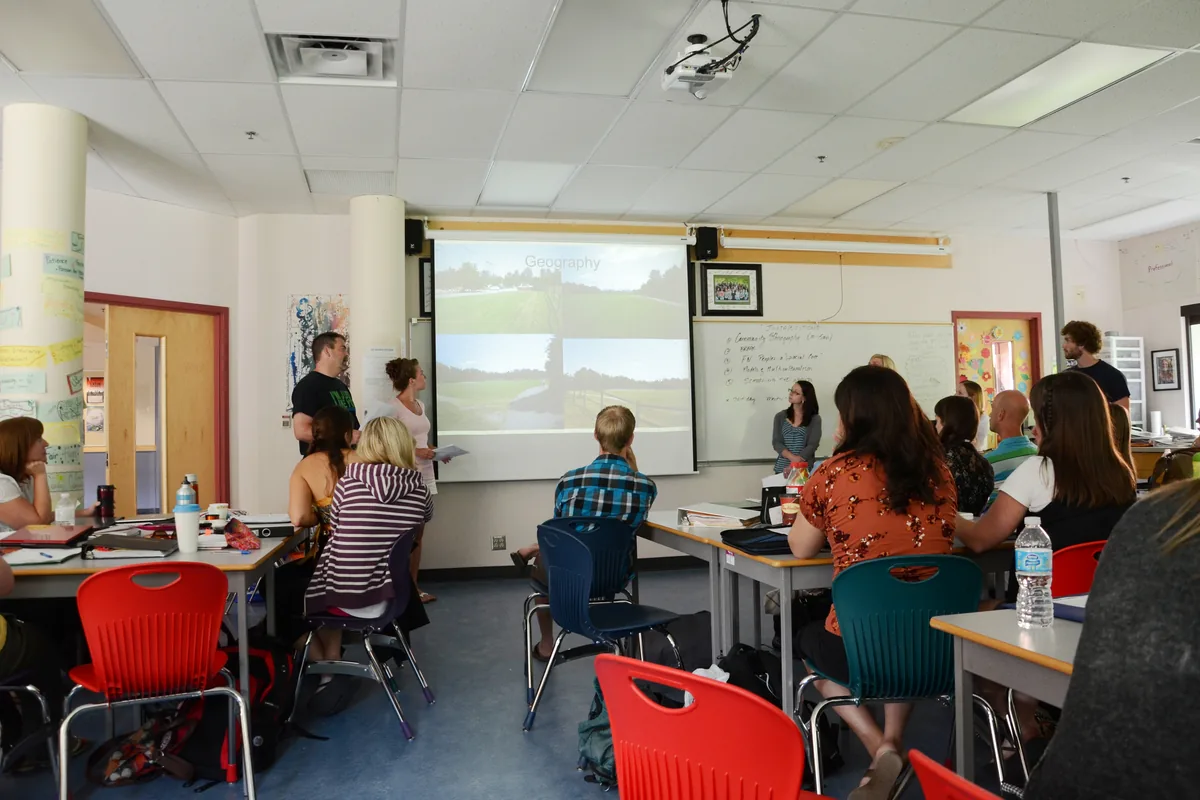
Teacher education instructor leads adult learners in a classroom.
University of the Fraser Valley / Wikimedia Commons, CC BY 2.0

A day in the life

1An instructor listens as two adult college students compare picture-card reading activities and explain their learning purposes.

Weigh two reading tasks

Have students set two reading tasks side by side and say what a child would gain from each.
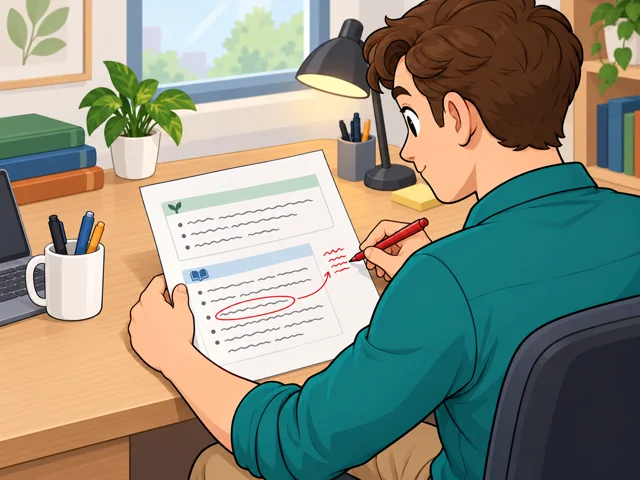
2An instructor circles part of a student's lesson plan and adds margin feedback connecting the activity to its learning goal.

Mark up a lesson plan

Read through a student's lesson plan, mark where a task misses its goal, and write revision comments.

3An instructor observes a student teacher guiding a young pupil through a picture activity and discusses the pupil's response with her.

Sit in on a trainee's lesson

In fieldwork jobs, first sit in on a trainee's lesson, then afterward discuss how the pupils reacted.

4An instructor and two colleagues compare research charts and annotate a manuscript about teacher preparation.

Study teacher education programs

If you do research, study teacher education programs, review findings with colleagues, then write them up for publication.

5An instructor helps an adult college student compare course options alongside her academic and career planning notes.

Help a student pick courses

During office hours, talk with a student about how education courses fit their school and career goals.

Quick facts

Preparation

Usually a doctorate

United States · 2025 entry classification

Pay

$75,350 a year

United States · 2025

Outlook

2.5% projected growth

United States · 2025–2035

Quick orientation

Preparation, pay & outlook

Preparation

Usually a doctorate

A doctorate is the typical entry education; some college teaching positions accept a master's in education.

Geography
United States
Period
2025 entry classification

Pay

$75,350 a year

2025 national median for education teachers, postsecondary.

Geography
United States
Period
2025

Outlook

2.5% projected growth

About 5,300 openings a year are projected for education teachers, postsecondary, during 2025–2035.

Geography
United States
Period
2025–2035

Fit, tradeoffs & changing tools

Things to weigh

  • Class meetings are only part of the workload; preparation and grading take additional time.
  • At research universities, publishing papers and seeking funding compete for time with teaching.

Where AI may help

Experimental classroom simulators use artificial intelligence (AI) to create virtual pupils and aim to give future teachers feedback on practice lessons.

What people still lead

You help a beginning teacher understand why a lesson produced a particular response and choose something manageable to improve.

What we can’t predict yet

How much coaching automated feedback can take over remains unsettled, especially when realistic classroom responses and nuanced advice matter.

Pay in context

Earnings

Check whether an offer pays an annual salary or pays separately for each course.

National pay and spread

The 2025 median was $75,350 for education teachers, postsecondary. That equals about $36.23 an hour if divided by 2,080 hours—a comparison, not an actual hourly rate or faculty schedule. The lowest-paid 10% earned $39,530 or less; the highest-paid 10% earned $126,860 or more. These are wage percentiles, not career stages.

Geography
United States
Period
2025
Pay basis
Annual wages; calculated hourly equivalent uses 2,080 hours

Course pay works differently

At Eastern Iowa Community Colleges, the education adjunct base rate is $800 per credit hour: $2,400 for a three-credit course. A credit hour measures course credit, not all the hours you spend preparing, teaching, and grading.

Geography
Iowa
Period
2026 posting
Pay basis
Part-time course compensation; base rate excludes special retiree rate

Openings exceed new positions

National employment is projected to grow 2.5% during 2025–2035. The roughly 5,300 annual openings include replacing people who leave the occupation, so they are not all newly created jobs.

Geography
United States
Period
2025–2035
Pay basis
Employment projection, not compensation

Getting started

Build toward university faculty work

Doctoral study usually takes several years after a bachelor's or master's degree.
What the route involves
Complete a relevant doctorate, conduct original research, and build teaching experience.
What it can lead to
Preparation to apply for university roles combining education courses with research.
What to check
Teacher-preparation positions can also require school teaching and college teaching experience; the doctorate alone may not meet every requirement.

Target teaching roles accepting a master's

What the route involves
Earn a master's in education and develop teaching experience.
What it can lead to
Eligibility for some education adjunct positions, where previous teaching experience may be preferred.
What to check
Check each opening's degree and subject requirements; this route does not qualify you for every faculty position.

Plan for graduate study and experience teaching. The mix depends on the faculty position you want.

After entry

Career paths

This starts where the entry routes leave off: early work, growing capability, and advancement or specialization.

  1. Get established

    Build your course calendar and assignments. Use student work to spot explanations that need revision.

  2. Deepen your specialty

    Develop expertise in an area such as elementary teaching. In research appointments, collaborate on studies of teacher preparation.

  3. Advance in faculty rank

    Where the rank system applies, work toward associate professor and professor. Tenure decisions weigh teaching, research, and contributions to the institution.

Where you can work

Research university

You teach undergraduate and graduate students while working with researchers, mentoring graduate students, and pursuing grants. Publication is part of the job.

  • Indoors
  • Office

Community college

Courses and student support take more of your attention. Some education teaching assignments include evening classes or work at multiple campuses.

  • Indoors
  • Office

Try it

See whether the job clicks before you commit to the path.

Invent a short lesson plan for teaching fractions, including one question to check understanding. Then act as the instructor of the future teacher: write two comments explaining where the plan could confuse a learner and how to revise it. Notice whether you enjoy analyzing someone else's teaching choices.

Explore more careers

Sources

  1. O*NET OnLine. Education Teachers, Postsecondary — 25-1081.00. Accessed 2026-10-04.
  2. O*NET OnLine / U.S. Bureau of Labor Statistics. National Wages: Education Teachers, Postsecondary. Accessed 2026-10-04.
  3. U.S. Bureau of Labor Statistics. Occupational projections and worker characteristics, 2025–2035. Accessed 2026-10-04.
  4. U.S. Bureau of Labor Statistics. Occupational Outlook Handbook: Postsecondary Teachers. Accessed 2026-10-04.
  5. North Carolina State University. Assistant Professor in Elementary Teacher Education. Accessed 2026-10-04.
  6. Eastern Iowa Community Colleges. Adjunct Faculty, Education. Accessed 2026-10-04.
  7. University of Virginia School of Education and Human Development. Can AI Unlock the Power of Unlimited, Meaningful ‘Do Overs’ for Beginning Teachers?. Accessed 2026-10-04.

Your message goes to the Great Jobs team. How we use your information