
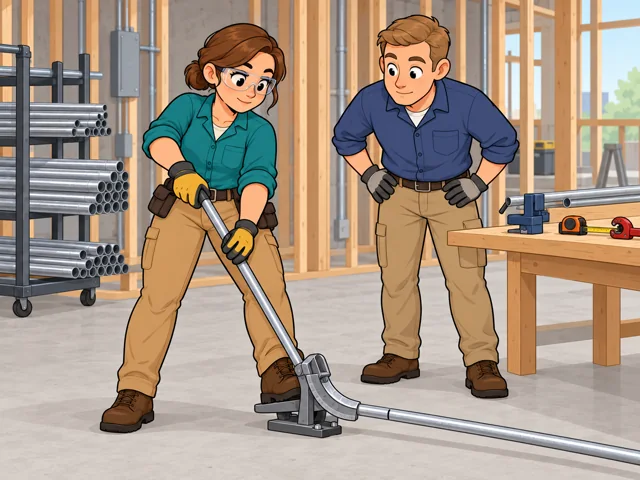
Bend conduit to the electrician's sizes
Measure first, then cut and bend wire or conduit to the sizes the electrician gives you.
Career profile
Electrician helpers ready supplies, form conduit, run wire, inspect gear, and keep work areas orderly.
On an electrical crew, plans and measurements turn into real paths for wire. Could you handle the pace, precision, and physical demands?

Measure first, then cut and bend wire or conduit to the sizes the electrician gives you.
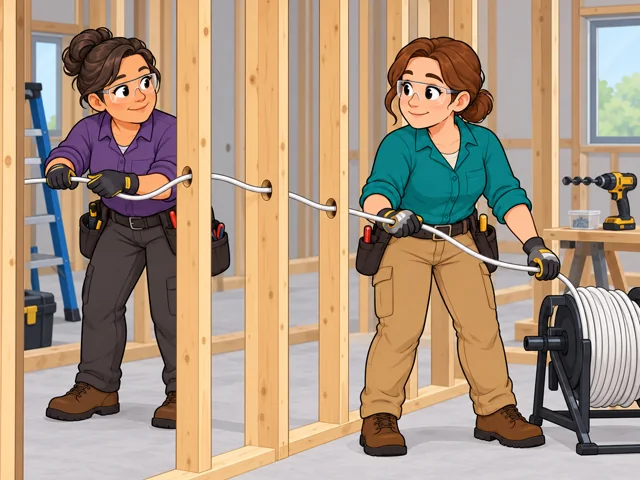
You drill the holes first, then pull or push wire through walls, ducts, or conduit following directions.
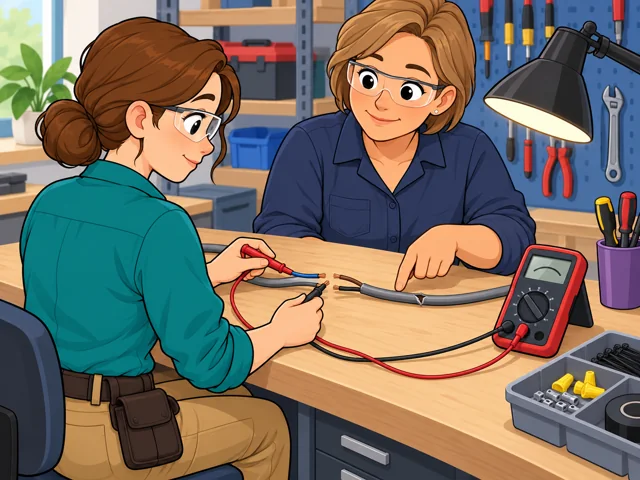
Use a test meter to find shorts, or spot loose connections and damaged insulation within your duties.
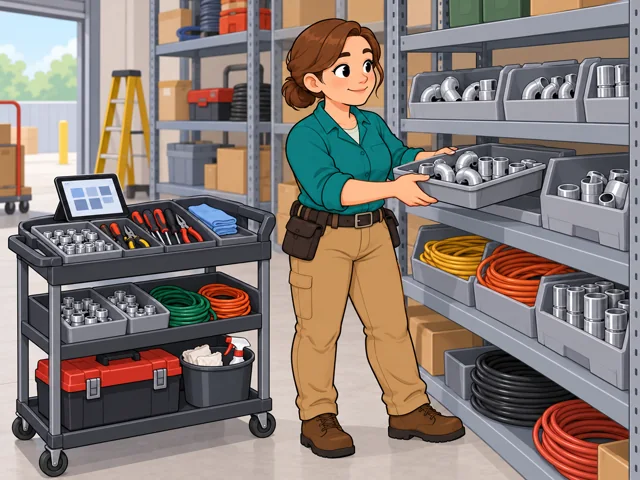
Move, clean, maintain, and organize tools and materials, and some crews track supplies with spreadsheets or recordkeeping software.
United States
United States · May 2025
United States · 2025–2035
Quick orientation
Formal education is not typically required, but an employer may prefer or require a high school diploma or equivalent. New helpers usually learn under experienced workers.
The May 2025 national median for Helpers—Electricians was $20.51 an hour, or $42,670 annually.
BLS projects employment from 65,000 jobs in 2025 to 65,400 in 2035. That is a forecast, not a hiring guarantee.
Digital drawings, recordkeeping systems, and spreadsheets can help a crew organize layouts, materials, and job records.
People still position tools, move materials, drill, pull wire, observe site conditions, and coordinate face to face.
The tools a helper actually uses depend on the employer and project.
Pay in context
Use the national median as a reference point, not as a starting wage or promised offer.
Helpers—Electricians had a median wage of $20.51 per hour and $42,670 per year. Half earned more and half earned less.
In May 2025, the 10th-percentile annual wage was $33,020 and the 90th-percentile wage was $58,340. These are wage percentiles, not starting and senior salaries.
A helper job gives supervised support experience. An electrician Registered Apprenticeship is a separate, structured path toward journey-worker status.
After entry
This starts where the entry routes leave off: early work, growing capability, and advancement or specialization.
Learn the crew's safety routines, keep materials organized, and complete assigned support work reliably under guidance.
Become consistent at measuring and preparing conduit, pulling wire, checking work, and clearly reporting what you observe.
If becoming an electrician is your goal, apply to an electrician apprenticeship and ask the sponsor how it treats prior helper experience.
Work may happen in unfinished interiors or around existing structures, where the crew drills openings, installs pathways, and routes wire through tight spaces.
Projects may involve trenches, underground conduit, cables, poles, or equipment outdoors, with weather, heights, and travel between jobsites.
Try it
On a simple room sketch, mark a route from a switch to a light. Use string to estimate the path, note each turn or opening, and list the tools and materials you think the crew would need. Then ask an electrician or construction teacher what you missed. Notice whether you enjoy the measuring, sequencing, and checking.
Stay safe: Keep this as a paper-and-string exercise. Do not open panels, outlets, switches, or energized equipment.