
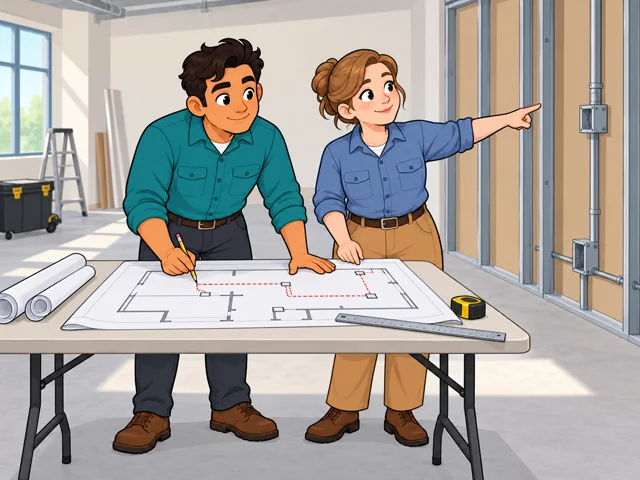
Plan the wire runs
Read blueprints or sketches, mark equipment locations, and route wires so they meet the job and local code.
Career profile
Electricians wire power, lights, controls and communications from drawings and code, then test and troubleshoot.
This work can suit people who like hands-on problem solving, precise drawings, results they can see, and decisions backed by careful checking.

Read blueprints or sketches, mark equipment locations, and route wires so they meet the job and local code.
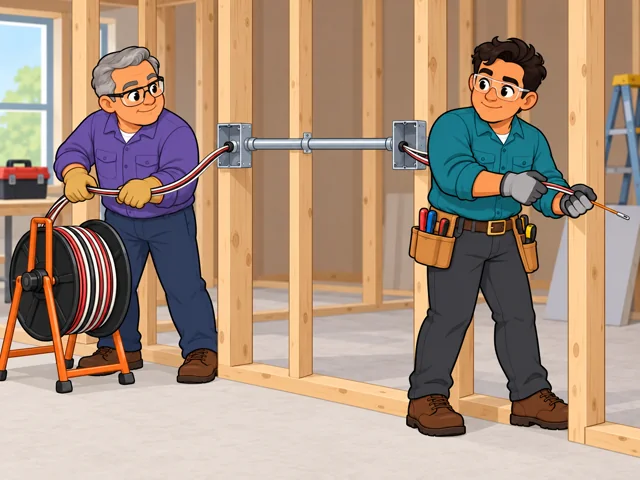
You set conduit or tubing, mount boxes, and pull insulated wire through hidden spaces such as inside walls.
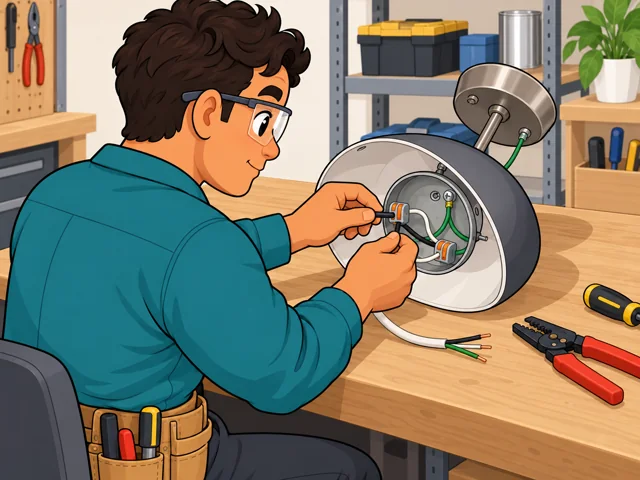
Connect wires to breakers, motors, fixtures, transformers and similar parts using hand and power tools.
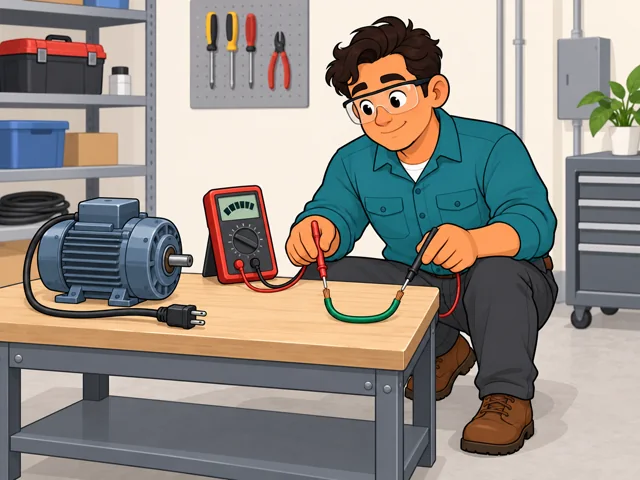
When something fails, test circuits with meters and other instruments, trace the fault, and decide what needs fixing.
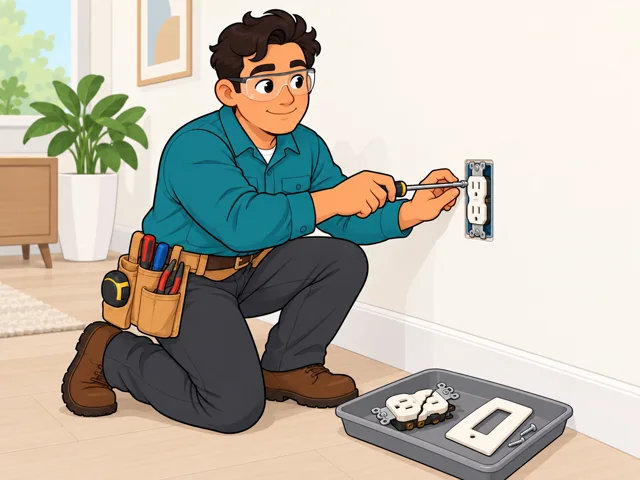
Look for hazards, defects or code violations, then repair or replace fixtures, equipment or wiring.
United States · BLS page updated August 27, 2026
United States · May 2025
United States · 2025–2035
Quick orientation
BLS lists a high school diploma or equivalent as typical entry education. Most electricians then learn through a 4- or 5-year apprenticeship; local requirements vary.
National median annual wage for wage-and-salary electricians—not a starting rate or guaranteed progression.
BLS projects 2025–35 employment growth of 9%, with about 72,700 openings per year on average. Local hiring may differ.
Software can help with drawings, electrical calculations, estimates, project tracking, and automated control systems.
People still interpret site conditions, install physical systems, test circuits, diagnose faults, and judge whether work meets code and is safe.
The mix of digital planning, estimating, and control tools varies by employer, project, and specialty.
Pay in context
For entry planning, compare a program's starting wage and raise schedule with the occupation-wide figures below.
The median was $63,190 a year: half of wage-and-salary electricians earned more and half earned less. The estimate excludes self-employed workers and does not represent apprentice starting pay. The median hourly wage was $30.38.
In May 2025, the 10th-percentile annual wage was $42,640 and the 90th-percentile wage was $108,510. These are wage percentiles, not starting and senior salaries.
Registered Apprenticeship is paid employment. Electrician apprentices earn less than fully trained electricians and receive wage increases as their skills grow.
The common routes combine technical learning with supervised work. Licensing, supervision, and program rules vary by state, locality, and sponsor.
After entry
This starts where the entry routes leave off: early work, growing capability, and advancement or specialization.
As an apprentice, build safe work habits under an experienced mentor while completing job-related technical instruction.
Take on broader installation, testing, and troubleshooting work as your skills grow; apprentice pay generally rises with that progress.
After apprenticeship, perform journey-worker duties subject to local licensing requirements.
Install systems while walls and routes are still accessible. The setting may shift between indoor and outdoor work, heights, weather, and multiple job sites.
Trace and repair problems in finished buildings, where wiring may be harder to reach. Expect travel between sites and occasional cramped spaces.
Maintain motors, controls, lighting, and other equipment around operating systems; factory settings may include noisy machinery.
Try it
Sketch a one-room floor plan, mark its lights, switches, and outlets, then trace possible routes between them. Note where the plan becomes unclear: this can show whether you enjoy translating a diagram into a precise physical layout and asking the next practical question.
Stay safe: Keep this to paper or a de-energized classroom demonstration supervised by a qualified instructor. Do not open panels or outlets or handle building wiring.