
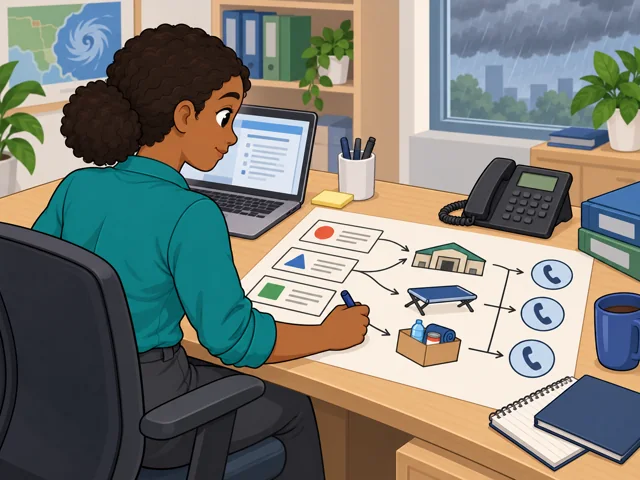
Draft the storm plan
Write the storm plan, naming which agencies handle shelter and how they will reach each other.
Career profile
Emergency management directors turn advance disaster plans into one response many groups carry out.
Before any crisis, you figure out who can help. Once one hits, you pull agencies together and keep their work linked.

Write the storm plan, naming which agencies handle shelter and how they will reach each other.
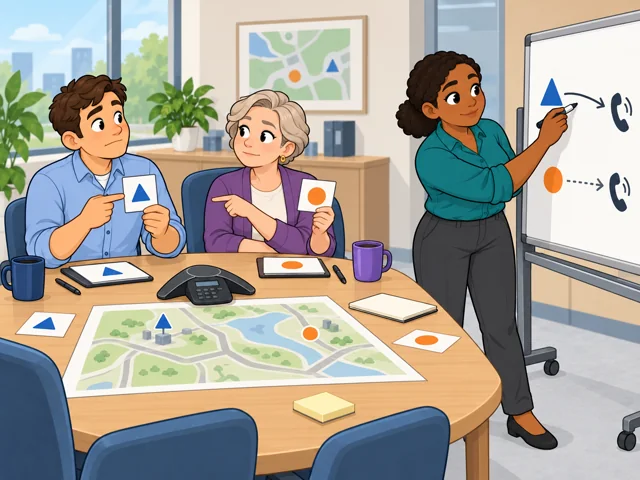
Lead a crisis drill and fix the procedure when two groups each expect the other to call.

From the emergency operations center, weigh each incoming request against available support and arrange help across agencies.

Review the spending records and write a report on how the emergency management grant money was used.
United States
United States · May 2025
United States · 2025–2035
Quick orientation
A bachelor’s degree and substantial related work experience are typical.
National median for emergency management directors; $44.87 hourly equivalent.
About 1,100 openings annually, including replacement openings.
Digital maps combine locations and incident information so you can see where help may be needed. These tools are called geographic information systems.
You still bring agencies together, resolve competing requests, and explain priorities to the people providing support.
How much coordination software can take over depends partly on whether incoming information stays accurate and current as conditions change.
Pay in context
These national figures describe emergency management directors across employers and experience levels.
The median was $93,330 a year, equivalent to $44.87 an hour. The 10th-percentile wage was $54,210 and the 90th-percentile wage was $166,430. These are points in the wage distribution, not starting and promotion salaries.
Hospital median pay was $100,530; local government, excluding education and hospitals, was $84,630.
Employment is projected to grow 3.9% from 2025 to 2035, with about 1,100 openings per year on average. Openings include replacing people who leave the occupation, not just new positions.
Director is usually a later-career role.
After entry
This starts where the entry routes leave off: early work, growing capability, and advancement or specialization.
Learn your organization’s resource network: who receives requests, who can supply help, and how information reaches decision-makers.
Learn to use mapping products in planning and exercises, including which questions a map can answer and which need follow-up with people.
Work toward senior responsibility for policies and priorities that span multiple communities. Executive-level development emphasizes strategic decisions and collaboration across organizations.
You connect public agencies and community organizations, arranging shared resources. Office planning can give way to emergency operations center coordination.
Planning reaches into teaching, research, and business operations. You work across campus units and community partners to protect people and keep essential university functions going.
Try it
On paper, imagine a storm closes a campus building. Make a table of needs, the people you would contact, and the information each needs. Then make one resource unavailable and revise your plan. Notice whether you enjoy finding dependencies and negotiating alternatives.
Stay safe: Keep this fictional; do not contact emergency services or send practice alerts.