
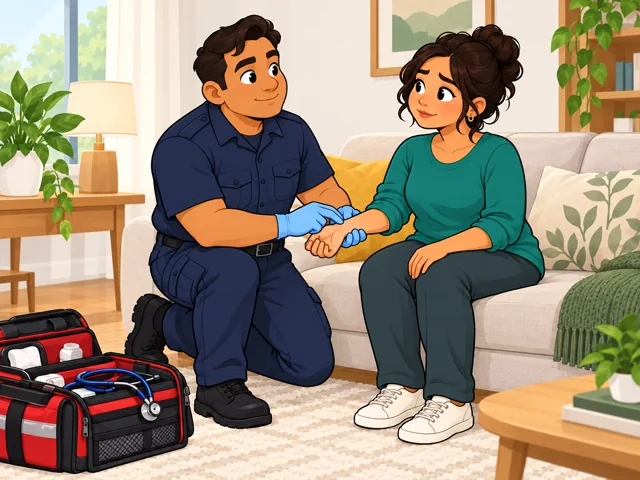
Find out what went wrong
Ask how the illness or injury began and check them over, since breathing trouble reshuffles what comes first.
Career profile
Emergency medical technicians (EMT) give basic urgent care and move patients safely by ambulance.
A patient tells you where it hurts, and you decide which problem comes first. Then you calm their fear on the ride to the hospital.
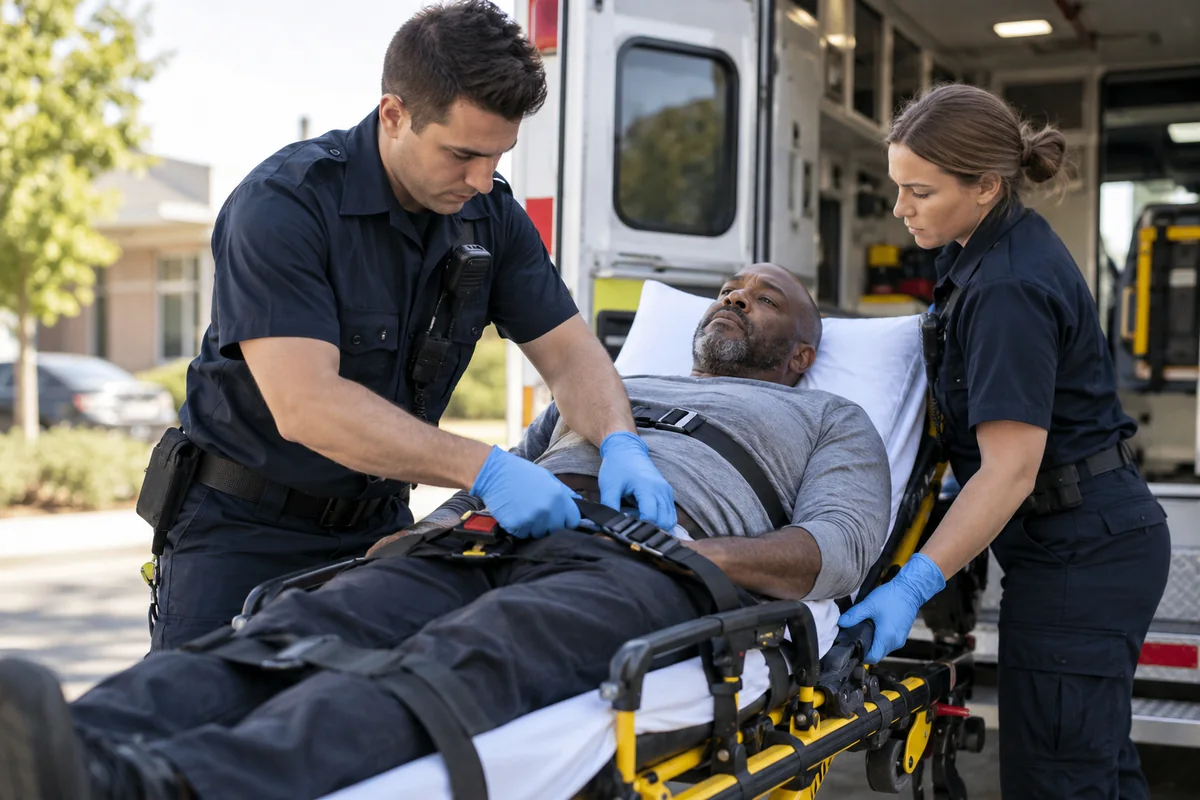
Ask how the illness or injury began and check them over, since breathing trouble reshuffles what comes first.
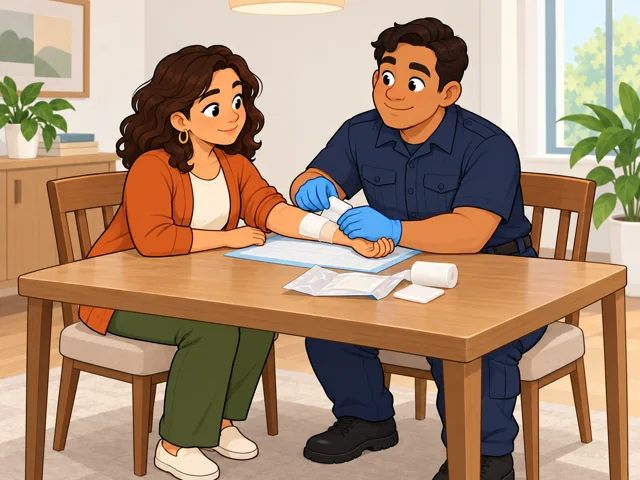
You talk through each first-aid step as you do it, and easing their fear counts as real work.
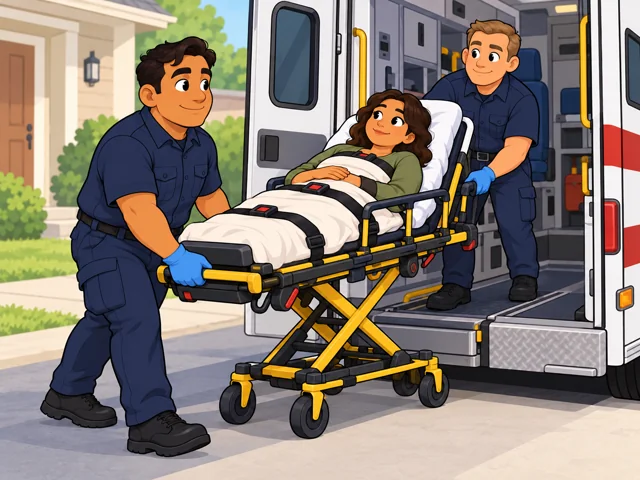
Move them onto the stretcher, then into the ambulance, held firmly so the ride stays safe and steady.
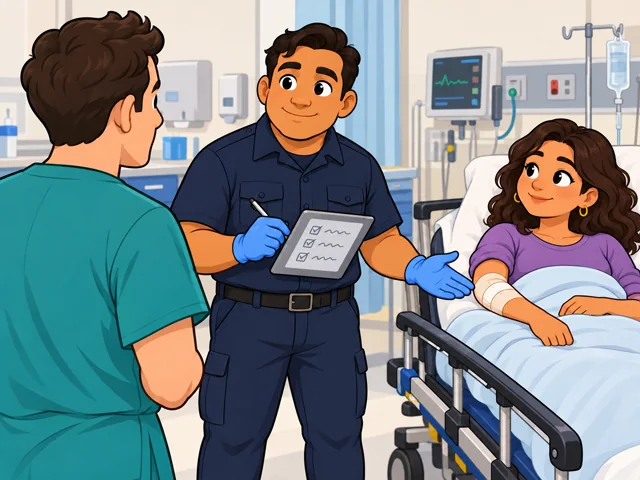
Tell the clinician what you saw, the treatment given and how they reacted, then write it up.
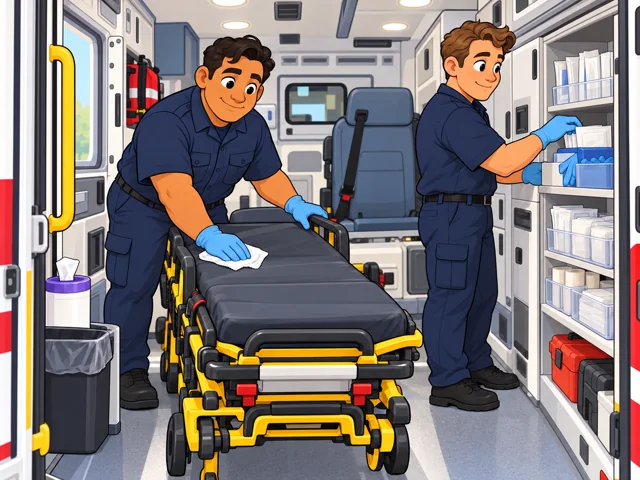
Clean the gear and restock used items like gloves and dressings before another patient needs them.
United States
United States · May 2025
United States · 2025–2035
Quick orientation
Complete an EMT program, then meet your state's requirements to practice.
National median for EMTs, equivalent to $21.38 an hour.
About 13,800 EMT openings per year, on average, across the country.
Some tools can suggest report text or fill in fields using artificial intelligence (AI). Adoption in emergency medical services is still early.
You assess and care for the patient. When software helps write a report, you must check that it accurately describes what happened.
How much reporting or treatment guidance AI will handle remains unsettled. Accuracy, patient privacy, and integration with ambulance software will shape its role.
Pay in context
The national median is $44,470 a year, or $21.38 an hour. Use it as a comparison point when checking an employer's hourly rate and schedule.
The lowest-paid 10% earned under $34,130; the highest-paid 10% earned over $62,500. These are wage percentiles, not starting and senior salaries.
Annual EMT medians were $42,260 in ambulance services, $47,160 in private general medical and surgical hospitals, and $67,560 in outpatient care centers.
Projected employment grows 5.8% from 2025 to 2035. The 13,800 average annual openings include replacement needs as well as growth; they are not all newly created jobs.
Choose training approved for the state where you intend to work. Finishing class, passing assessments, and gaining permission to practice are separate steps.
After entry
This starts where the entry routes leave off: early work, growing capability, and advancement or specialization. This path also has a credential or licensing boundary; see the requirements and limits.
Learn your ambulance's equipment layout and build dependable habits for partner communication and patient handoffs.
Use continuing education to practice rare emergencies and keep up with local care protocols. Track renewal requirements as you go.
If you want broader clinical responsibility, pursue a qualifying paramedic program. National Registry paramedic certification requires at least EMT certification or licensure first, plus further education and assessment; state permission is still required.
Respond to 911 calls with EMTs and paramedics. Your workplace shifts between incident scenes and the ambulance, with weather and scene conditions changing each call.
Move patients between hospitals or other care facilities. Routine transfers put more of your day around pickups, patient monitoring during travel, and handoffs at the destination.
Try it
Try a 30-second handoff. Imagine a patient says they fell, their ankle hurts, and they cannot remember when it happened. Tell a partner what you know and what remains unknown, without adding facts. Notice whether you enjoy making a clear report from incomplete information.
Stay safe: Keep this a speaking exercise; do not practice treatment or patient lifting.