
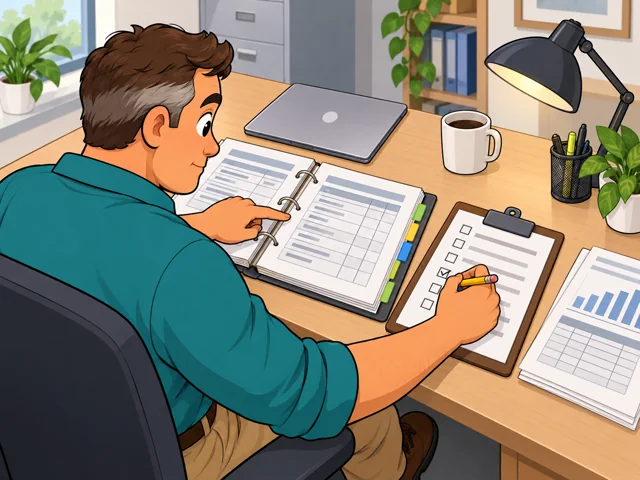
Prep before the site visit
Line up the facility's reports with its permit and flag records and activities to inspect.
Career profile
Environmental compliance inspectors check facilities and records against environmental rules, log violations, then confirm fixes.
A facility's reports tell part of the story. Walking the grounds, questioning the operator and gathering evidence show whether its practices meet the rules.
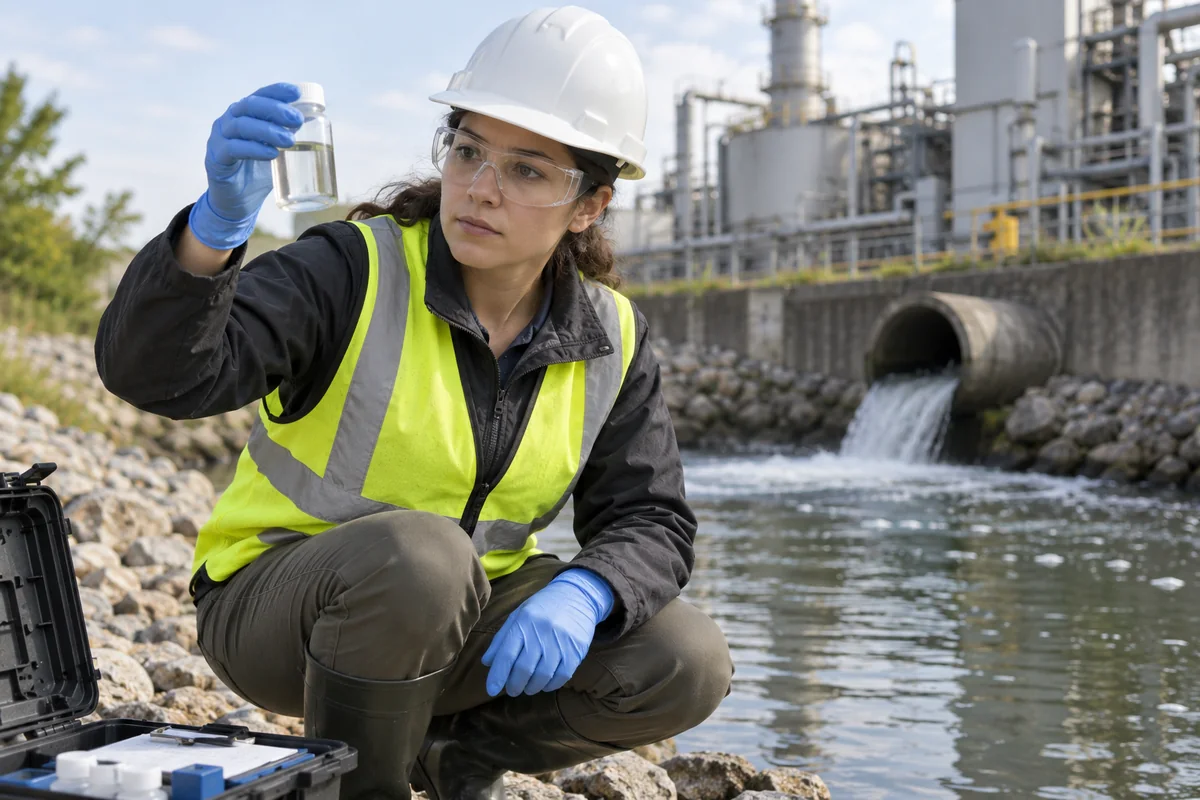
Line up the facility's reports with its permit and flag records and activities to inspect.
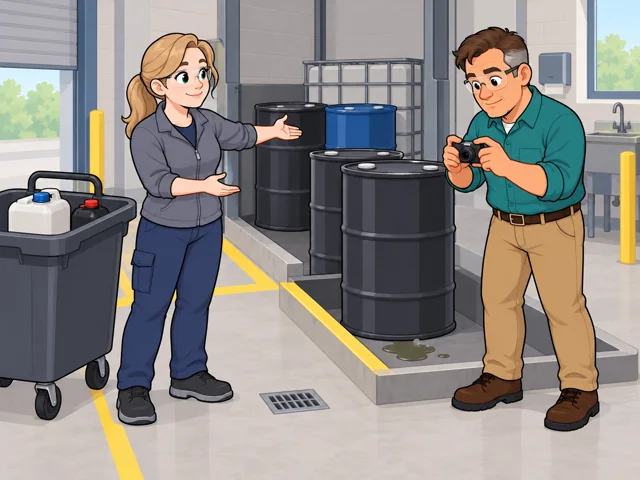
Ask how waste moves on site, photograph conditions that matter, and test the answers against what you see.
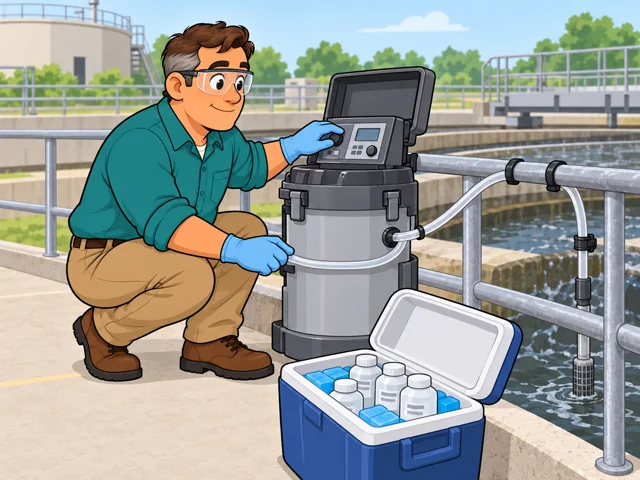
On wastewater jobs, set up the sampler, keep samples preserved and take them to a lab.
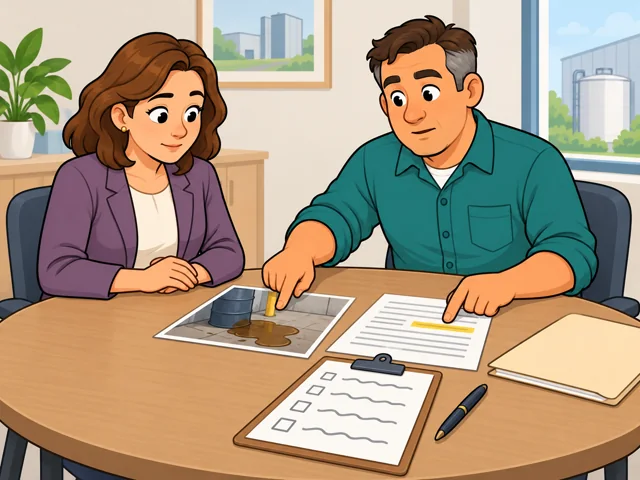
Link findings to the unmet requirement, draft the formal violation record and tell the business what to fix.
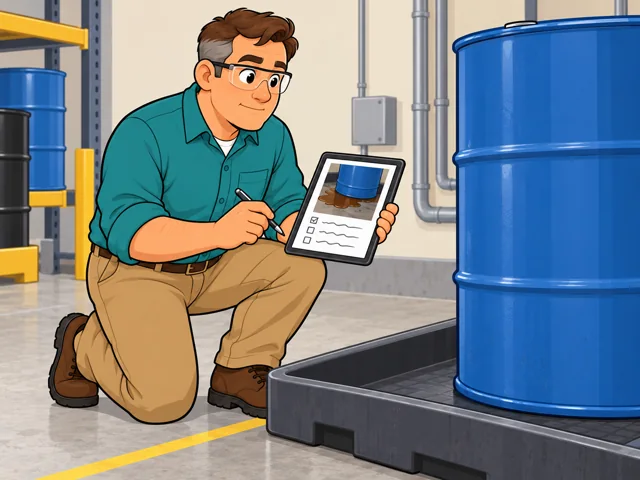
Read the follow-up records or revisit the site, noting what changed and whether evidence still shows a problem.
United States
Pay depends on the employer and position level; national figures cover a wider group of compliance jobs.
National projections combine environmental inspectors with other compliance officers.
Quick orientation
Some employers also accept relevant technical experience. Check the required science courses and experience before choosing a program.
Pay depends on the employer and position level; national figures cover a wider group of compliance jobs.
National projections combine environmental inspectors with other compliance officers.
In air-emissions work, electronic reporting tools can calculate test results and package supporting records, reducing manual data entry.
You still question the facility's explanation, examine conditions, and decide what additional evidence an inspection needs.
How much review becomes automatic will depend on the quality of submitted data and whether unusual site conditions still require a visit.
Pay in context
Use the national numbers as broad context, then compare the salary range for the specific inspector job.
Across all compliance officers, the May 2025 median was $80,730 a year, or $38.81 an hour. The lowest tenth earned below $48,220; the highest tenth earned above $133,720. These are not environmental-inspector estimates or starting-pay bands.
For that broader group, government median pay was $81,540, versus $91,960 in professional, scientific, and technical services. This does not establish a pay advantage for environmental inspectors in either setting.
Mesa, Arizona lists Inspector I at $57,975.63–$84,314.26 annually and Inspector II at $60,903.44–$88,572.85 in its 2026 water-quality recruitment. These are position ranges, not promised starting salaries.
All compliance-officer jobs are projected to grow 4% during 2025–2035, with about 32,700 openings annually, including replacements. Only some are environmental inspection jobs.
Requirements differ by agency. New inspectors learn with experienced staff; inspection and enforcement authority comes with the specific position.
After entry
This starts where the entry routes leave off: early work, growing capability, and advancement or specialization.
Learn to collect usable samples and write inspection records that explain exactly what you observed.
Build toward Inspector II work: investigate more complicated discharges and review the records behind industrial permits.
Take on technically difficult cases and teach newer inspectors how to collect evidence and apply requirements.
Visit businesses such as car washes and industrial plants, then return to records and laboratory results. Your focus is what enters the sewer or storm drains and how it affects the treatment system.
Inspect waste generators and treatment or storage facilities. You examine containers, waste-handling records, and site operations; some visits develop evidence for an enforcement case.
Try it
Try a fictional records check: a permit requires a sample every Monday and a result no higher than 10. The log shows Monday: 8; Tuesday: 7; Monday: 12. Write what appears noncompliant, what information is missing, and one question for the operator. Notice whether you enjoy separating evidence from assumptions.
Stay safe: These invented numbers are only for this paper exercise, not real environmental limits.