
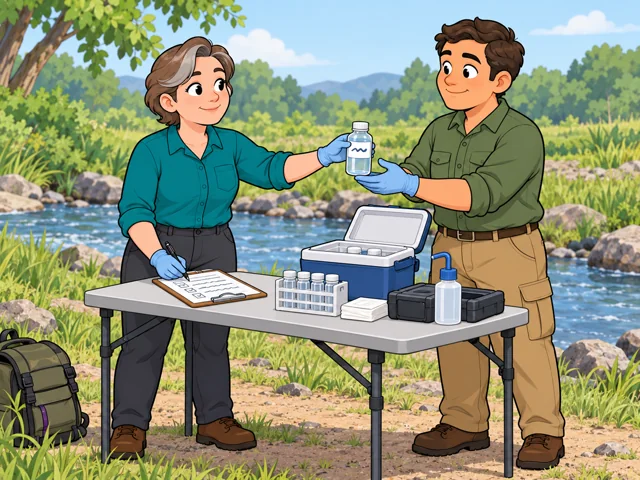
Bottle water the lab can trace
Fill the sample bottle, write down how you collected it, and log each person who handles it.
Career profile
Environmental technicians collect water, air and soil samples, then test them for pollutants.
Start with a small bottle of water or scoop of soil and turn it into numbers. Those numbers help show what caused a site's contamination.
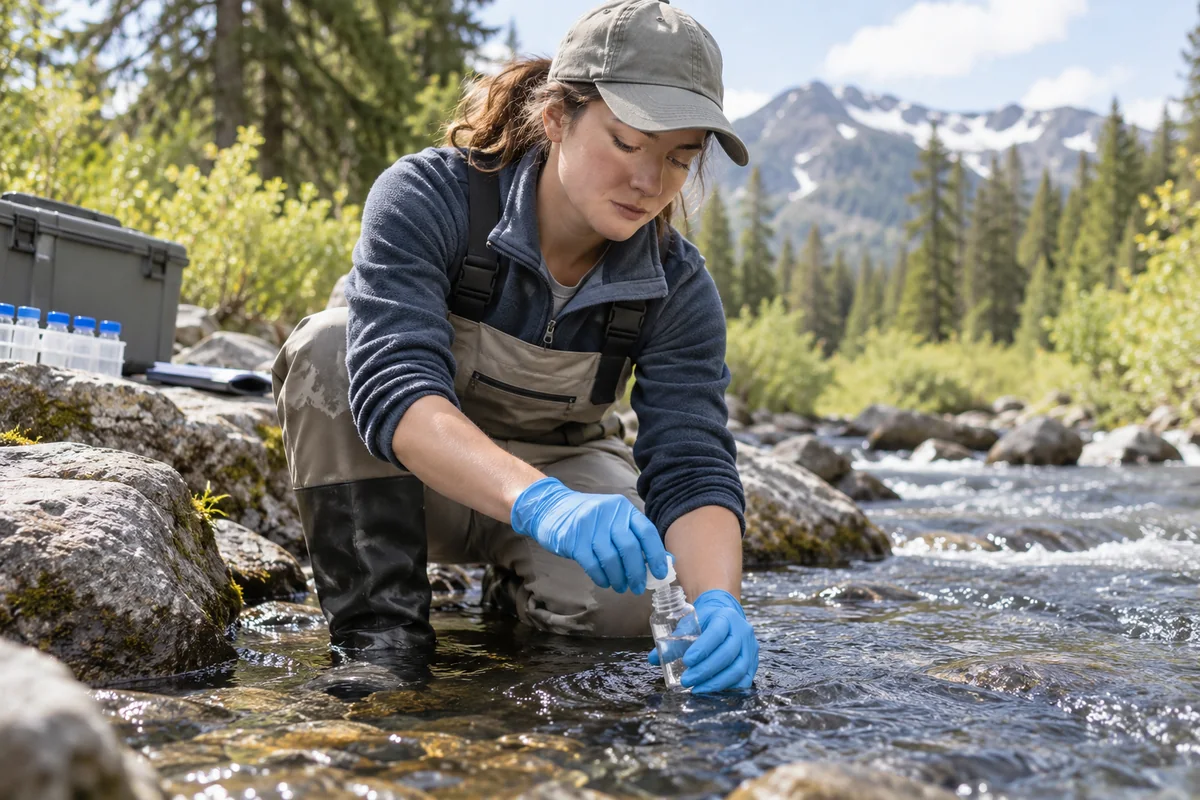
Fill the sample bottle, write down how you collected it, and log each person who handles it.
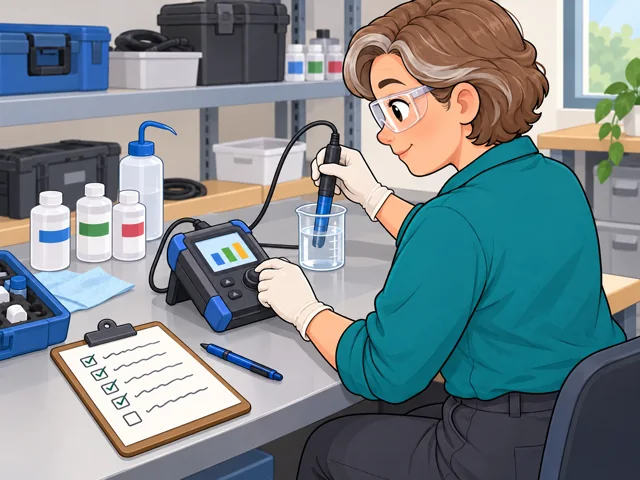
Run the calibration, log that it's done, and work out what's wrong if the readings don't pass.
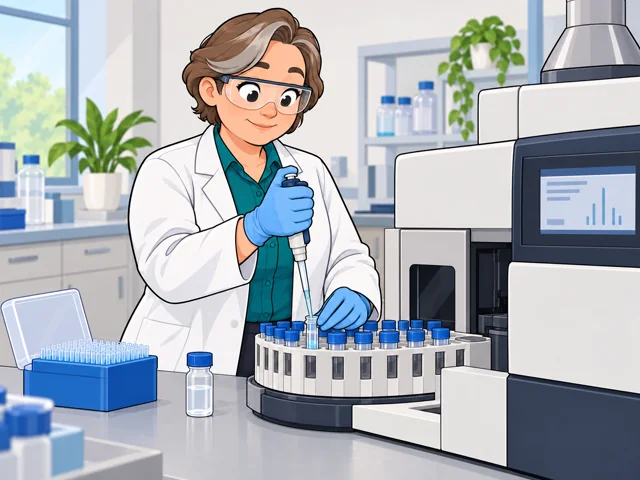
Prepare the collected material, then run it on lab instruments to measure contaminants, such as lead in particles.

Sort the results in spreadsheet software, build a chart, then walk coworkers or clients through what it shows.
United States
United States · May 2025
United States · 2025–2035
Quick orientation
Requirements range from high school to a bachelor's degree.
National median, equivalent to $26.49 an hour; not starting pay.
National employment projection for 2025–2035.
In wastewater work, automatic samplers collect material, while laboratory databases track samples and records.
You still set up equipment, check its condition, and resolve problems at the sampling site.
How much collection can be automated depends on the site and sample; changing field conditions may still require a visit.
Pay in context
Compare both the pay range and the workplace.
The lowest-paid 10% earned below $38,170; the highest-paid 10% earned above $94,160. These are wage percentiles, not beginner and senior salaries.
Median annual pay was $64,070 in local government, excluding education and hospitals, versus $48,440 in testing laboratories and services.
About 5,300 openings are projected annually, including replacements for people leaving the occupation.
You generally work under an environmental scientist, engineer, or another specialist. Match your education to the positions you want.
After entry
This starts where the entry routes leave off: early work, growing capability, and advancement or specialization.
Learn the sample collection, storage, and transport procedures until your records and handoffs are dependable.
Build skill in troubleshooting automatic samplers and adapting to changed site conditions without losing accurate records.
With experience and the employer's required qualifications, progress toward coordinating fieldwork and training newer technicians.
Travel among sampling locations and work around automatic samplers. Weather and access conditions shape the day.
Work with laboratory bench staff to receive samples, prepare sampling kits, and maintain quality records. Careful handoffs keep testing organized.
Try it
Fill three clean containers with tap water. Give each an ID and record its tap location, collection time, and collector. Ask someone to match each container to your log. Notice whether you enjoy making a sample's history easy to trace.
Stay safe: Use only tap water for this recordkeeping exercise; it does not test whether water is safe.