
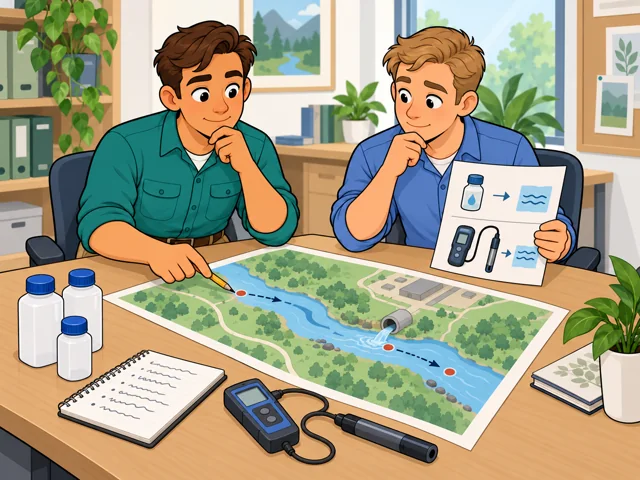
Pick the right evidence to collect
Choose a collection method and decide which measurements, records or observations could answer the question.
Career profile
Environmental scientists investigate pollution and similar hazards, weigh evidence, and advise groups on next steps.
The work blends scientific analysis with legal rules and explaining findings in plain words. Time outdoors collecting data may be only one piece of it.
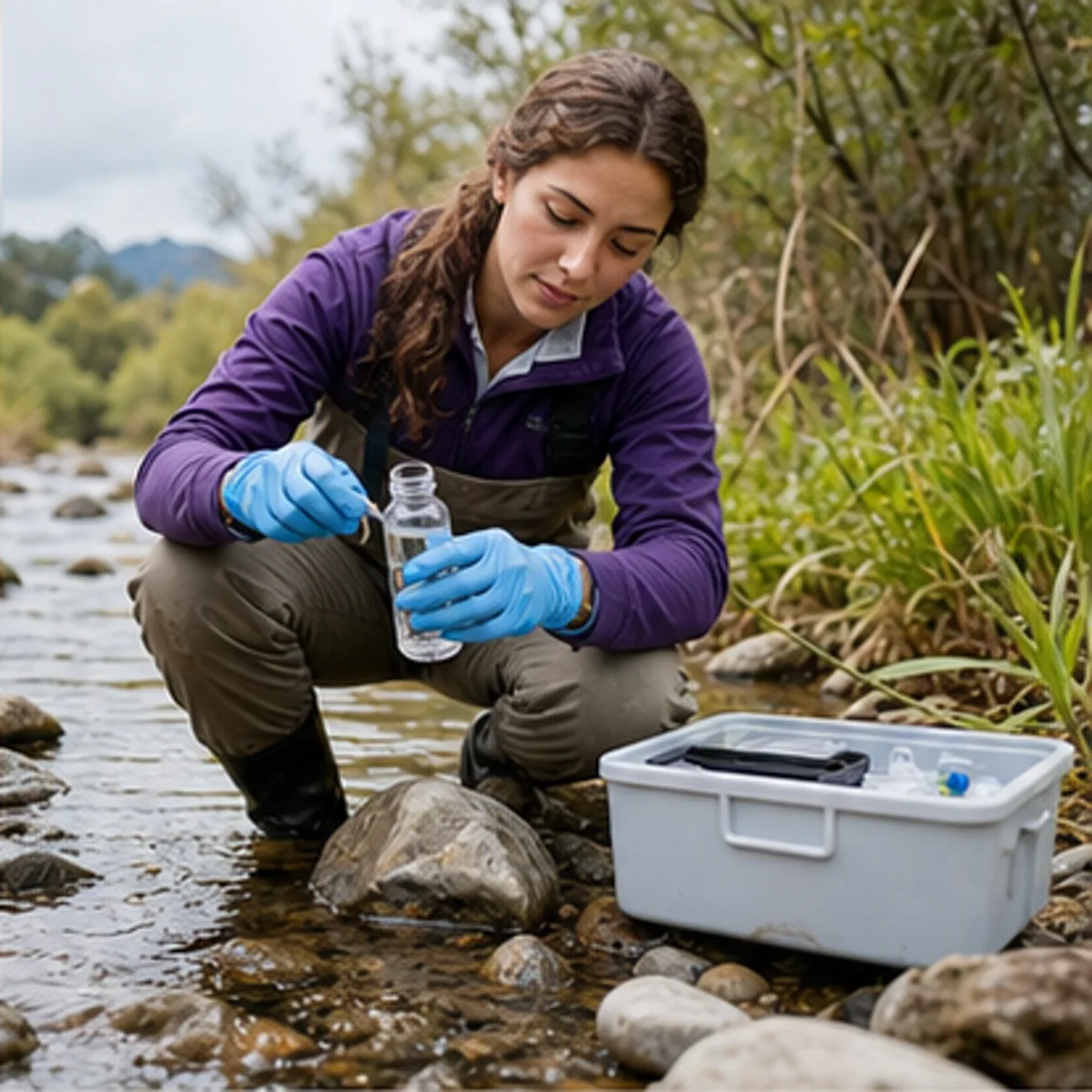
Choose a collection method and decide which measurements, records or observations could answer the question.
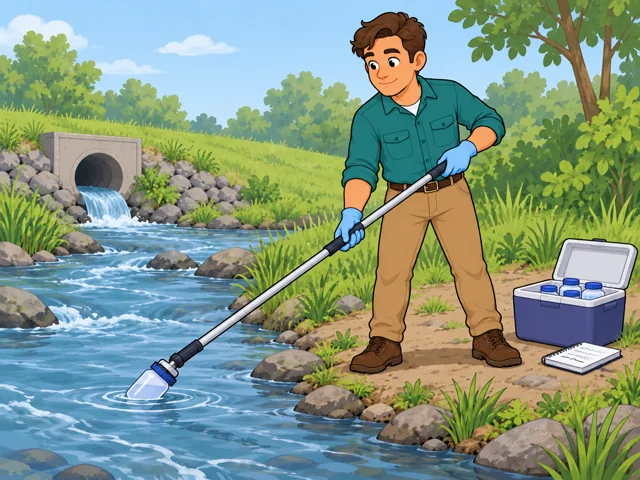
You gather data on emissions, weather, water, air, soil or a project's effects, firsthand or from existing sources.

Check data quality, compare results and look for trends, hazards, pollutants or how human activity changes nature.
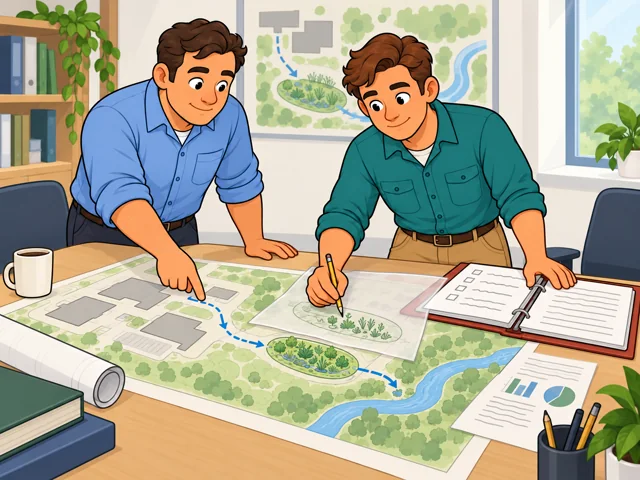
Read permits, project plans or standards and recommend ways to prevent, limit or repair harm to the environment.

Write technical reports or brief clients, officials, coworkers or the public on the evidence and possible next steps.
United States
United States · May 2025
United States · 2025–2035
Quick orientation
Typical entry preparation is a bachelor's in environmental science or a related natural science.
National median annual wage for the occupation—not a starting salary.
Projected for 2025–35, with about 7,300 openings a year on average, including replacement openings.
GIS, spreadsheets, databases, scientific software, and compliance systems can organize records, map results, run analyses, and prepare documentation.
Scientists still choose suitable methods, judge data quality and compliance, weigh possible responses, and explain consequences to other people.
Tool use differs by specialty and employer.
Pay in context
The national median is the clearest benchmark, but it combines workers across experience levels, specialties, locations, and employers.
The median was $82,220 a year: half of workers in the occupation earned more and half earned less. It is not an entry-level figure. The median hourly wage was $39.53.
In May 2025, the 10th-percentile annual wage was $52,520 and the 90th-percentile wage was $140,010. These are wage percentiles, not starting and senior salaries.
Among listed major industries, median annual wages ranged from $79,320 in consulting services to $116,110 in the federal government. These are sector medians, not offers or career stages.
A relevant bachelor's degree is the usual route. USMAP offers a narrower apprenticeship option for eligible service members already working in a matching military trade.
After entry
This starts where the entry routes leave off: early work, growing capability, and advancement or specialization.
Learn the employer's sampling, data-quality, safety, recordkeeping, and review procedures, then produce work that others can check.
Take on more analysis, permit or standards review, response planning, and communication with clients, agencies, or the public.
With experience, supervise technical staff or move toward project leader, program manager, or another management role.
State, local, and federal roles may focus on natural resources, public health, investigations, permits, or compliance. Expect office or laboratory work with field visits depending on the assignment.
Teams help clients follow environmental rules, assess project impacts, reduce pollution, or plan cleanup. Work may move between reports, client meetings, and project sites.
Try it
Enter this fictional stream pH series in a spreadsheet: 7.1, 7.2, 6.9, 5.4, 7.0. Make a chart, flag the unusual result, and write three questions you would ask before recommending action. Notice whether you enjoy checking the evidence more than jumping to an answer.
Stay safe: Treat the numbers only as a practice set; do not use this exercise to label real water safe or unsafe.