

Career profile

Epidemiologist

Epidemiologists study who gets sick, what those people share, and ways to prevent more cases.

Rising illness reports could mean a real spread, or just more cases being counted. Records, comparisons and well-chosen questions are how you tell which.

epidemiologist reviewing disease trend charts with colleagues in a public health office.

A day in the life

1An epidemiologist and an older woman coworker compare date fields in illness reports and check the source records before combining them.

Line up report dates

Before merging illness reports, check whether each date marks symptom onset or diagnosis, and make them match.

2An epidemiologist studies a chart of illness onset over time, noticing a cluster after earlier lower counts.

Graph cases by date

Plot cases by date beside earlier counts, because a sudden cluster deserves a closer look.
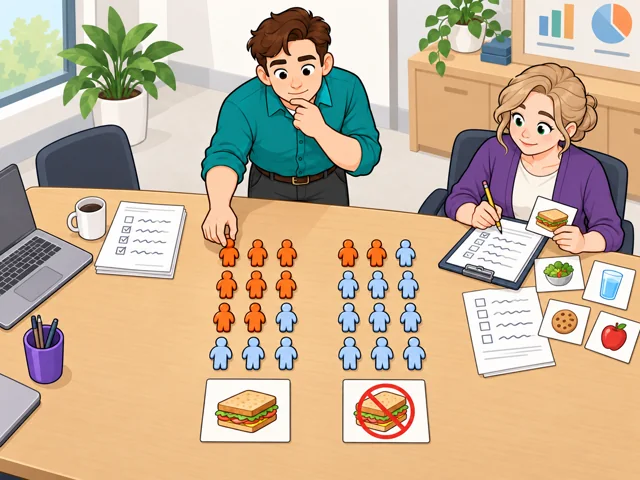
3An epidemiologist compares illness proportions among people who ate a suspected food and those who did not while a coworker checks other exposures.

Probe a food-linked outbreak

Calculate the share of eaters and non-eaters who fell ill, and weigh other causes before blaming the food.

4An epidemiologist explains an investigation chart and its uncertainty to two colleagues reviewing a brief about prevention.

Brief health officials on findings

Write a short summary or present a chart showing results, open questions, and what they mean for prevention.

Quick facts

Preparation

Master’s degree

United States

Pay

$87,220/year

United States · May 2025

Outlook

+18.7%

United States · 2025–2035

Quick orientation

Preparation, pay & outlook

Preparation

Master’s degree

Graduate study is the typical entry preparation.

Geography
United States
Period
Not applicable

Pay

$87,220/year

National median for epidemiologists; equivalent to $41.93 an hour.

Geography
United States
Period
May 2025

Outlook

+18.7%

Projected employment growth, with about 800 openings a year on average.

Geography
United States
Period
2025–2035

Fit, tradeoffs & changing tools

Things to weigh

  • Expect substantial screen time and careful record checking alongside the investigations.
  • Many jobs have regular hours, but fieldwork and public health emergencies can bring irregular schedules.

Where AI may help

Shared electronic records let office and field staff work with incoming information sooner. Software helps organize records, calculate comparisons, and update charts.

What people still lead

You choose a fair comparison and check whether missing information or the way people were selected could explain the result.

What we can’t predict yet

How much record handling can be automated depends on whether systems exchange usable data. Incompatible formats and missing details can still require follow-up.

Pay in context

Earnings

Pay varies with location, experience, and responsibility. Use national figures as a reference when comparing actual job offers.

The national pay range

The May 2025 median was $87,220 a year, equivalent to $41.93 an hour. The 10th and 90th percentile annual wages were $61,270 and $138,800. These mark the national wage spread, not starting and senior salaries.

Geography
United States
Period
May 2025
Pay basis
Gross wages for epidemiologists, SOC 19-1041; annual wages and hourly equivalent, excluding benefits.

Growth and openings

Employment is projected to grow 18.7% from 2025 to 2035. About 800 openings a year are projected on average, including growth and replacement needs. Openings are not all newly created jobs.

Geography
United States
Period
2025–2035
Pay basis
Employment projection, not compensation; average annual openings for SOC 19-1041.

Getting started

Study public health with an epidemiology focus

What the route involves
Earn a Master of Public Health (MPH) focused on epidemiology. Look for disease-study methods, statistics, a public health agency practicum, and a capstone or thesis.
What it can lead to
Preparation to apply for public health agency and research roles, with practice connecting findings to programs and policy.

Build a research-focused master’s route

What the route involves
Earn a Master of Science (MS) in epidemiology through a program open to bachelor’s graduates. Study research methods and statistics, then complete a research thesis.
What it can lead to
Preparation for epidemiological research roles and further graduate research training.

Plan on a bachelor’s degree followed by graduate study. Two common degree directions emphasize different parts of the work; compare each program’s coursework and practical experience.

After entry

Career paths

This starts where the entry routes leave off: early work, growing capability, and advancement or specialization.

  1. Get established

    Learn your workplace’s records and definitions. Document how you prepare data so colleagues can follow your work.

  2. Take on a study question

    Plan the comparison, run the analysis, and ask colleagues to challenge your interpretation before you report it.

  3. Lead or specialize

    Move toward leading a public health program or specializing in an area such as chronic disease. Research directors often have a doctoral or medical degree.

Where you can work

State or local health department

Your work connects directly to community health decisions. Office analysis may alternate with surveys or field investigations, using reports from healthcare providers and laboratories.

  • Office
  • Field work

University research group

Work centers on studies and publication. Alongside analyzing data, you may help write research papers and funding proposals.

  • Office

Try it

See whether the job clicks before you commit to the path.

Try a fictional outbreak comparison: 12 of 30 people who ate a dish became ill, compared with 3 of 30 who did not. Calculate each group’s percentage, then write one possible explanation and one question you would ask before blaming the dish. Notice whether you enjoy both the calculation and questioning what it means.

Explore more careers

Sources

  1. O*NET OnLine. Epidemiologists — 19-1041.00. Accessed 2026-10-09.
  2. U.S. Bureau of Labor Statistics. Epidemiologists — Occupational Outlook Handbook. Accessed 2026-10-09.
  3. U.S. Bureau of Labor Statistics. May 2025 Occupational Employment and Wage Statistics, national estimates — pinned facts binding. Accessed 2026-09-29.
  4. U.S. Bureau of Labor Statistics. Employment Projections Table 1.2, 2025–2035 — pinned facts binding. Accessed 2026-09-29.
  5. Centers for Disease Control and Prevention. Field Epidemiology Manual: Collecting Data. Accessed 2026-10-09.
  6. Centers for Disease Control and Prevention. Field Epidemiology Manual: Describing Epidemiologic Data. Accessed 2026-10-09.
  7. Centers for Disease Control and Prevention. Field Epidemiology Manual: Analyzing and Interpreting Data. Accessed 2026-10-09.
  8. Centers for Disease Control and Prevention. Field Epidemiology Manual: Using Technologies for Data Collection and Management. Accessed 2026-10-09.
  9. University of Washington School of Public Health. MPH in Epidemiology. Accessed 2026-10-09.
  10. University of Washington School of Public Health. MS in Epidemiology. Accessed 2026-10-09.

Your message goes to the Great Jobs team. How we use your information