
Career profile

Tree Faller

Fallers cut down trees with a chainsaw, following a plan they choose carefully.

Before any cut, fallers study the tree and its surroundings. Patient, watchful people who like hands-on labor may enjoy the thinking behind every cut.
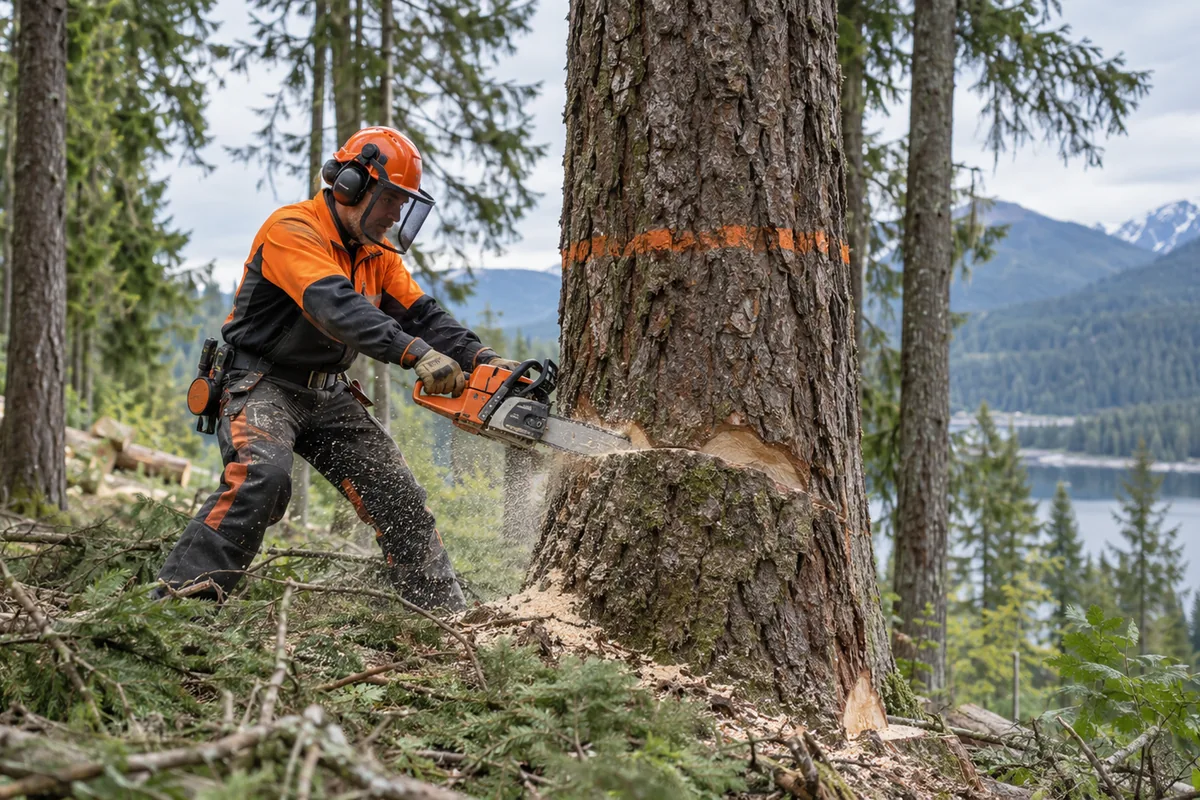
A tree faller in forestry safety gear using a chainsaw to cut a marked tree in a managed forest, safe working distance.

A day in the life

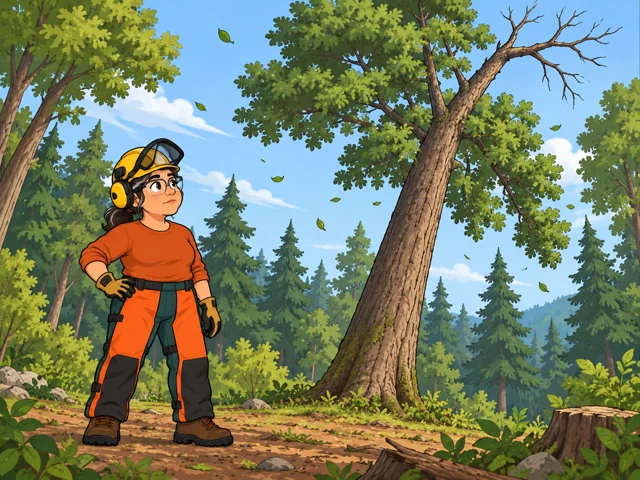
1A tree faller studies a leaning tree, a dead limb and neighboring crowns while wind moves the foliage.

Size up the tree before cutting

Weigh the tree's lean, dead limbs, nearby trees and wind to decide whether and how to fell it.
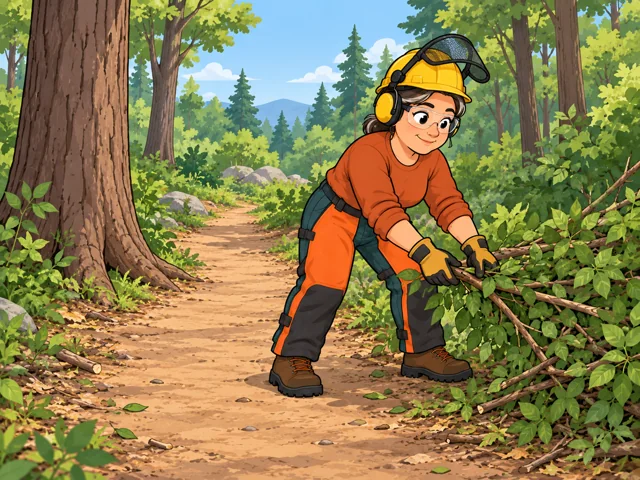
2The faller pulls brush aside to clear an unobstructed escape route away from the tree.

Clear brush and a way out

Clear brush from your work spot and escape route so it does not get in your way.
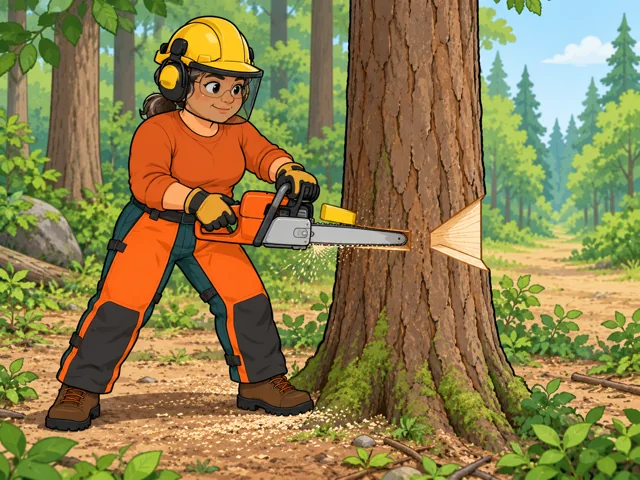
3Wearing forestry protective equipment, the faller makes a back cut with a chainsaw while a wedge helps guide the tree toward an open corridor.

Drop the tree where planned

Use the chainsaw and wedges to bring the tree down in the direction you chose beforehand.
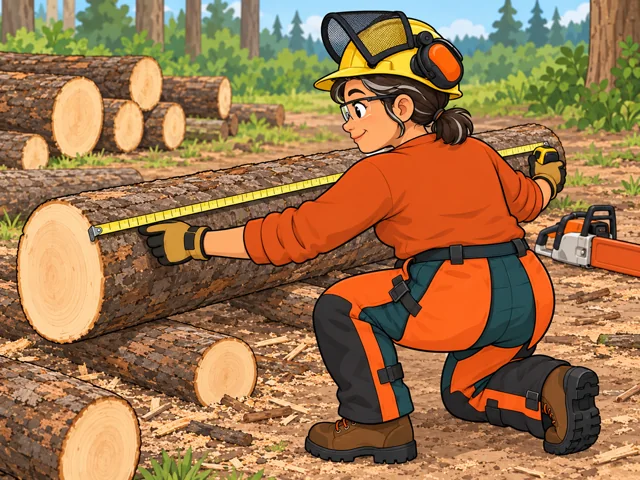
4The faller measures a freshly cut log with a logging tape, checking its length beside the remaining trunk.

Cut the trunk into logs

Some positions have you measure the downed trunk, saw it into set lengths and inspect the logs.
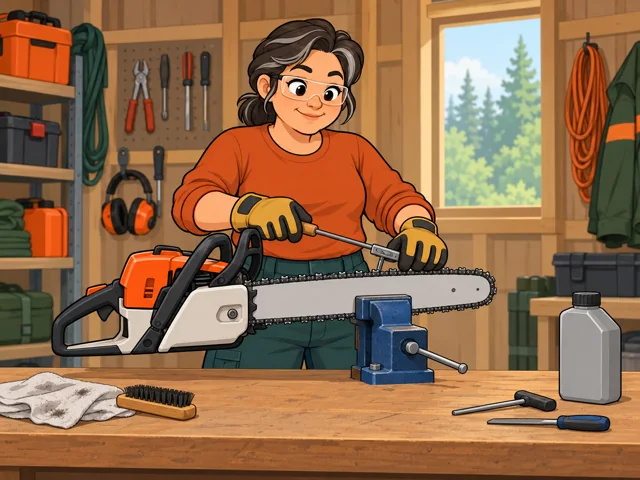
5At a maintenance bench, the faller carefully sharpens the chain of a switched-off chainsaw with a file and guide.

Keep the saw in shape

Clean and oil the chainsaw, sharpen the chain and fix it when needed so it keeps running.

Quick facts

Preparation

High school diploma or equivalent

United States · 2025–2035

Pay

$52,100 a year

United States · May 2025

Outlook

9.9% decline

United States · 2025–2035

Quick orientation

Preparation, pay & outlook

Preparation

High school diploma or equivalent

Typical entry preparation, followed by training on the job.

Geography
United States
Period
2025–2035

Pay

$52,100 a year

National median for fallers, equivalent to $25.05 an hour.

Geography
United States
Period
May 2025

Outlook

9.9% decline

Faller employment is projected to shrink, with about 500 openings a year on average.

Geography
United States
Period
2025–2035

Fit, tradeoffs & changing tools

Things to weigh

  • Falling trees, branches, and chainsaws can cause severe injuries. Noise, rough ground, and bad weather add strain to an already physical day.
  • Early starts and long drives to logging sites can stretch your day. In some regions, work is seasonal.

Where AI may help

Large harvesting machines can cut trees, remove limbs, and cut logs to length, reducing some manual work across logging crews.

What people still lead

Manual fallers often work where large equipment cannot reach. You still assess the tree and surrounding hazards before cutting.

What we can’t predict yet

How much cutting shifts to machines will depend partly on the terrain they can handle. The balance between chainsaw work and equipment work may change from site to site.

Pay in context

Earnings

Use the national faller figures as a comparison point when you look at an actual job offer.

The middle and the spread

The median was $52,100 a year, or $25.05 an hour. The 10th–90th percentile range was $35,180–$82,360 annually, or $16.91–$39.60 hourly. These are wage percentiles, not starting and senior pay levels.

Geography
United States
Period
May 2025
Pay basis
National employee wage estimates for Fallers, SOC 45-4021.

Ask how much work the offer includes

Logging schedules can be seasonal or include extended shifts. Ask about expected hours and months of work alongside the pay rate.

Geography
United States
Period
Not stated
Pay basis
Schedule context for interpreting an individual offer; no workplace pay premium is assumed.

Openings in a shrinking occupation

Employment is projected to fall 9.9% from 2025 to 2035. About 500 openings a year are still projected on average; openings can occur as workers leave even while total employment declines.

Geography
United States
Period
2025–2035
Pay basis
Employment projection for Fallers, SOC 45-4021; openings are an annual average.

Getting started

Learn with a logging crew

What the route involves
Start in a job that provides training in logging hazards, chainsaw use, and equipment care.
What it can lead to
You move from close supervision to performing the trained duties independently once you demonstrate safe performance to the employer.
What to check
Federal youth employment rules prohibit most logging work under age 18. Covered logging employers must also ensure current first aid and cardiopulmonary resuscitation training.

Build field skills before applying

What the route involves
Take a logging or forest-technology program with field practice. Look for instruction that includes tree assessment, chainsaw handling, and guided felling.
What it can lead to
You gain practice cutting down trees, removing limbs, and cutting trunks into logs before seeking a crew position.
What to check
Course completion does not replace an employer’s responsibility to check that you can safely perform the job’s tasks.

A high school diploma or equivalent is typical preparation. You can learn through a logging employer or build relevant field skills in a training program first.

After entry

Career paths

This starts where the entry routes leave off: early work, growing capability, and advancement or specialization.

  1. Get established

    Build consistent habits for checking each tree, keeping the work area clear, and maintaining your saw.

  2. Develop your judgment

    Get better at recognizing how lean, rot, and heavy limbs affect a felling decision. Compare what you noticed with what happened.

  3. Broaden your crew role

    With additional equipment training, learn to operate a skidder—the machine that drags logs. Some crews rotate workers between felling and moving timber.

Where you can work

Logging sites using cables

Here, cable systems pull felled timber toward a collection area. Your work fits around moving lines and loads, with clear signals between crew members before lines move.

  • Outdoors
  • Field work
  • Physical demands
  • Safety-sensitive

Crews using ground machinery

Skidders drag logs out of the woods. On some crews, you rotate between chainsaw work on foot and operating a skidder, so equipment skills become a larger part of the day.

  • Outdoors
  • Field work
  • Vehicle
  • Physical demands
  • Safety-sensitive

Try it

See whether the job clicks before you commit to the path.

Compare two photographs of standing trees. Mark visible lean, uneven limb growth, and neighboring trees, then list what the photos cannot tell you. Notice whether you enjoy studying those details before making a decision.

Stay safe: Keep this exercise on paper. Do not cut a tree or enter an active logging site to try it.

Explore more careers

Sources

  1. O*NET OnLine. 45-4021.00 — Fallers. Accessed 2026-10-10.
  2. U.S. Bureau of Labor Statistics. Occupational Outlook Handbook — Logging Workers. Accessed 2026-10-10.
  3. Occupational Safety and Health Administration. 29 CFR 1910.266 — Logging operations. Accessed 2026-10-10.
  4. U.S. Bureau of Labor Statistics. May 2025 Occupational Employment and Wage Statistics — National estimates, Fallers, SOC 45-4021. Accessed 2026-09-29.
  5. U.S. Bureau of Labor Statistics. Employment Projections, Table 1.2 — Fallers, 2025–2035. Accessed 2026-09-29.
  6. University of Wisconsin–Stevens Point, Wisconsin Forestry Center. Science of Tree Felling. Accessed 2026-10-10.
  7. U.S. Department of Labor, Wage and Hour Division. What jobs are off-limits for kids?. Accessed 2026-10-10.

Your message goes to the Great Jobs team. How we use your information