
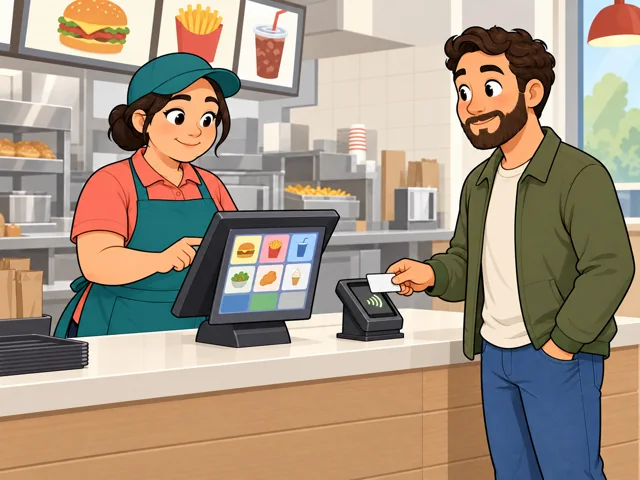
Ring up orders and take payment
Tap each item the customer picks into the cash register, then take their payment.
Career profile
Fast food and counter workers take orders, make food and hand meals to customers.
Can you get one order right while the next customer is already waiting? Every meal you hand over shows what your effort produced.
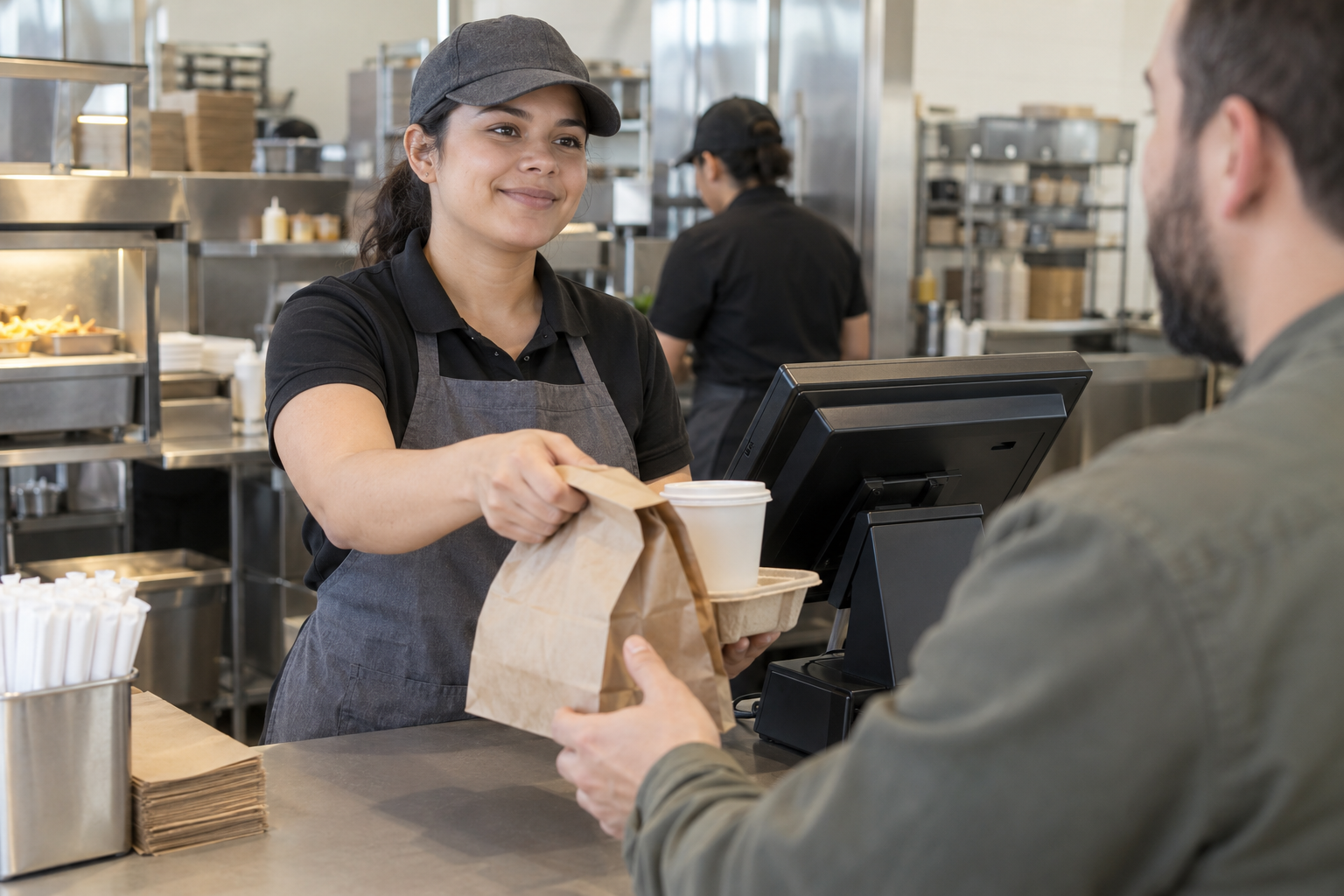
Tap each item the customer picks into the cash register, then take their payment.
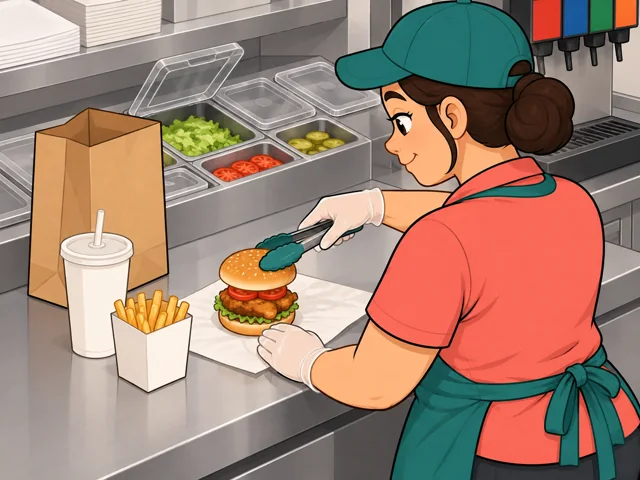
Make the sandwich, pour the drink, and pack everything in a bag the customer can carry out.
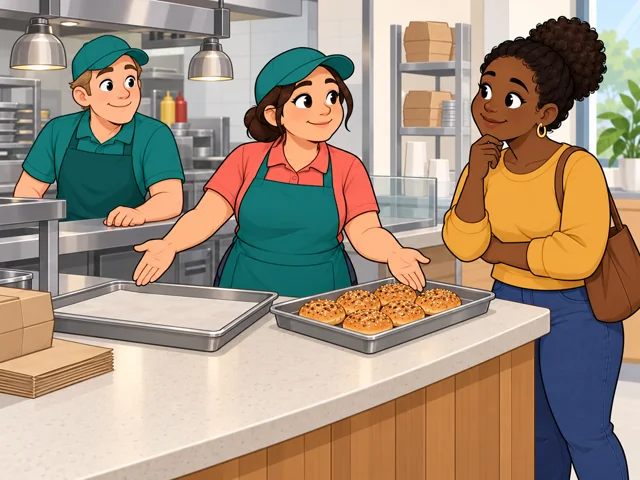
Tell the cooks when something runs out, then explain to the customer what that changes in their order.
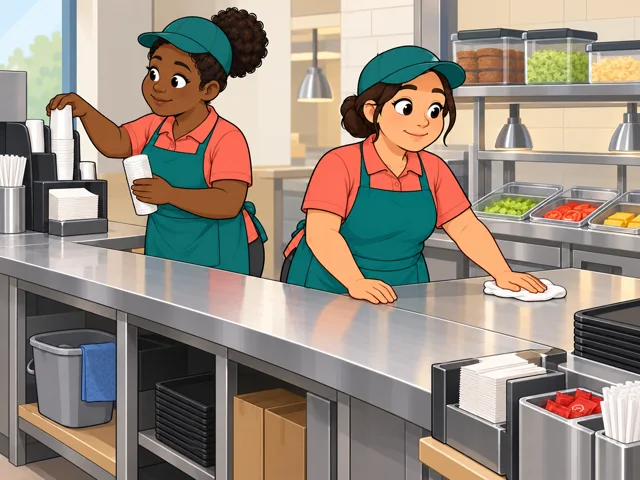
Wipe and clean the counter where you hand out food, and refill cups, napkins and food supplies.
United States · 2025–2035
United States · May 2025
United States · 2025–2035
Quick orientation
Typically no formal educational credential or previous experience; short-term workplace training.
National median for fast food and counter workers in May 2025.
Employment growth projected for 2025–2035, with about 827,400 openings annually.
At some quick-service restaurants, customers enter orders through touchscreens or phone apps, reducing manual order entry.
You still assemble meals and talk through order problems with customers and coworkers.
Even food handoff can be automated: a Texas test restaurant used a conveyor. How widely such systems spread—and how much they change staffing—remains uncertain.
Pay in context
Compare the hourly rate and the hours you can expect to work.
The May 2025 median was $15.00 an hour, equivalent to $31,200 for 2,080 paid hours. Part-time schedules mean actual yearly earnings can be lower.
In May 2025, the 10th-percentile wage was $10.98 an hour and the 90th-percentile wage was $20.51. These are wage percentiles, not starting and experienced pay rates.
May 2023 hourly averages were $14.24 in restaurants and other eating places, $16.01 in food and beverage retailers, and $16.17 in elementary and secondary schools. These are historical averages, not current offers.
About 827,400 openings a year are projected for 2025–2035. These include replacing workers who leave the occupation, alongside employment growth of 5.8%.
You can usually enter through employment rather than a college program.
After entry
This starts where the entry routes leave off: early work, growing capability, and advancement or specialization.
Build accuracy with orders, payments and cleanup.
Add food preparation, restocking and handling customer concerns.
With experience, you may advance into a supervisory or food service manager role.
Orders may arrive from the counter, drive-through and phone apps. You help keep meals moving to the right pickup point.
You prepare and serve set portions. Some jobs offer weekday daytime shifts, but school breaks can bring unpaid gaps.
Try it
Make a paper menu with four items. Ask a friend to give you three pretend takeout orders, including one change. Write tickets and assemble each order with labeled slips of paper. Notice whether tracking details while talking feels satisfying or draining.