

Give each carpenter a starting spot
Study the building plans, decide which tasks must come first, and give each carpenter a starting spot.
Career profile
Construction and extraction supervisors lead crews that build, dig, or do extraction work.
Who takes the next task, and does the finished work pass inspection? You answer them and help sort out problems that could stall the crew.

Study the building plans, decide which tasks must come first, and give each carpenter a starting spot.
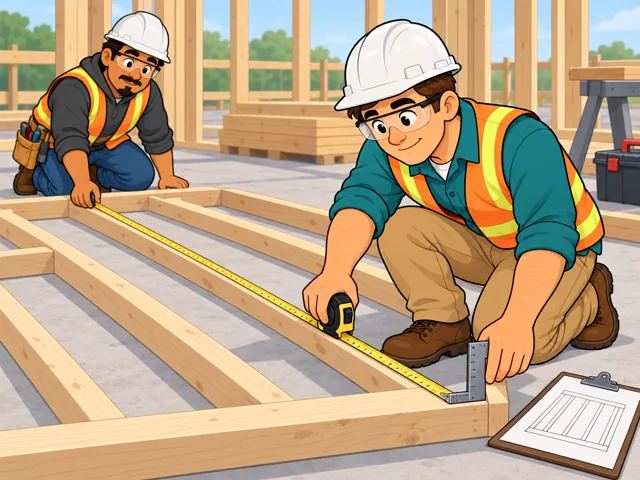
Use a tape measure and framing square to check the carpentry layout against the plans before assembly continues.
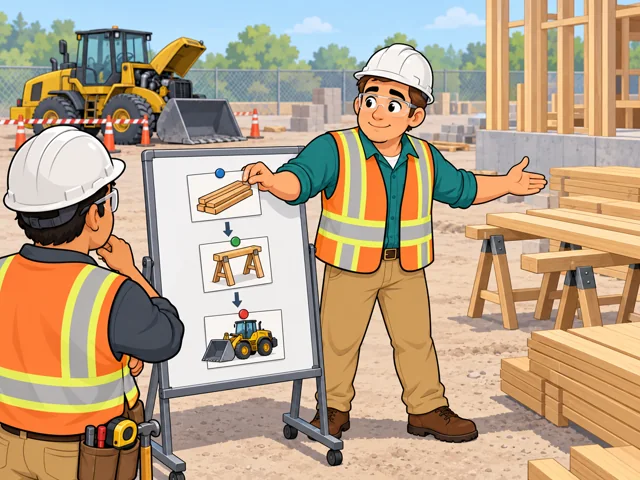
The loader has trouble, so you review the remaining work and reorder the crew's tasks during the fix.
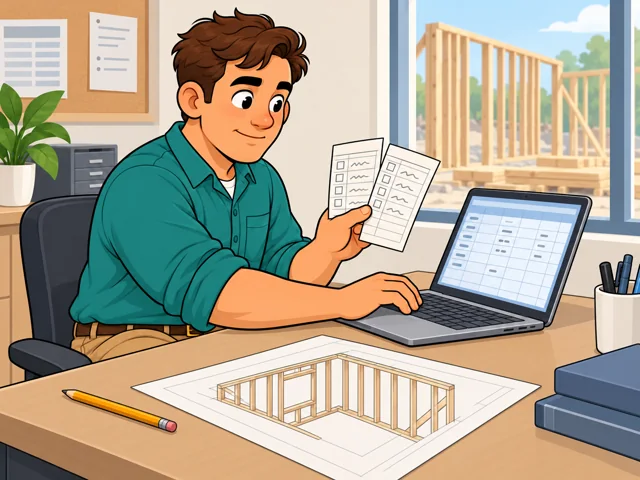
You review the crew's timecards and estimate worker-hours for the upcoming task, sometimes tracking figures on a spreadsheet.
United States · 2025
United States · 2025
United States · 2025–2035
Quick orientation
Typical preparation: a high school diploma or equivalent and five or more years of related work.
National annual median; the hourly median is $38.42.
About 67,000 openings per year are projected nationally.
Scheduling software and digital records help organize crew plans, hours, and materials.
You judge whether a plan fits the equipment and people available, then explain changes to the crew.
How much planning software will handle on its own remains uncertain when site conditions change.
Pay in context
The national median is a midpoint across working supervisors, not a starting offer.
In 2025, median pay was $79,920 a year, with an hourly median of $38.42. These figures cover construction and extraction supervisors together.
Employment is projected to grow 5% from 2025 to 2035, with about 67,000 openings annually on average. These are projected opportunities, not vacancies available today.
In May 2025, the 10th-percentile annual wage was $53,280 and the 90th-percentile wage was $128,260. These are wage percentiles, not starting and senior salaries.
In May 2023, supervisors averaged $73,550 a year in residential building construction and $84,850 in nonresidential building construction. These older figures compare industry averages, not today's offers.
Usually, you learn the work before leading the people doing it. Requirements depend on the trade and employer.
After entry
This starts where the entry routes leave off: early work, growing capability, and advancement or specialization.
Build a dependable routine for explaining assignments, checking safety expectations, and keeping crew time records accurate.
Improve your estimates of labor needs and learn to adjust work sequences around equipment capacity and project deadlines.
A general foreman role can add responsibility for other foremen and their crews, bringing several work schedules together.
Your setting may shift from outdoor structural work to indoor doors and cabinets. You need to read plans closely while checking how the crew's work fits the building.
You work around loaders, dozers, and other machines. Equipment condition and operator coordination shape the day; some foremen also operate equipment.
You connect the mine plan with daily stone production, coordinating quarry staff and maintenance. Dust and weather are part of the setting.
Try it
On paper, plan a four-person crew's day: unload materials, mark a layout, assemble a frame, and inspect it. Decide which tasks depend on others. Then imagine the delivery is late and revise the assignments. Notice whether you enjoy explaining the new plan as much as making it.
Stay safe: Keep this a paper exercise; it is not a plan for actual construction.