

Move dealers between tables
Cover a dealer's break by moving another dealer over, so every running game still has someone dealing.
Career profile
Gaming supervisors staff the casino floor, settle guest complaints and support dealers and slot attendants.
Staff find you for two reasons. A game is short a dealer, or a player says a payout was wrong.

Cover a dealer's break by moving another dealer over, so every running game still has someone dealing.

Listen to the player and the dealer, resolve the payout dispute, then explain how you settled it.
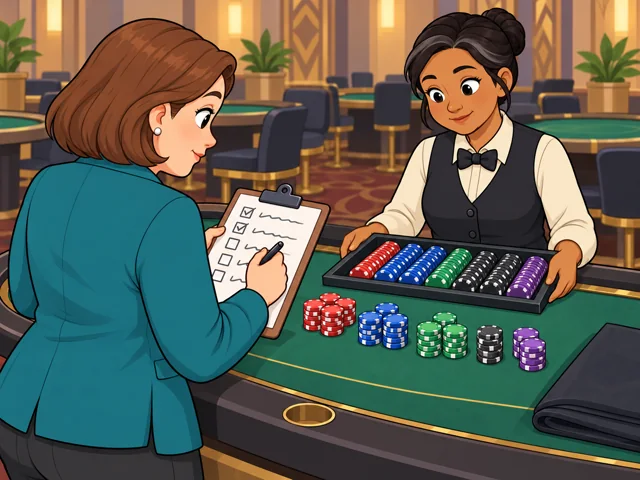
Confirm the table's chip count and fill out the report before that game closes.

On a slot floor, confirm jackpot payouts and log any machine malfunctions so technicians have a record.

Show a dealer who made an error the correct procedure, watch them try again and give precise feedback.
United States · 2025–2035
United States · 2025
United States · 2025–2035
Quick orientation
A high school diploma or equivalent and related work experience are typical preparation.
2025 national median for gambling-service supervisors; $30.68 per hour.
Projected for 2025–2035, with about 2,600 openings annually across the United States.
Computer systems already help table supervisors record play and request more chips for a table.
You still explain decisions to guests and coach dealers when their work needs correction.
How much checking software will take over remains uncertain; the balance between screen work and watching games may change.
Pay in context
The national median is $63,820 a year, or $30.68 an hour, for first-line supervisors of gambling services workers.
In 2025, the lowest-paid 10% earned $41,400 or less; the highest-paid 10% earned $84,750 or more. These are wage percentiles, not starting and senior salaries.
About 2,600 openings are projected each year during 2025–2035. That includes replacing workers who leave the occupation, alongside 3.5% projected employment growth.
Supervision usually follows casino experience. Check the workplace’s minimum age and licensing requirements, including background screening, before paying for training.
After entry
This starts where the entry routes leave off: early work, growing capability, and advancement or specialization.
Learn the property’s game controls, reports, and when to involve surveillance or the shift manager.
Get better at coaching dealers and passing clear information to the next level of management.
Table-game and slot supervisors may advance to gambling manager. Education requirements differ by employer.
You stay close to dealers and players across several games. Watching play and answering questions keep you on your feet.
Your team serves players spread among machines. Guest disputes, payouts, and equipment problems shape the shift.
Try it
Draw four pretend casino tables and give five fictional dealers staggered breaks. Then remove one dealer from the schedule. Decide which tables can stay open and explain your changes. Notice whether coordinating people under constraints interests you.
Stay safe: Use paper only; no gambling, money, or casino visit is needed.