
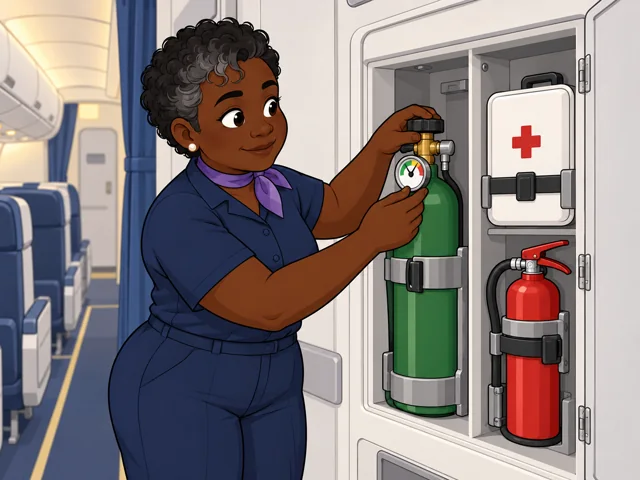
Check the emergency gear
Before anyone boards, check that the first aid kits, oxygen bottles and fire extinguishers are ready to use.
Career profile
Flight attendants keep everyone on board safe and supported throughout the flight.
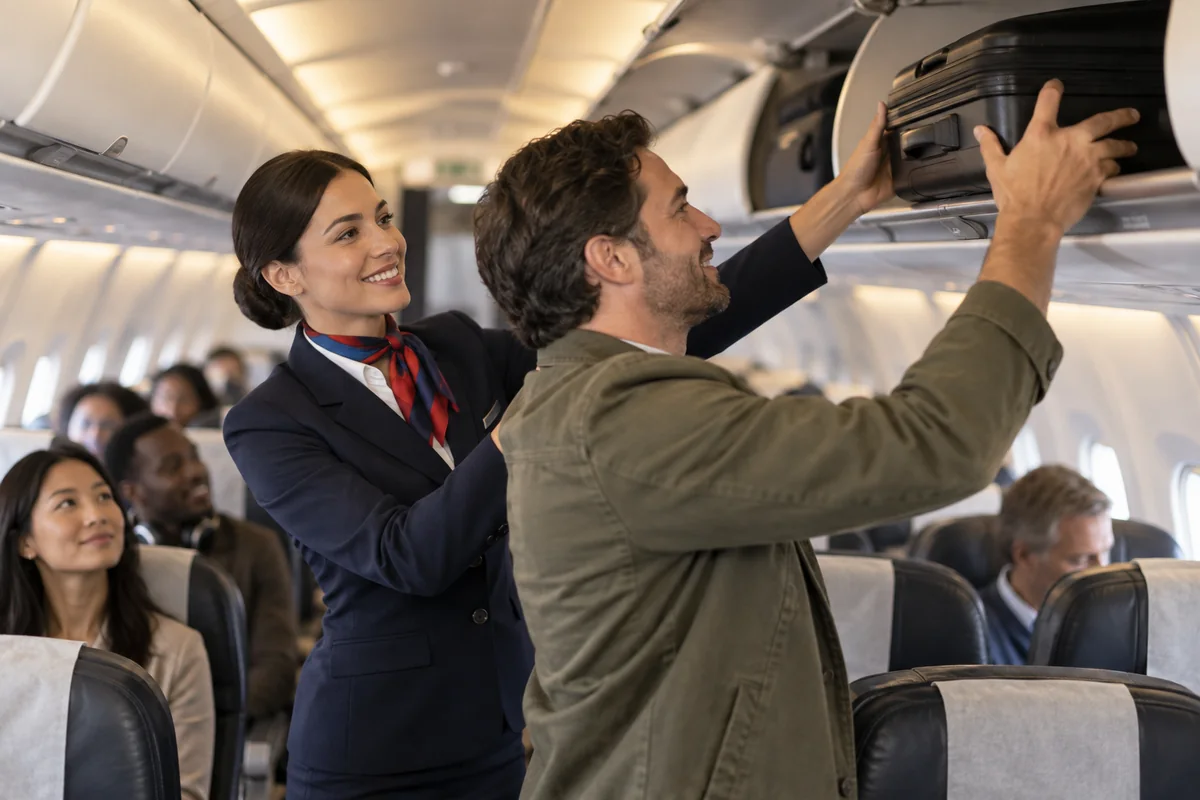
Can you make a traveler feel welcome while stowing their bag, then, when it counts, win their attention for a safety point they missed?
Before anyone boards, check that the first aid kits, oxygen bottles and fire extinguishers are ready to use.
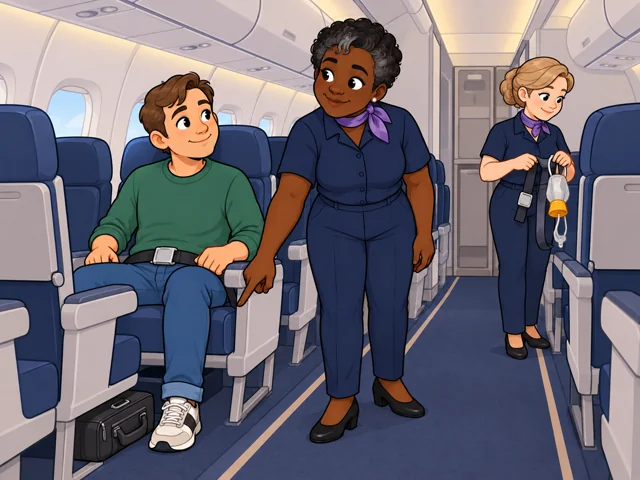
Show passengers how the safety equipment works, then walk the aisle checking belts and stowed bags.
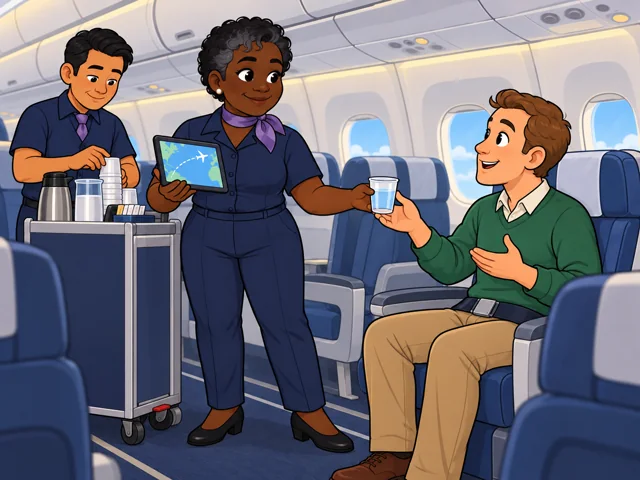
Hand out drinks and snacks, and help travelers figure out landing times and onward connections.
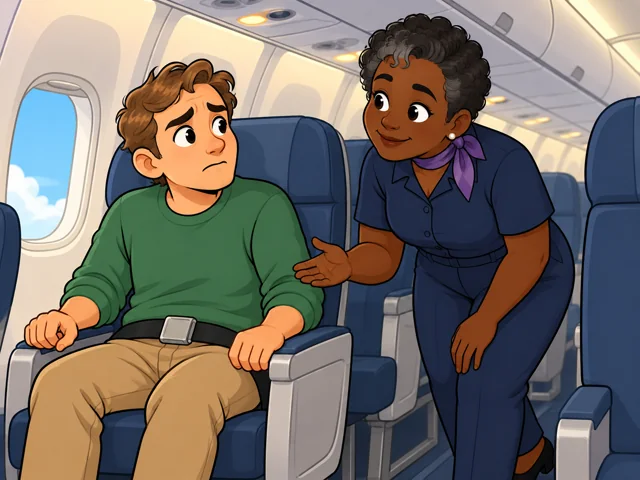
When turbulence frightens a traveler, calm them down, and if someone falls ill, give first aid right there.
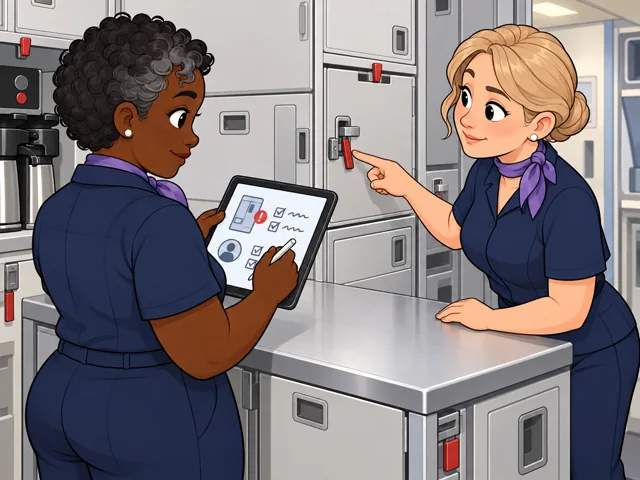
Record any faulty cabin equipment and passenger incidents so the airline gets the details.
United States
United States · May 2025
United States · 2025–2035
Quick orientation
Customer service experience is typically part of the preparation, too.
National median annual wage; not a starting salary.
About 18,500 openings per year, including replacements for people leaving the occupation.
Passenger apps can answer some travel questions. United’s app supplies connecting-gate directions and flight updates.
You still watch the cabin, respond to distress, and help passengers act on safety instructions.
How much routine explaining moves to passengers’ phones will depend on the tools and whether people can use them during a disrupted trip.
Pay in context
Use the national median as a reference point, then examine how an airline calculates paid time.
The median was $63,580. The 10th and 90th percentiles were $35,110 and $136,430. These describe the wage distribution, not starting and senior pay.
Annual medians were $63,570 in scheduled air transportation and $70,700 in nonscheduled air transportation.
Airline pay can combine flight hours, boarding pay, and a minimum reserve guarantee. Rates may rise with years of service. Ask which hours count and how time away from base is compensated.
Build the experience an airline requires, then apply for its selection and training process.
After entry
This starts where the entry routes leave off: early work, growing capability, and advancement or specialization. This path also has a credential or licensing boundary; see the requirements and limits.
Learn the airport routines and cover trips on reserve—the on-call schedule many new attendants begin with.
Keep emergency skills current through recurrent training and train for additional aircraft types.
With experience, pursue a senior cabin role such as purser, helping coordinate other attendants.
Smaller cabins mean confined working spaces. Reserve work can involve covering another attendant’s trip on short notice from your home base.
Longer flights can mean extended duty periods and nights away. Senior cabin attendants may coordinate the crew’s work.
Try it
Ask a friend to play a passenger who wants to leave a bag in the aisle. Practice a brief, courteous request to move it, then have them ask why. Notice whether you can stay clear and calm without sounding impatient.
Stay safe: Use an ordinary room; this is communication practice, not emergency training.