
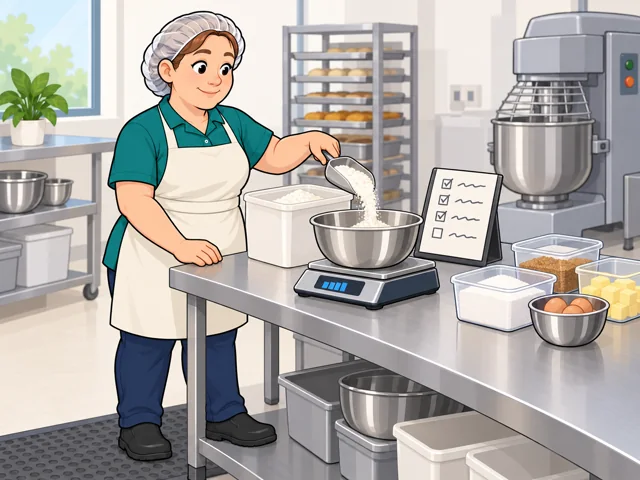
Weigh out every ingredient
Use the recipe to weigh each ingredient on a scale before it goes into the mixer.
Career profile
Food batchmakers mix measured ingredients into batches in large factory mixers, following exact recipes.
You watch a blend reach just the right feel. Then you try to get the next batch to turn out the same way.
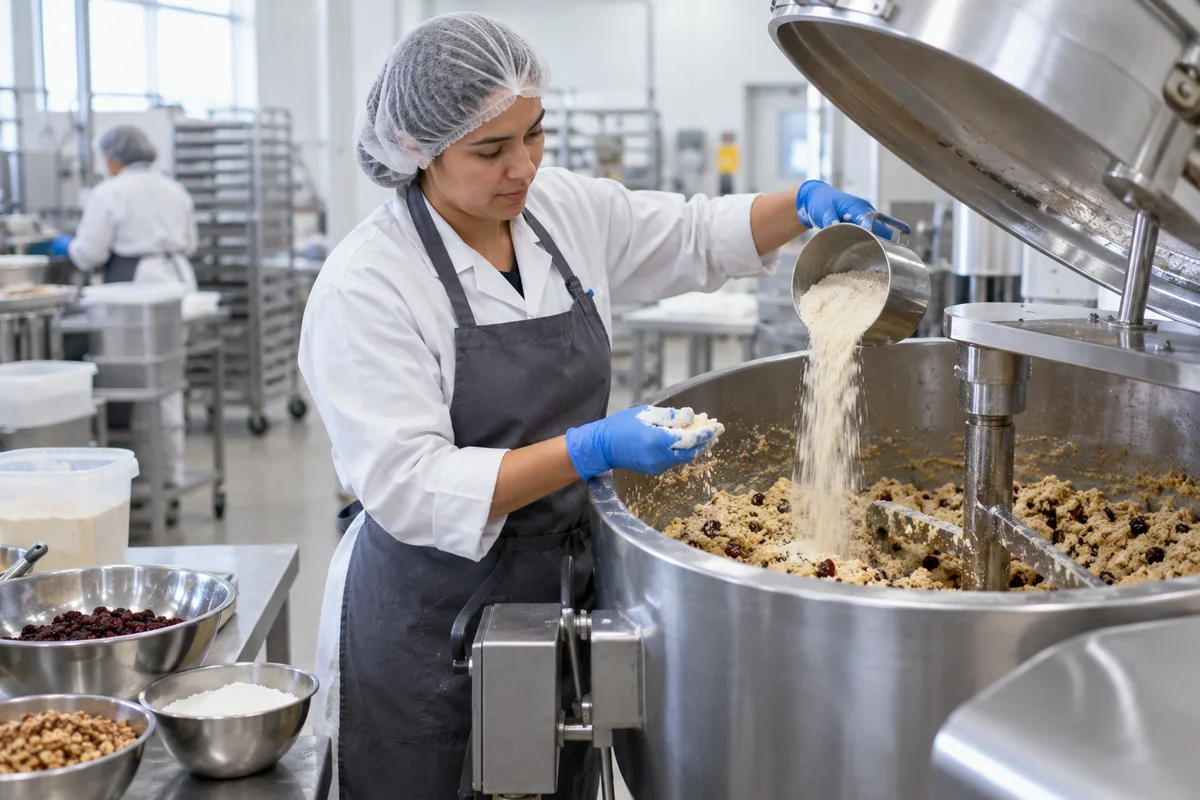
Use the recipe to weigh each ingredient on a scale before it goes into the mixer.
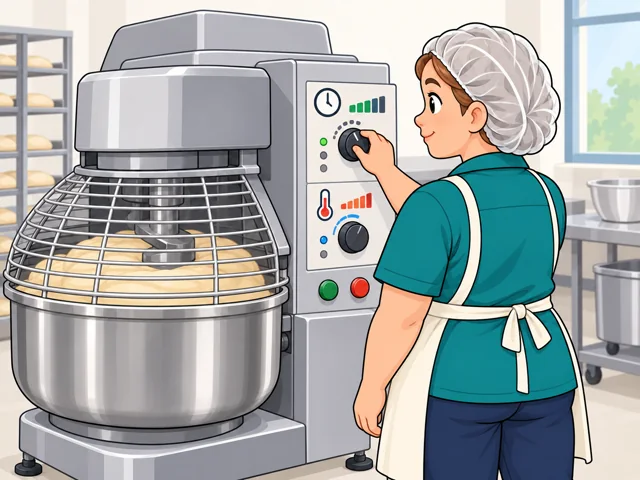
In a bakery, you set the mixing time and dough temperature on the machine's control panel.
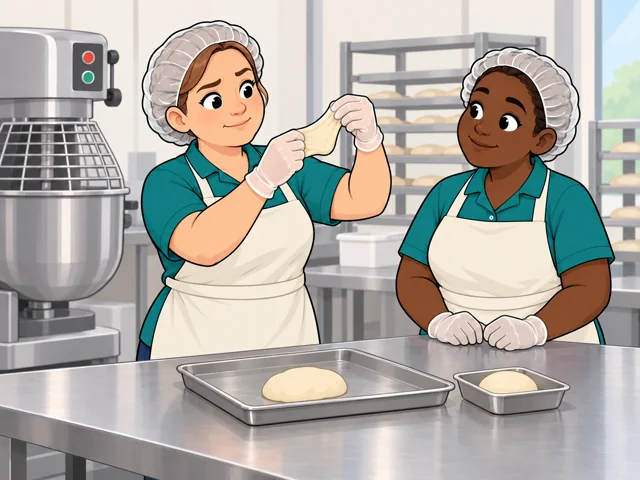
Judge a sample against the goal by feel or test results, and change processing time if it's unfinished.

Write down the ingredients used, temperatures and test results so the production record shows what happened.

You clean the blender, other equipment and your work area, following the plant's sanitation steps.
United States · 2025–2035
United States · May 2025
United States · 2025–2035
Quick orientation
A high school diploma or equivalent is typical, followed by training on the job.
National median for food batchmakers, equivalent to $20.33 an hour.
Employment of food batchmakers is projected to grow from 2025 to 2035.
Some bakery systems automatically measure and feed ingredients into mixers, reducing hand loading.
Operators still set the cycle and check dough consistency.
How much future equipment takes over those checks will depend on the product and the mixing system.
Pay in context
Compare actual offers: employers may weigh your experience, equipment skills, and location when setting pay.
Food batchmakers earned a median $42,290 a year, or $20.33 an hour. Half earned more and half earned less.
The lowest-paid 10% earned $31,990 or less annually; the highest-paid 10% earned $58,940 or more. These are wage percentiles, not starting and senior salaries.
Within food manufacturing, the annual median was $43,830, compared with $42,290 across all industries. That difference does not guarantee a higher offer at a particular plant.
About 23,100 openings per year are projected for 2025–2035, including replacement openings as well as growth. This is a national estimate, not a count of jobs available nearby.
You typically learn this work after hiring. Some jobs accept newcomers; others require related equipment experience.
After entry
This starts where the entry routes leave off: early work, growing capability, and advancement or specialization.
Learn your machine's safe operation, cleaning routine, and signs of trouble.
Develop changeover and troubleshooting skills so you can help keep production running between batches.
An experienced batchmaker may take responsibility for directing helpers through the batchmaking process.
You may move between blenders, grinders, and packaging equipment. Powder handling brings dust, and changing products means cleaning and resetting equipment.
Dough mixing involves temperature and timing. Some jobs include moving dough troughs into fermentation rooms before the next mixing stage.
Try it
On paper, scale a four-ingredient recipe to make three times as much. Create a batch sheet with a checkbox beside each amount, then have someone check your arithmetic. Notice whether you enjoy the precision and recordkeeping.