
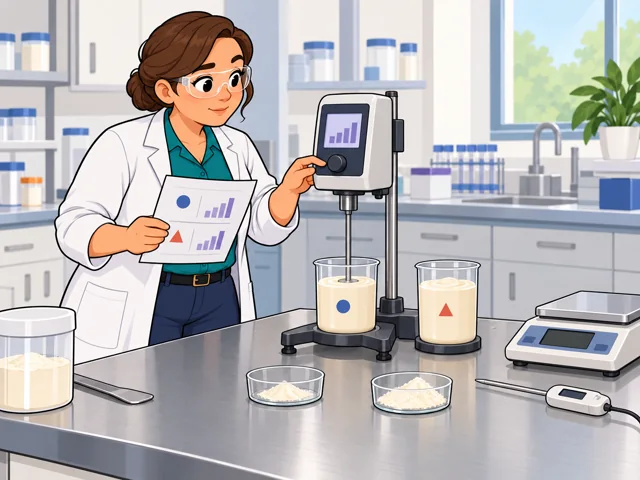
Test two batches side by side
Change how much of one ingredient goes in, keep all else steady, and judge if it truly thickened.
Career profile
Food scientists run experiments that improve food at every stage, from raw ingredients to meals.
Say a sauce tastes fine but separates in its container. Find what changed, then test whether swapping one ingredient or changing the process fixes it.
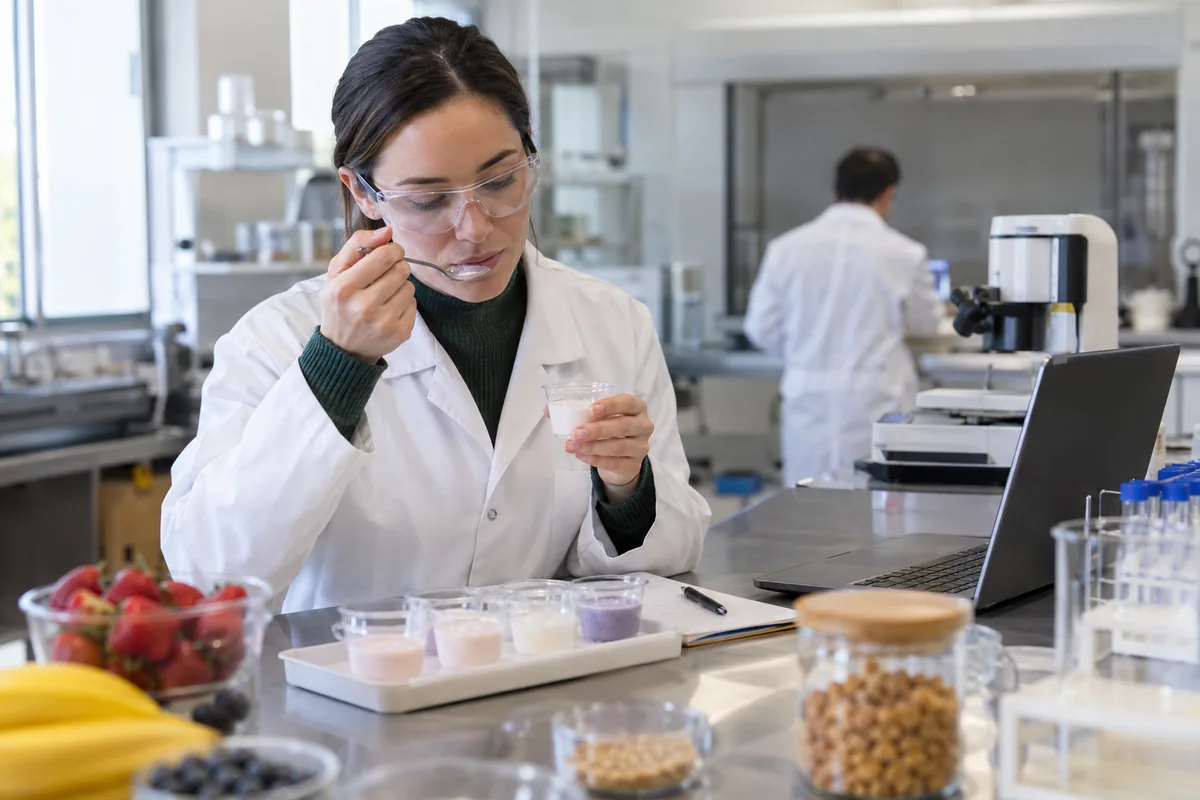
Change how much of one ingredient goes in, keep all else steady, and judge if it truly thickened.

Put out labeled samples, collect tasters' texture or flavor scores, and compare them rather than trusting your favorite.
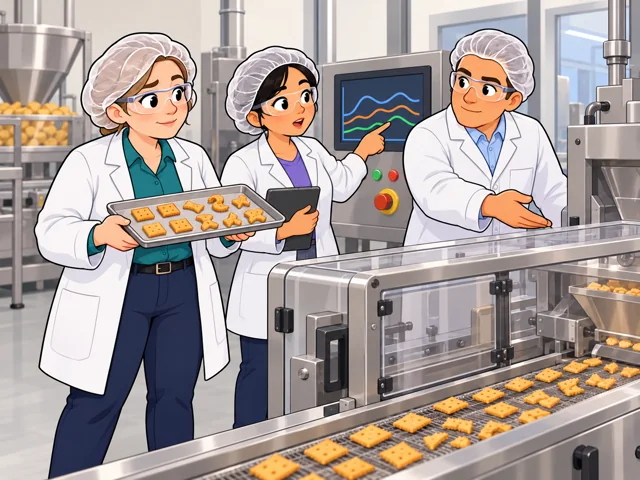
Review the processing with engineers and plant operators before you pick what to test next.
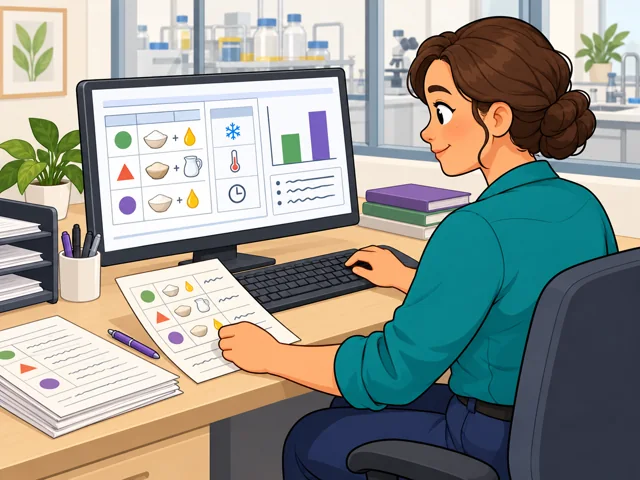
Enter the formula, test conditions and results in the digital lab record, plus why you reached your conclusion.
United States · 2025–2035
United States · May 2025
United States · 2025–2035
Quick orientation
Typical entry education for food scientists and technologists.
National median for food scientists and technologists; equivalent to $42.65/hour.
Projected employment growth for food scientists and technologists from 2025 to 2035.
Some product-development tools use artificial intelligence (AI) to retrieve food research and suggest formulation considerations, giving you ideas to investigate.
You still design physical trials, interpret results and work with production colleagues to decide what a product needs.
How much early research and formula development moves into software remains uncertain; generating a suggestion and proving it works are separate tasks.
Pay in context
Location, relevant experience and technical skills can affect an offer. National figures give you a reference point, not a promised starting salary.
Food scientists and technologists had median wages of $88,720 a year, equivalent to $42.65 an hour. Half earned more and half earned less.
The 10th-percentile annual wage was $52,920 and the 90th-percentile wage was $145,280. These mark the lower and upper ends of the middle 80%, not beginner and senior pay levels.
Employment is projected to grow 6.2%, with about 1,000 openings a year on average. Openings include replacing people who leave the occupation, as well as new positions.
A bachelor's degree is the usual starting point. Early associate scientist jobs can involve closely supervised projects while you learn the employer's methods.
After entry
This starts where the entry routes leave off: early work, growing capability, and advancement or specialization.
Learn the lab's test methods and recordkeeping. Build confidence collecting reliable results and explaining what they mean.
Develop experiments that connect a product problem to its cause, then follow the solution from laboratory batches into manufacturing trials.
Specialize in a product or process, such as fried snacks. Senior scientists lead complex projects and coach less experienced colleagues.
Your laboratory work connects to the company's production lines. Plant trials bring you alongside engineers and operators, sometimes requiring travel and time around noisy equipment.
You make sample foods that show customers how ingredients perform. Expect demonstrations, contact with sales and flavor specialists, and occasional visits to customer plants.
Try it
Put equal amounts of oil and water into two clear, sealed containers. Shake one briefly and the other longer, then photograph both at the same intervals. Write down what changed and design a repeat test. Notice whether you enjoy controlling conditions and explaining an imperfect result.
Stay safe: Use clean, unbreakable containers. Observe without tasting; this exercise does not test food safety or shelf life.