
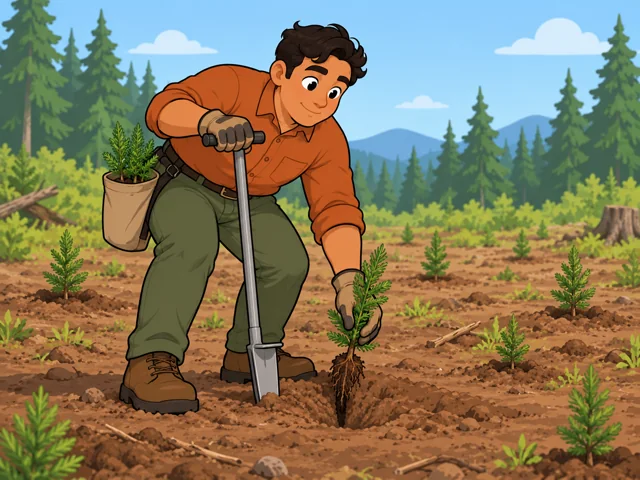
Plant seedlings by hand
Prepare the soil, then set young trees into the ground with a hand planting tool to restock it.
Career profile
Forest and conservation workers plant seedlings, thin dense growth and help care for forests.
Picture a day that starts with a bundle of seedlings and ends with freshly planted forest. Your work stays visible on the land.
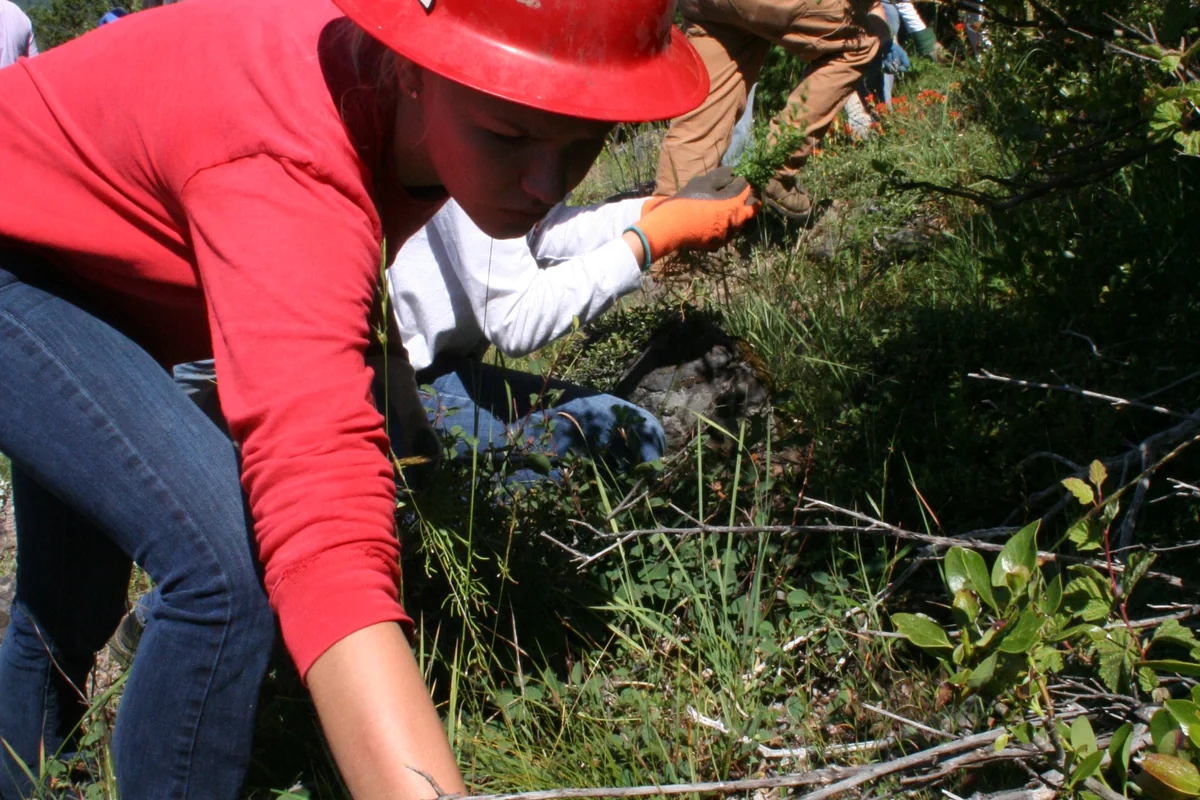
Prepare the soil, then set young trees into the ground with a hand planting tool to restock it.
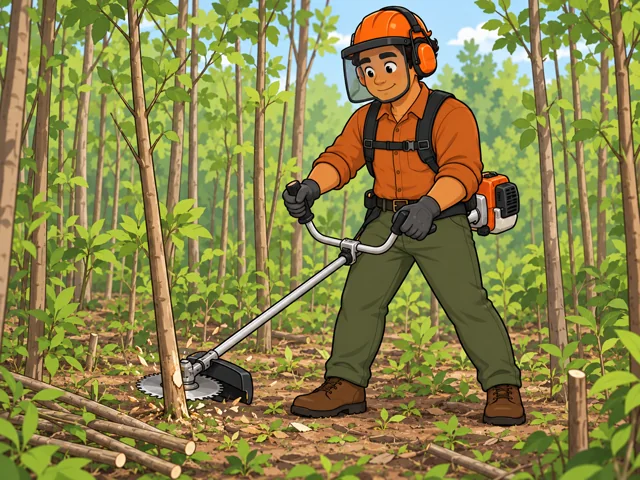
Use a powered thinning saw to cut out chosen trees so the ones left standing have room.
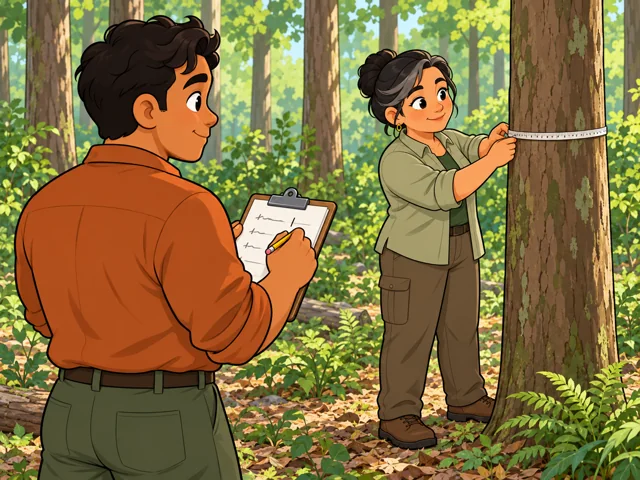
While the crew marks or measures trees, write down each one counted so the final count is correct.
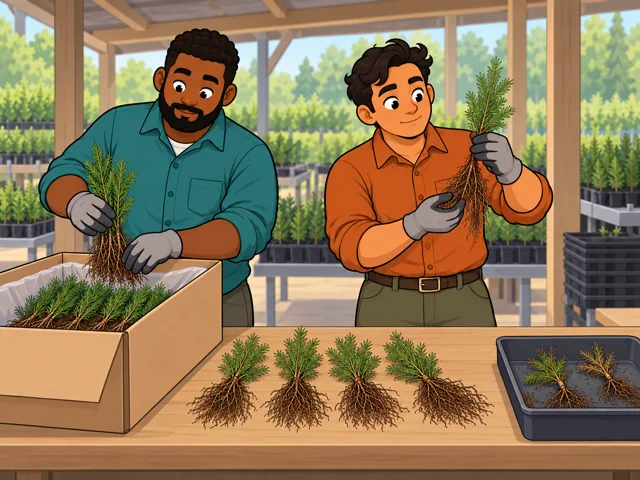
Check nursery seedlings for damage and size, then count the keepers and pack them in bales or boxes.
United States · 2025–2035
United States · May 2025
United States · 2025–2035
Quick orientation
A diploma or equivalent is typical, followed by on-the-job training; related experience is not typically required.
National median for forest and conservation workers, equivalent to $21.00 an hour.
About 2,200 openings a year are projected nationally, despite shrinking total employment.
Sensors that observe forests from a distance can reduce the labor needed to count and identify trees.
Crews still plant, handle tools, and check conditions on the ground.
How much fieldwork machines take over will change the balance between counting trees and physically tending them.
Pay in context
The national median is a reference point, not a starting offer.
In May 2025, median pay was $43,680 annually, or $21.00 hourly. The annual 10th and 90th percentiles were $33,780 and $57,220. These describe the wage spread, not beginner and experienced pay.
Annual medians were $43,680 in state government, excluding education and hospitals, and $39,590 in religious, grantmaking, civic, professional, and similar organizations.
Employment is projected to fall 1.5% from 2025 to 2035, with about 2,200 openings annually on average. Projected openings are not a count of jobs available today.
You carry out fieldwork under foresters or conservation scientists.
After entry
This starts where the entry routes leave off: early work, growing capability, and advancement or specialization.
Learn safe tool operation and maintenance.
In nursery work, get better at spotting damaged seedlings and sorting plants consistently for shipment.
An associate's degree in forestry or a related field can support a move into forest and conservation technician work.
Trail clearing may share your day with campground upkeep and restroom cleaning.
Work follows the seedling crop: prepare beds, pull plants, then sort and pack them for shipment. Expect repeated bending and careful handling of small plants.
Try it
Draw a batch of seedlings on paper, varying their size and adding damage to some. Write a simple acceptance rule, sort the drawings, and tally the usable plants. Notice whether repeated checking holds your attention; that is one small part of nursery conservation work.
Stay safe: Use drawings only; this does not require collecting plants or using cutting tools.