
Inspect a logging site
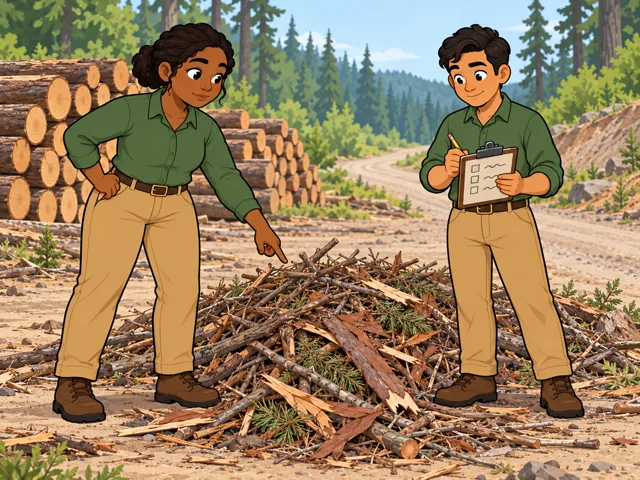
Walk the logging site looking for piled debris or flammable material left poorly managed, then recommend fixes.
Career profile
Forest fire inspectors find what could spark or feed wildfires, then help people fix it.
Field inspections get you outdoors. Conversation matters too, since you explain fire regulations and ways to keep fires from starting at all.
Walk the logging site looking for piled debris or flammable material left poorly managed, then recommend fixes.
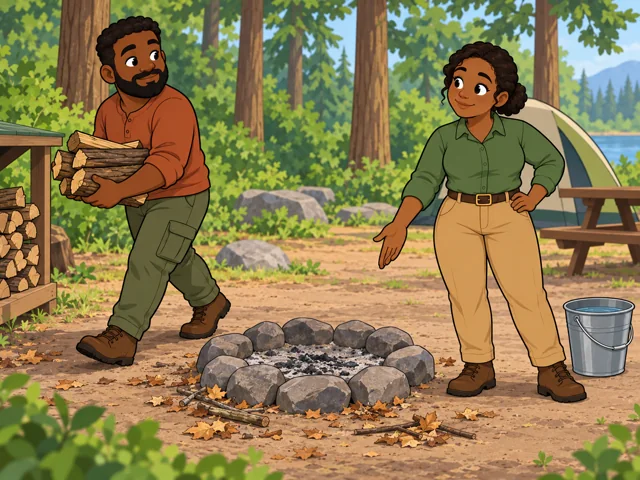
You compare what campers are doing with the forest-use regulations and tell them what to change.
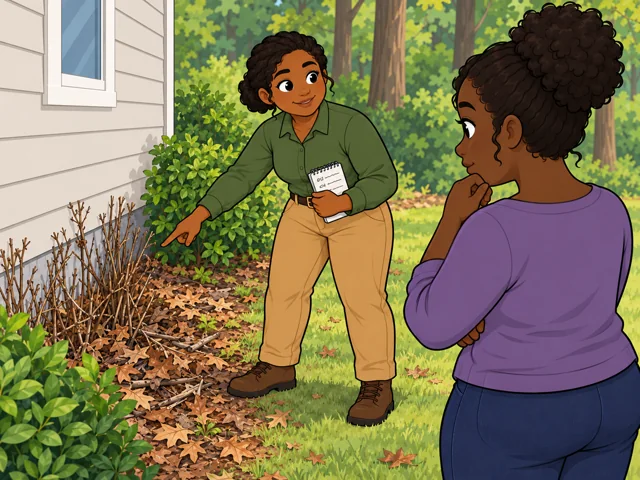
Some jobs include home checks, where you explain how removing flammable material lowers the home's wildfire risk.

Make a visual display for a local group, walk them through fire safety measures, and record the outreach.
United States · 2025–2035
United States · May 2025
United States · 2025–2035
Quick orientation
A starting education level; employers also look for relevant experience and training.
National median for forest fire inspectors and prevention specialists, equivalent to $27.34 an hour.
Projected national employment growth, with about 400 openings annually.
Online forms and address maps can handle parts of permit intake. California already uses these tools for burn permits.
Staff still review California's general and broadcast burn applications, and some require a site inspection.
How much permit review can move online will depend on which site conditions can be judged reliably without a visit.
Pay in context
National wages give you a comparison point when you read an actual job offer.
Forest fire inspectors and prevention specialists earned a median $56,870 a year, or $27.34 an hour. The 10th–90th percentile range was $35,420–$105,460 annually. Those are positions in the wage distribution, not starting and senior salaries.
Employment is projected to grow 13.1%, with about 400 openings a year from growth and replacement needs combined. That national total does not tell you how many jobs will open near you.
Requirements depend on the agency. These two California Department of Forestry and Fire Protection (CAL FIRE) routes show how experience can qualify you for Fire Prevention Specialist I.
After entry
This starts where the entry routes leave off: early work, growing capability, and advancement or specialization.
Learn the inspection standards and write findings another inspector can follow.
Develop your inspection scheduling and teaching skills so you can manage field visits alongside community education.
Move toward organizing patrols or training volunteers. One year of full-time experience performing Specialist I duties at CAL FIRE meets one experience route for Specialist II; advancement still requires selection.
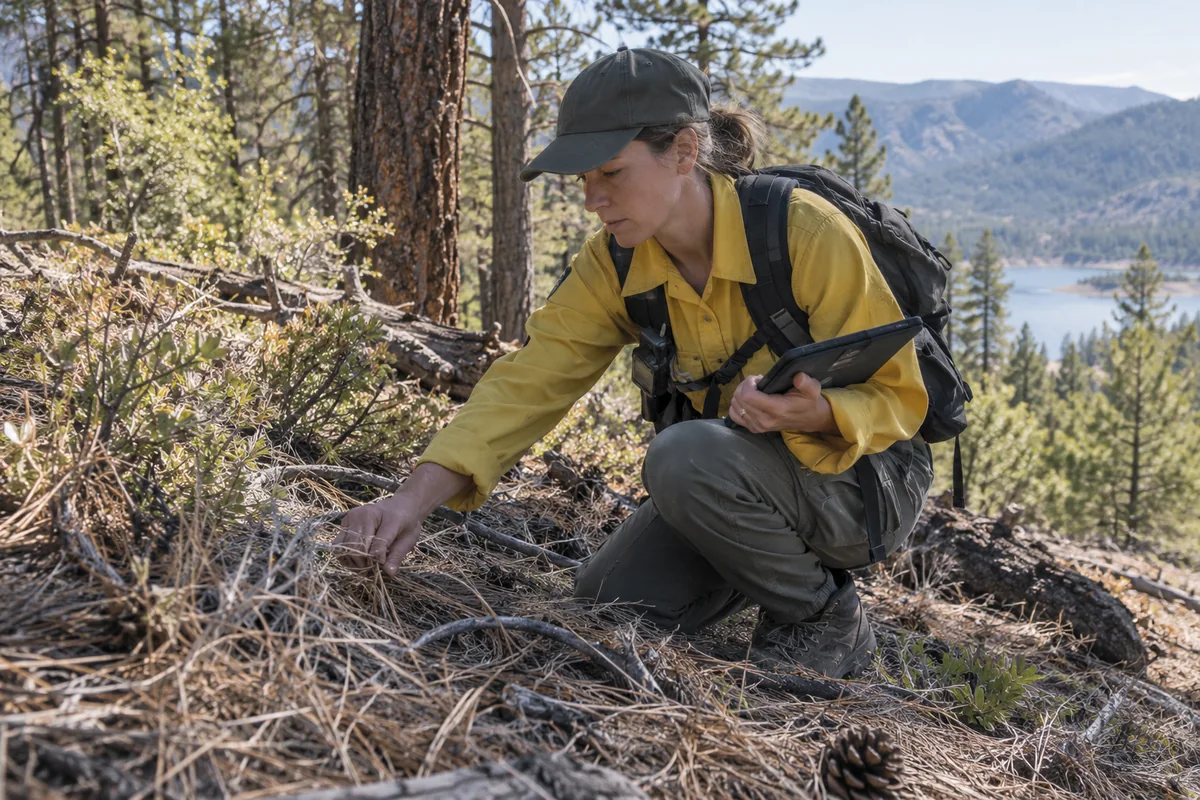
Travel between campsites and logging areas, checking hazards and speaking with forest users.
Residential programs, including California's, put you face to face with owners about the vegetation around their homes. The work focuses on individual properties and explaining practical changes.
Try it
Read CAL FIRE's defensible-space guide, then observe your own yard or a property you have permission to visit. Write down one vegetation concern and a plain-language explanation for the owner. Notice whether you enjoy turning an observation into useful advice.
Stay safe: This is a practice observation, not an official inspection. Do not enter other properties or remove vegetation.