
Career profile

Fuel Cell Engineer

Fuel cell engineers design and test fuel cells, which make electricity from fuel through chemistry.

A fuel cell can make power yet wear out too soon. Part of your work is finding which changes could help it last longer.
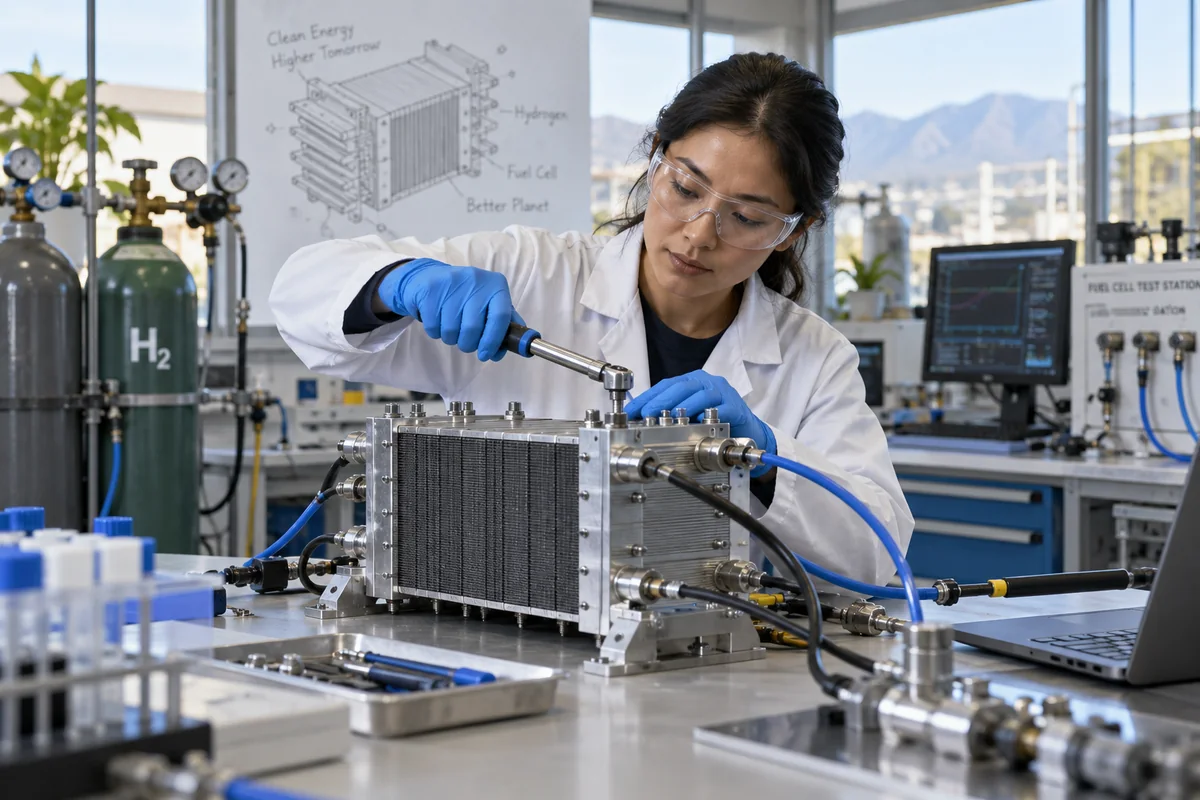
An adult fuel cell engineer assembling and testing a hydrogen fuel cell stack on a laboratory workbench with safe equipment.

A day in the life

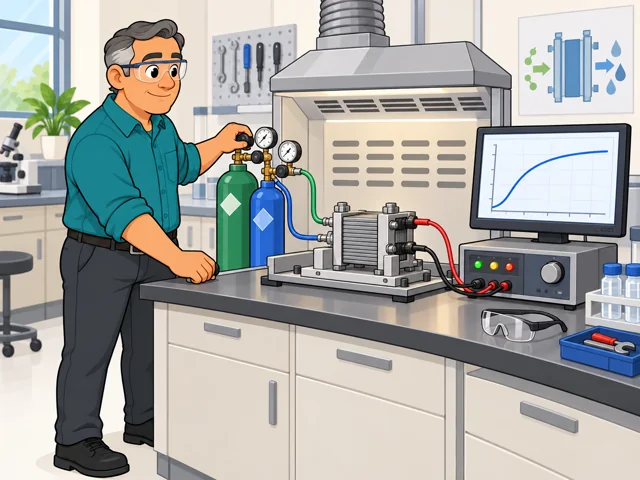
1A fuel cell engineer adjusts a connected laboratory test station and checks its initial performance curve.

Prepare the test station

Get the test station and measuring gear ready first, then check how well a fuel cell performs.
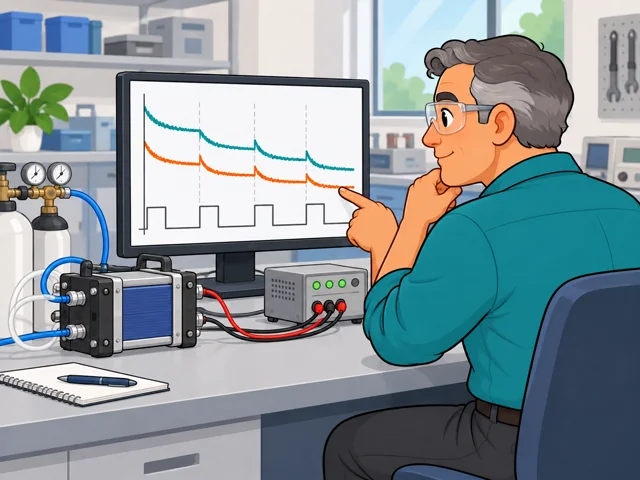
2The engineer compares initial and later output traces from a portable fuel cell undergoing repeated start-stop testing.

Track output across on-off cycles

For portable power designs, compare output before and after many on-off cycles to catch hidden drops.

3The engineer and a colleague compare component samples and visual summaries of heat tolerance, cost, and expected life.

Weigh heat, cost and lifespan

Weigh how well a part handles a running cell's heat against its cost and expected lifespan.
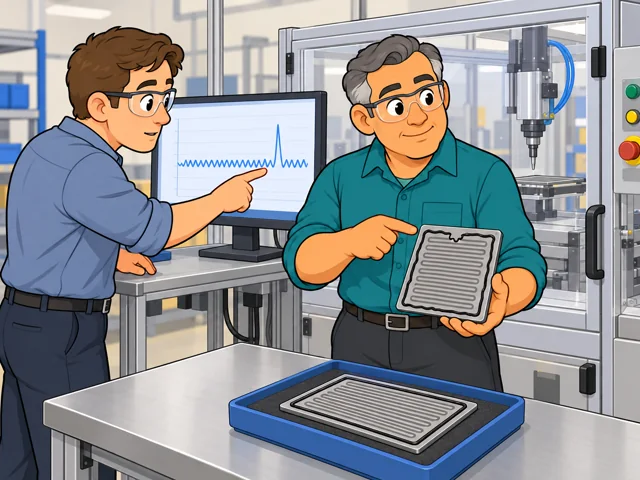
4The engineer and a production colleague compare an uneven seal on a rejected fuel-cell part with an equipment trace to investigate the failure.

Trace why parts get rejected

In factory jobs, match machine readings to rejected parts, pin down the cause, and help stop repeats.

Quick facts

Preparation

Usually a bachelor's degree

United States

Pay

Not displayed

Pay depends on the particular engineering role and employer.

Outlook

Not displayed

Explore openings by specialty, including stack testing, materials, and system design.

Quick orientation

Preparation, pay & outlook

Preparation

Usually a bachelor's degree

Relevant engineering study is a common start; some roles require a master's degree.

Geography
United States
Period
Not applicable

Pay

Not displayed

Pay depends on the particular engineering role and employer.

Geography
United States
Period
Not applicable

Outlook

Not displayed

Explore openings by specialty, including stack testing, materials, and system design.

Geography
United States
Period
Not applicable

Fit, tradeoffs & changing tools

Things to weigh

  • Durability work takes patience: a good first result does not tell you how a cell will perform after repeated use.
  • Some manufacturing roles cover evenings or weekends so production problems receive an immediate response.

Where AI may help

In vehicle development, simulation software can build and compare fuel cell powertrain models before engineers commit to hardware.

What people still lead

You choose the test conditions and decide whether the evidence supports a design change.

What we can’t predict yet

How much physical testing models can replace will depend on how well they capture wear and changing operating conditions.

Pay in context

Earnings

The range below is for an experienced fuel cell design role, not starting pay or a national average.

Senior fuel cell design: $105,000–$135,000

At Redwire Defense Tech in Ann Arbor, Michigan, the anticipated annual salary for a Senior Mechanical Engineer, Fuel Cells is $105,000–$135,000. The role develops solid oxide fuel cell power systems and requires 4–7 years of relevant experience.

Geography
Ann Arbor, Michigan, United States
Period
Employer listing retrieved October 4, 2026
Pay basis
Anticipated annual salary for one senior position

What affects the offer

For this position, your qualifications and experience, location, and the employer's internal pay alignment can affect actual compensation.

Geography
Ann Arbor, Michigan, United States
Period
Employer listing retrieved October 4, 2026
Pay basis
Factors affecting the same position's compensation

Getting started

Engineering degree plus applied analysis

What the route involves
Earn a relevant bachelor's degree, such as mechanical or electrical engineering, and practice analyzing hardware measurements with statistics and programming.
What it can lead to
You can meet the educational requirement for some fuel cell stack-analysis positions.
What to check
These positions may also expect experience applying data analysis to real hardware problems.

Graduate study focused on fuel cells

What the route involves
After undergraduate study, pursue graduate engineering work in fuel cell materials, how heat and fluids move through cells, and system performance.
What it can lead to
A master's degree can meet the education requirement for roles that seek deeper technical preparation.
What to check
Check the program's prerequisites and fuel cell course offerings before choosing it.

Build an engineering foundation, then develop fuel cell skills through projects or graduate study.

After entry

Career paths

This starts where the entry routes leave off: early work, growing capability, and advancement or specialization.

  1. Get established

    Learn the test station and produce measurements another engineer can reproduce.

  2. Connect results to causes

    Take responsibility for investigating recurring component problems, using data to recommend a change and check its effect.

  3. Lead a move into production

    Advance toward leading the transfer of a new stack design—a group of connected cells—into manufacturing, coordinating equipment, quality, and supplier decisions.

Where you can work

Development laboratory

You investigate materials and small-scale designs before they are ready for production. The central question is whether a change improves performance, durability, or cost.

  • Indoors
  • Lab

Fuel cell manufacturing site

Production problems set immediate priorities. You work with equipment and product data to keep problems from recurring; some positions cover evening or weekend operations.

  • Indoors
  • Shift work

Try it

See whether the job clicks before you commit to the path.

Read the Department of Energy's Types of Fuel Cells page. Compare polymer electrolyte membrane fuel cells with solid oxide fuel cells: list one advantage and one limitation of each, then choose which you would investigate for a vehicle. Explain what you would test before deciding. Notice whether weighing imperfect options interests you.

Explore more careers

Sources

  1. O*NET OnLine. Fuel Cell Engineers — 17-2141.01. Accessed 2026-10-03.
  2. U.S. Department of Energy. Types of Fuel Cells. Accessed 2026-10-03.
  3. U.S. Department of Energy. DOE Technical Targets for Fuel Cell Systems for Portable Power and Auxiliary Power Applications. Accessed 2026-10-03.
  4. U.S. Department of Energy. Fuel Cell Technologies Manufacturing Research and Development. Accessed 2026-10-03.
  5. Bloom Energy. Stack Data Analysis Engineer — JR-24018. Accessed 2026-10-03.
  6. Bloom Energy. Staff Process Engineer — JR-22718. Accessed 2026-10-03.
  7. Bloom Energy. Sr. Staff Process Development Engineer, NPI — JR-21500. Accessed 2026-10-03.
  8. Argonne National Laboratory. Vehicle Technology Assessment Workflow. Accessed 2026-10-03.
  9. Michigan Technological University. Graduate Course Descriptions 2025–26 — ME 5220 Fuel Cell Technology. Accessed 2026-10-03.
  10. U.S. Bureau of Labor Statistics. Occupational projections and worker characteristics. Accessed 2026-10-03.
  11. Redwire Defense Tech. Senior Mechanical Engineer, Fuel Cells. Accessed 2026-10-04.

Your message goes to the Great Jobs team. How we use your information