
Career profile

Geological Technician

Geological technicians work out what lies underground from collected samples and instrument readings.

You study rock and what a drill brings up, then build geology records. An eye for small differences helps show what lies under a site.
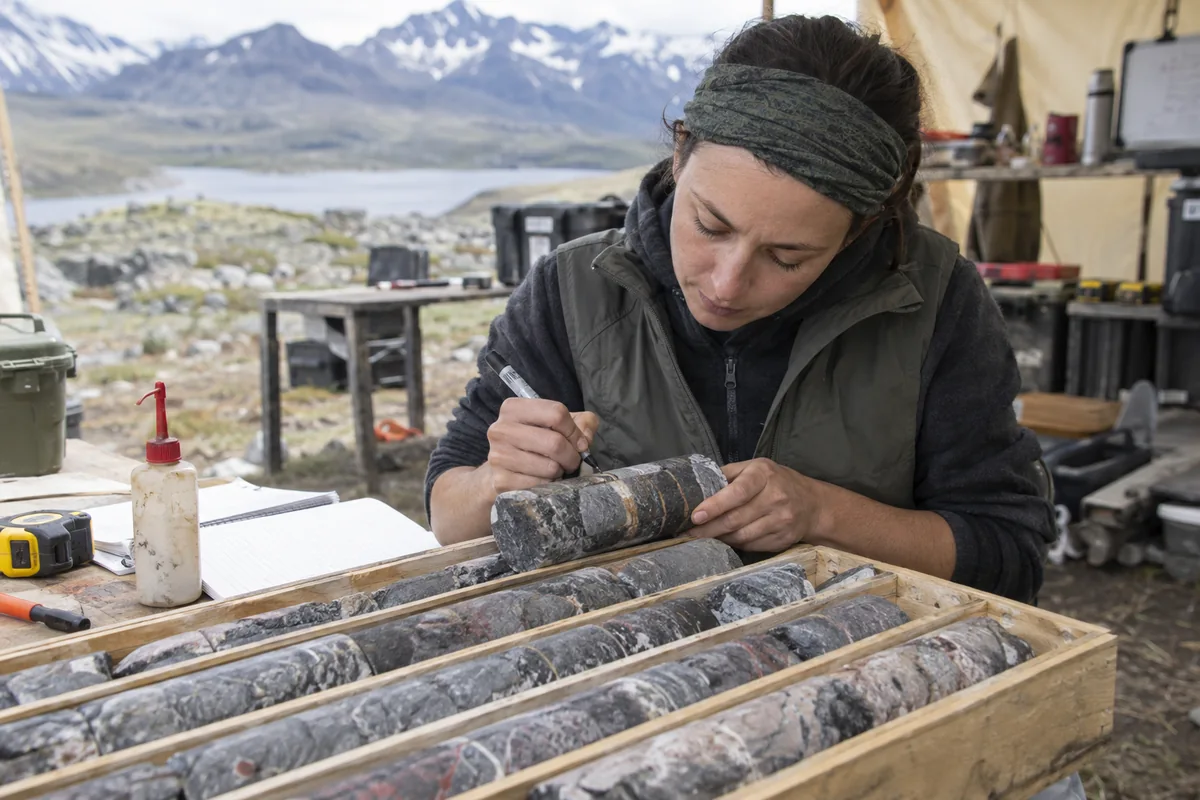
geological technician labeling rock core samples at a field station.

A day in the life

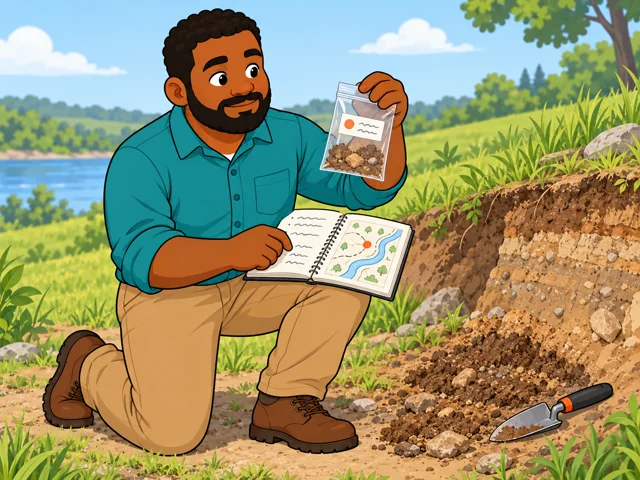
1A geological technician compares the tag on a freshly collected sample with its location in his field notebook beside a sediment exposure.

Match each sample to the notebook

Collect geological samples, then make sure each label matches the location written in your field notebook.
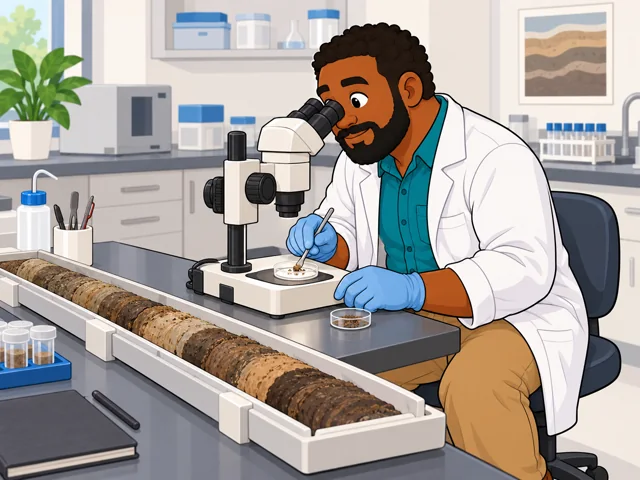
2A geological technician examines sediment under a microscope and separates a small portion for further analysis beside a split core.

Choose sediment for more testing

Examine a small piece of sediment core under the core lab microscope and pick what gets tested further.
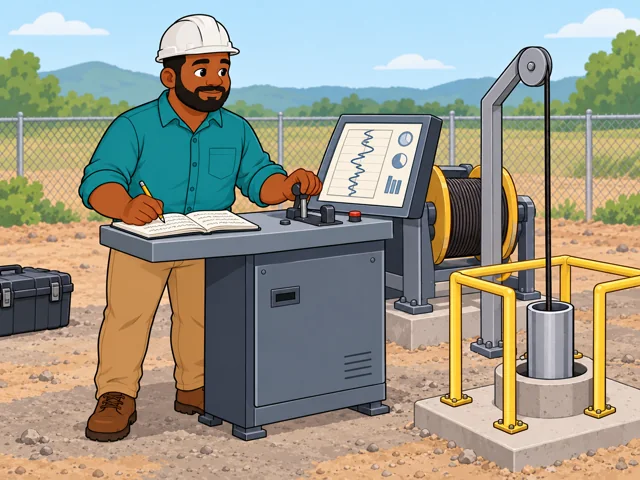
3A geological technician operates borehole logging equipment and records a measurement while a cable carries an instrument below the surface.

Log readings from a borehole

On a well-logging job, you run the measurement tools and write down underground pressure or temperature.
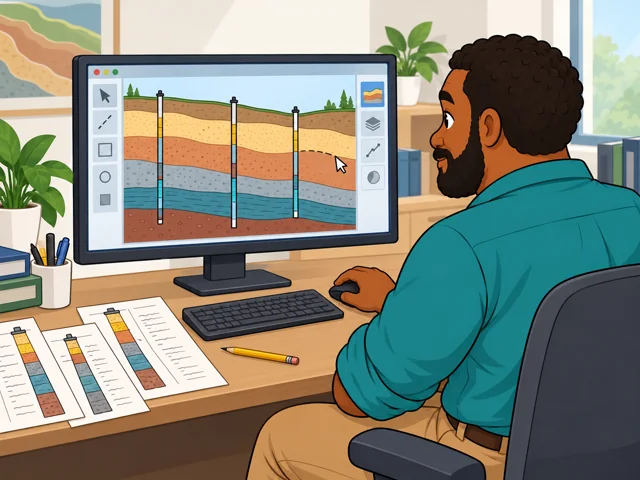
4A geological technician consults well records while drawing a cross-section of underground layers in mapping software.

Map the layers beneath the site

Pair mapping software with well records to draw a cross-section, a sideways view of the buried layers.

Quick facts

Preparation

Associate's degree

United States

Pay

$53,350/year

United States · May 2025

Outlook

3.6% growth

United States · 2025–2035

Quick orientation

Preparation, pay & outlook

Preparation

Associate's degree

Typical entry preparation; some jobs require a bachelor's degree.

Geography
United States
Period
Not applicable

Pay

$53,350/year

National median, equivalent to $25.65/hour, for geological technicians excluding hydrologic technicians.

Geography
United States
Period
May 2025

Outlook

3.6% growth

Projected employment growth from 2025 to 2035, with about 1,000 openings a year.

Geography
United States
Period
2025–2035

Fit, tradeoffs & changing tools

Things to weigh

  • Field assignments can mean carrying equipment in bad weather and staying away for days or weeks.
  • An office assignment can mean much of the day at a computer.

Where AI may help

In some core laboratories, scanners make detailed images along a sample, helping you examine layers without relying only on visual inspection.

What people still lead

People still prepare the cores, select small samples and handle material for later tests.

What we can’t predict yet

How much scanning will replace hands-on examination remains uncertain; different tests need different kinds of sample preparation.

Pay in context

Earnings

Use the national figures as a reference when comparing offers, not as a promised starting wage.

The midpoint

The median was $53,350 a year, or $25.65 an hour. Half of workers earned more and half earned less.

Geography
United States
Period
May 2025
Pay basis
National employee wages for SOC 19-4043, geological technicians excluding hydrologic technicians; annual and hourly medians.

The national spread

The 10th-percentile annual wage was $35,770 and the 90th-percentile wage was $99,560. These describe the wage distribution, not beginner and senior pay grades.

Geography
United States
Period
May 2025
Pay basis
National employee annual wage percentiles for SOC 19-4043.

Openings over the decade

Employment is projected to grow 3.6%, with about 1,000 openings annually from growth and replacement needs. Local opportunities will differ.

Geography
United States
Period
2025–2035
Pay basis
Employment projection and average annual openings for SOC 19-4043; not a compensation measure.

Getting started

Study applied science

What the route involves
Earn an associate's degree in applied science or a related technology, studying subjects such as geology, chemistry and mathematics.
What it can lead to
This is typical preparation for technician jobs, followed by learning the employer's equipment and software.

Use a physical-science degree for federal roles

What the route involves
Complete a bachelor's degree with a major in an appropriate physical science.
What it can lead to
For federal geological work classified as Physical Science Technician, series 1311, this can meet the education route at General Schedule grade 5.
What to check
The vacancy's requirements and the federal group qualification standard also apply. A qualifying degree does not guarantee selection.

You enter a team supporting scientists and engineers, with workplace training after hiring.

After entry

Career paths

This starts where the entry routes leave off: early work, growing capability, and advancement or specialization.

  1. Learn the local workflow

    After hiring, practice using the team's field equipment, laboratory instruments and software.

  2. Develop a technical specialty

    In core work, build skill in preparing, imaging and preserving samples so they remain useful for later analysis.

  3. Coordinate data collection

    With experience, aim for responsibility directing workers who operate geological measuring equipment.

Where you can work

Field sites

You work outdoors with sampling equipment. Remote assignments may involve travel and irregular hours.

  • Outdoors
  • Field work
  • Travel
  • Physical demands

Core laboratories

The workbench may hold sampling tools, balances and a microscope. Preparing and storing cores shares space with imaging equipment.

  • Indoors
  • Lab

Geological data offices

Your day centers on computer records, maps and reports, generally with more regular hours than field assignments.

  • Indoors
  • Office

Try it

See whether the job clicks before you commit to the path.

Make a sample log for three rocks you already own or can borrow. Give each an identifier, photograph it beside a ruler, and record visible colors, grains and layers. Ask someone to match the rocks to your notes. Notice whether you enjoy making observations precise enough for another person to use.

Stay safe: Use intact specimens; no breaking, grinding or chemical tests.

Explore more careers

Sources

  1. O*NET OnLine. Geological Technicians, Except Hydrologic Technicians. Accessed 2026-10-09.
  2. U.S. Bureau of Labor Statistics. Geological and Hydrologic Technicians: applicable preparation and working conditions. Accessed 2026-10-09.
  3. U.S. Bureau of Labor Statistics. May 2025 Occupational Employment and Wage Statistics: national SOC 19-4043 estimates. Accessed 2026-09-29.
  4. U.S. Bureau of Labor Statistics. Employment Projections Table 1.2, 2025–2035: SOC 19-4043. Accessed 2026-09-29.
  5. U.S. Geological Survey. Santa Cruz Core Splitting Laboratory. Accessed 2026-10-09.
  6. U.S. Office of Personnel Management. Physical Science Technician Series 1311: qualification requirements. Accessed 2026-10-09.

Your message goes to the Great Jobs team. How we use your information