
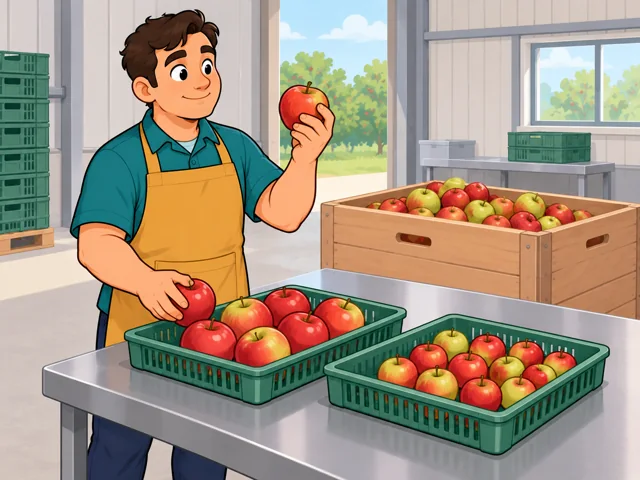
Sort fruit into grades
Inspect the fruit and divide it into groups that meet the required standards for quality and size.
Career profile
Graders and sorters group farm products by size, weight, color, and condition.
An apple's flaw can hide until you turn it over. People who enjoy spotting tiny differences can use that eye here in repeated, hands-on tasks.
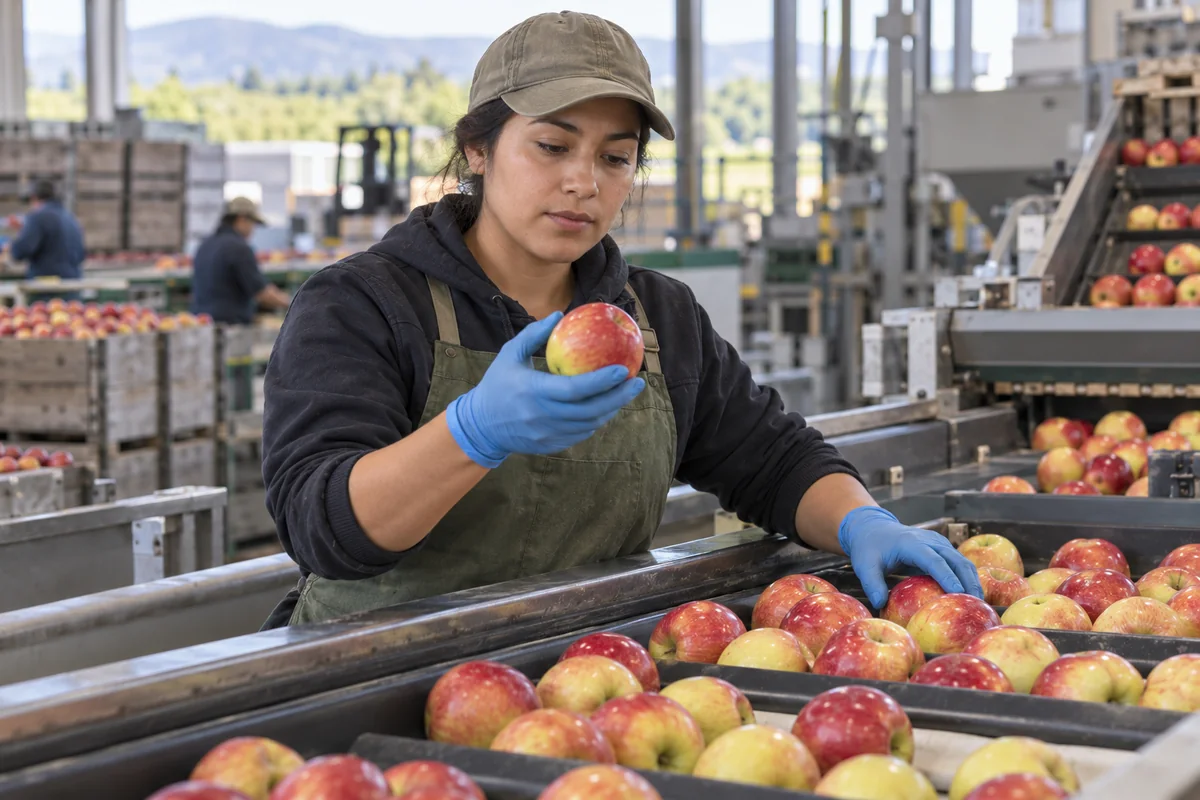
Inspect the fruit and divide it into groups that meet the required standards for quality and size.
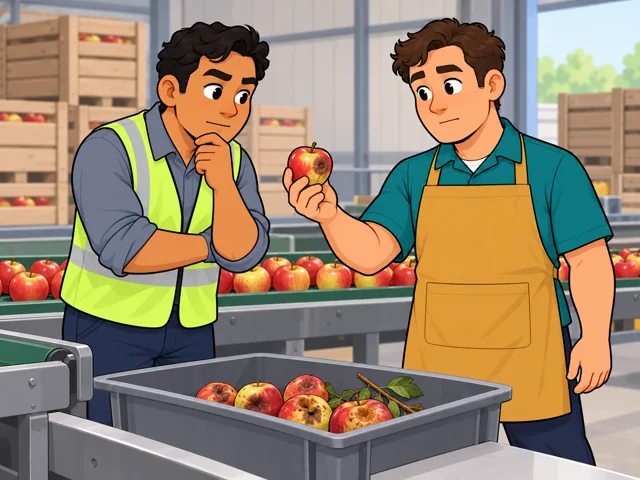
Pick out defective pieces and anything that isn't fruit, and show doubtful fruit to a supervisor.
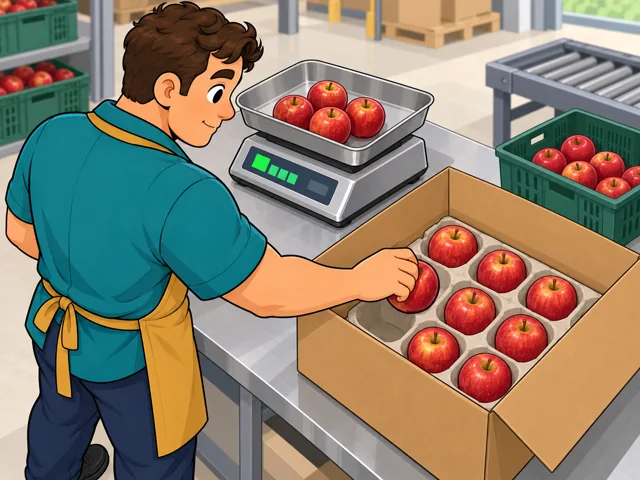
Weigh the produce on a scale first, then pack what passes into containers by grade.
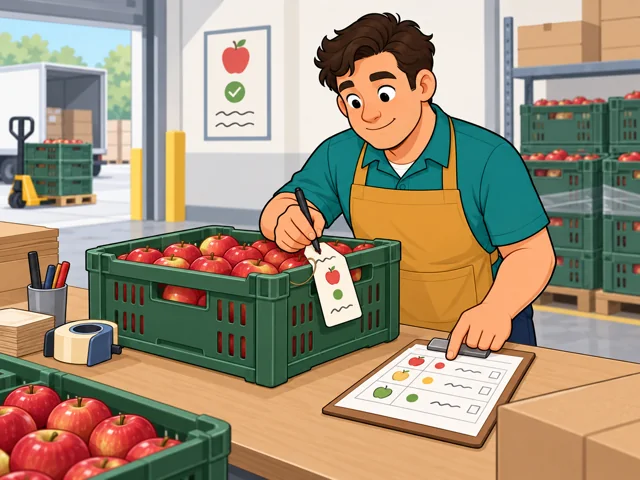
Mark grade numbers on the tags and also on the shipping sheets so each batch stays recognizable.
United States · 2026
United States · 2025
United States · 2024–2034
Quick orientation
Schooling and experience requirements vary by employer.
National median: $35,730 annually.
About 5,100 openings annually are projected for 2024–2034, including replacement needs.
In some apple packing lines, cameras and artificial intelligence classify visible defects, helping automate sorting.
Operators control the final sorting settings, including how severe a defect must be to change a fruit's grade.
How much hands-on inspection remains will depend on which products and defects machines can reliably recognize and which systems a workplace adopts.
Pay in context
Compare the hourly rate with the hours and months you would actually work.
In 2025, the median was $17.18 an hour, or $35,730 annually. The bottom 10% earned $29,580 or less; the top 10% earned $44,490 or more. These are wage percentiles, not beginner and experienced-worker rates.
In May 2023, graders and sorters averaged $15.52 an hour ($32,290 annually) in crop-production support and $17.32 ($36,030 annually) in animal slaughtering and processing. These historical industry averages are not current offers.
Annual wage estimates assume 2,080 hours of work. A seasonal contract may cover only part of the year, so ask about the end date and expected weekly hours before planning your income.
Entry requirements differ, so read the experience requirement before applying.
After entry
This starts where the entry routes leave off: early work, growing capability, and advancement or specialization.
Compare uncertain pieces with your supervisor until your sorting decisions reliably match the required grade.
Build beyond hand sorting by learning the selector machine used at your workplace.
Develop coaching and production-planning skills for a packing-line lead role. Leads coordinate workers and help correct quality problems; moving up requires more than sorting quickly.
You work alongside sizing-machine operators, packers, and quality checkers. The crew follows a packing plan, and some operations run evening shifts.
Fruit may need another inspection after ocean shipping. In melon warehouses, you re-sort and repack arrivals to meet customer specifications.
Try it
Use a few apples or potatoes already at home. Write a simple rule for sorting by size and visible blemishes, sort them, then repeat without looking at your first results. Notice which pieces are hard to classify and whether you enjoy making consistent decisions.
Stay safe: This tests observation, not whether food is safe to eat.