
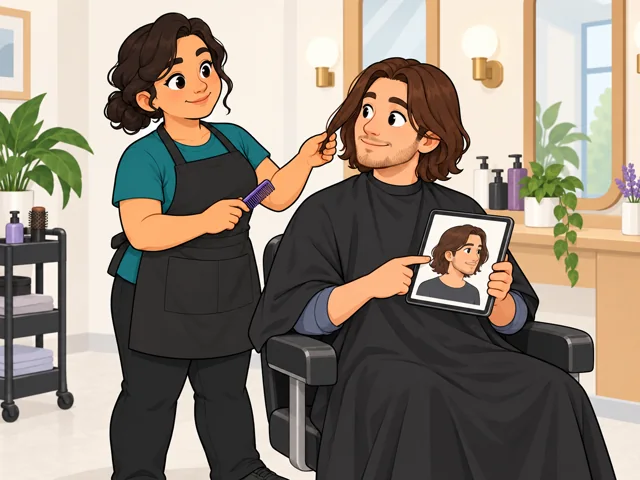
Agree on the look first
Go over the client's photo and their hair so you agree on the result before you cut.
Career profile
Hairstylists cut, color and style hair to suit the person in the chair.
You turn what a client asks for into a style that suits them. That takes precise hands and working out what "a bit shorter" means.

Go over the client's photo and their hair so you agree on the result before you cut.
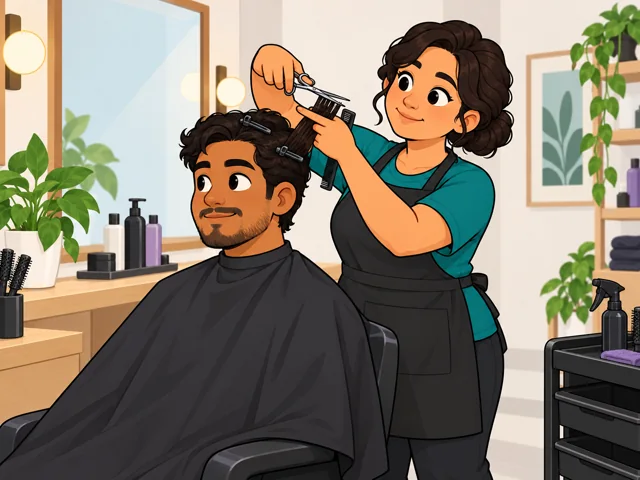
Cut the agreed shape with scissors or clippers, checking that each section blends into the next.
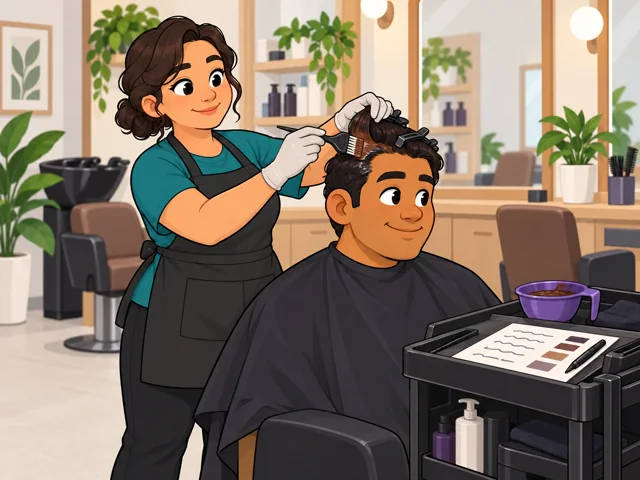
If your salon does color, brush on the dye and log it for the client's next visit.
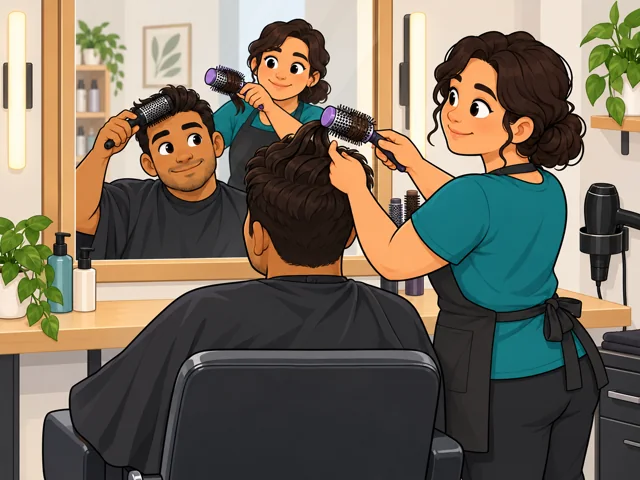
Dry and style the hair, then teach the client to redo it at home with a brush.
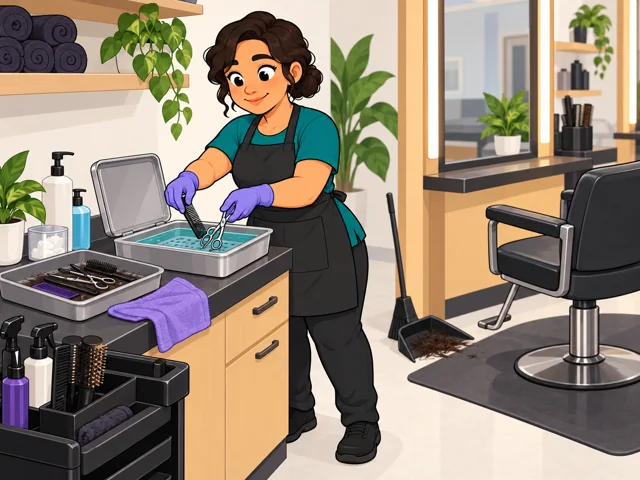
Clean your station and sanitize your scissors and combs before the next client sits down.
United States
United States · May 2025
United States · 2025–2035
Quick orientation
An approved cosmetology program and licensing exam are the usual route.
National employee median; tips included, self-employment excluded.
About 73,400 openings annually for hairdressers, hairstylists, and cosmetologists.
Some color-consultation tools let clients preview shades on screen and help suggest products.
You assess the actual hair, agree on the service, and carry out the cut or color.
How much color planning salons will hand to software remains uncertain, especially when a preview and a client's expectations differ.
Pay in context
Hours, tips, and whether you work for yourself affect what reaches your pocket.
The median was $17.21 an hour, with a reported annual equivalent of $35,790. The 10th and 90th percentiles were $13.00 and $34.23 an hour—$27,040 and $71,190 annually. These describe the wage spread, not beginner and expert pay; part-time work means fewer paid hours.
Hourly medians were $17.39 in personal care services and $14.84 in retail trade.
Employee wage figures exclude self-employed workers. If you own a salon, sales must cover business costs before becoming personal income.
Employment is projected to grow about 8% from 2025 to 2035, with 73,400 openings per year on average. Openings include replacing people who leave the occupation, not just newly created jobs.
Check your state board's requirements before paying for training. Licensing rules vary.
After entry
This starts where the entry routes leave off: early work, growing capability, and advancement or specialization.
Build consistency in everyday cuts and consultations. Use salon training and clear client records to improve from visit to visit.
Take advanced classes in a service you want to develop, such as coloring or hairstyling, and broaden the work you can confidently offer.
An assistant manager or salon manager role adds responsibility for helping other stylists and running the salon.
Some franchise salons organize the work around cutting hair, with fellow stylists and ongoing training. Individual franchise owners set employment conditions.
You choose your schedule but also order supplies, keep business records, and attract clients. Workdays can extend beyond appointments.
Try it
Try a mock consultation with a friend using two hairstyle photos. Ask what they like about each and how much styling they want to do at home. Summarize their request and let them correct you. Notice whether you enjoy turning a vague preference into a clear plan.
Stay safe: Keep this to conversation and photos; do not cut hair or apply chemicals.