
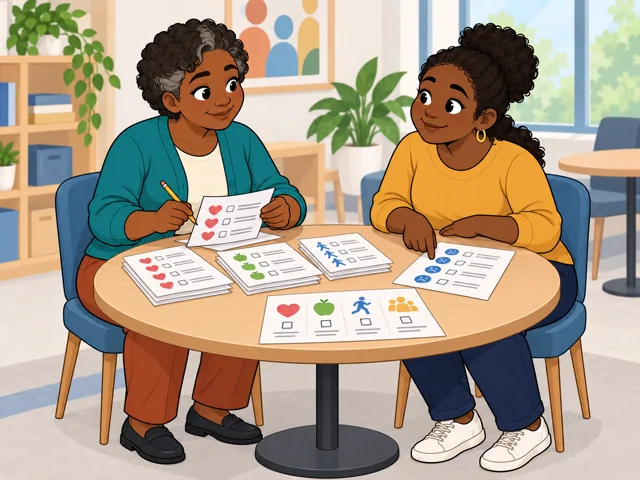
Find the questions people keep asking
Sort survey answers and talk with community partners, then pick a new health program's topics from repeat questions.
Career profile
Health education specialists shape lessons and outreach around audience knowledge gaps, then judge what worked.
Survey answers become your workshop, and leading it shows which explanation to redo. The job blends people work and finding ways to reach an audience.
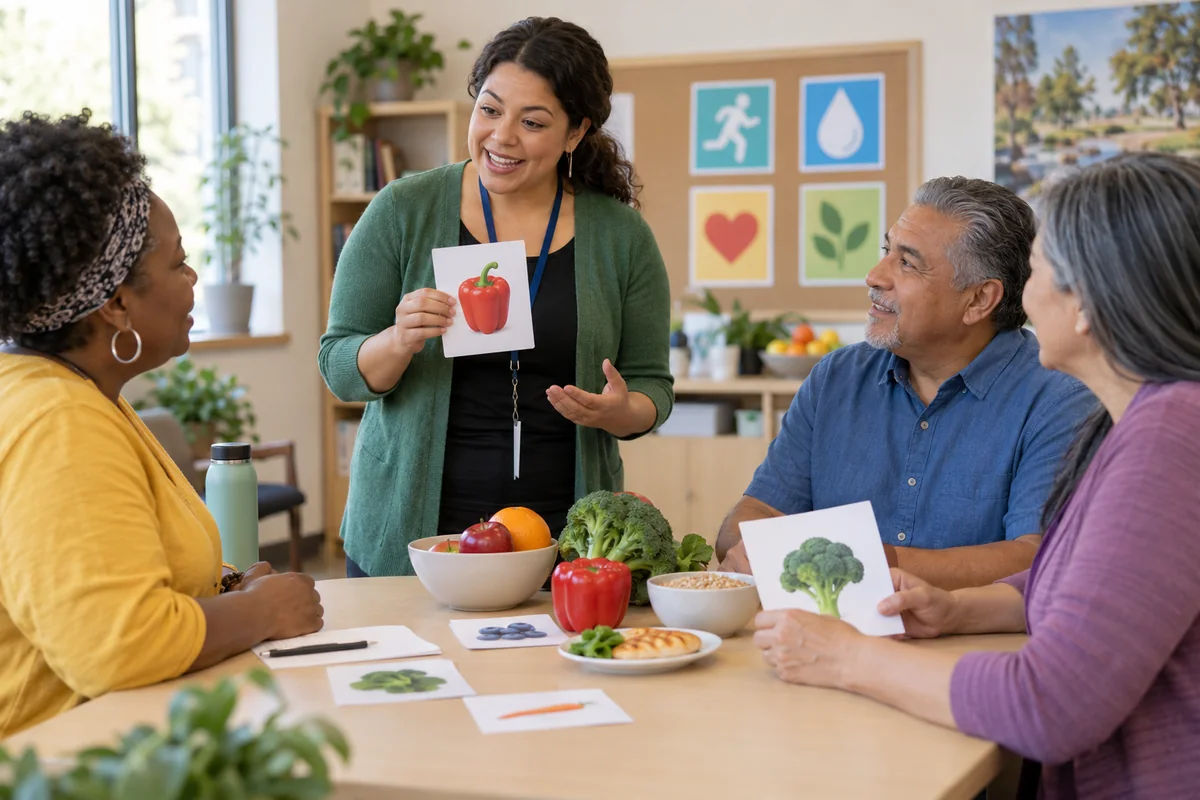
Sort survey answers and talk with community partners, then pick a new health program's topics from repeat questions.
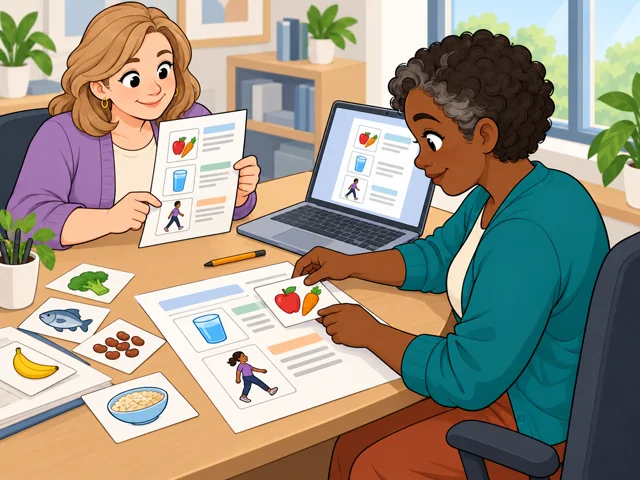
Rewrite health information as a handout or slide deck, choosing words and pictures the people attending will understand.
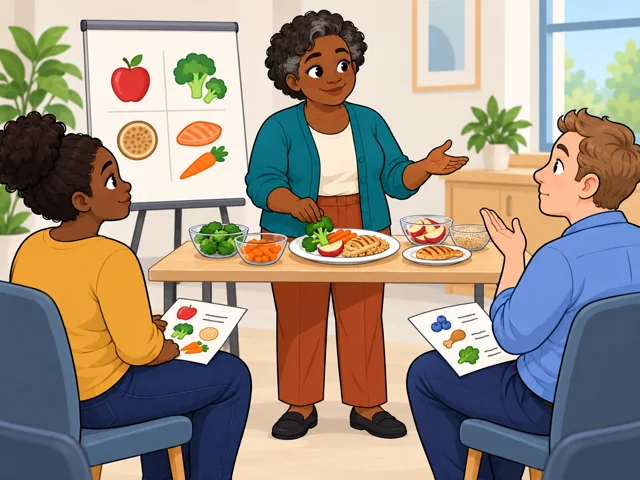
You explain a health topic, invite the group's questions, and try a new example if reactions show confusion.
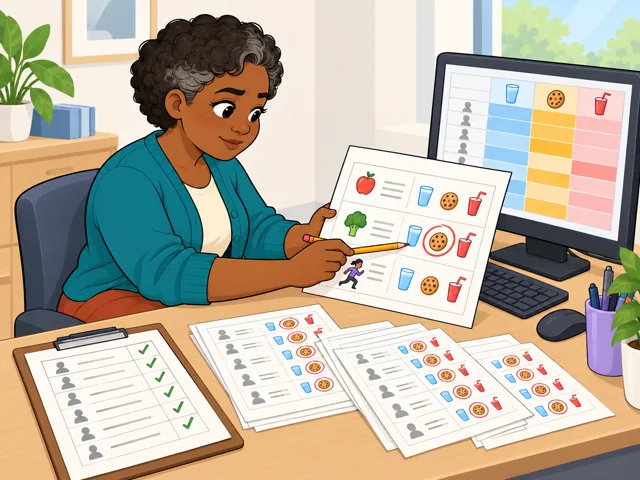
Record who came and review participants' answers on a spreadsheet, then rework any section people keep misunderstanding.
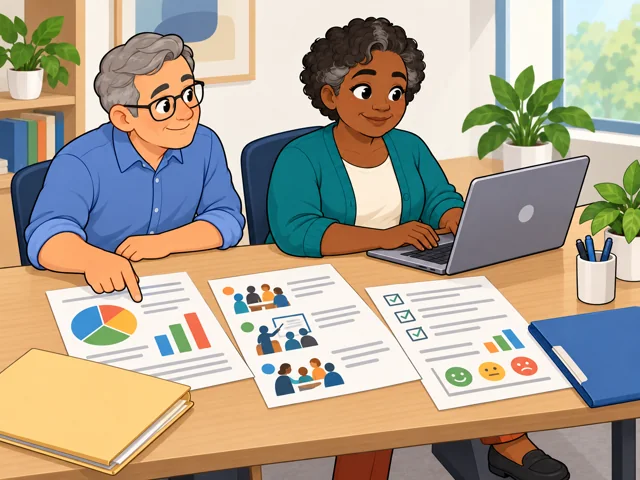
Some roles have you draft grant applications covering the health need, proposed program, and evaluation plan.
United States
United States · May 2025
United States · 2025–2035
Quick orientation
Some employers also require or prefer certification.
National median, equivalent to $30.80 an hour.
About 6,900 openings a year on average, including replacements.
Spreadsheets help organize results, and presentation tools help build lessons. For advocacy work, tools that generate text—generative artificial intelligence (AI)—can also help draft talking points.
You check the facts and possible bias, listen to the audience, and decide whether the message fits the people you want to reach.
How much campaign writing can be handed to AI remains unsettled: a draft may save time but still need substantial checking and rewriting.
Pay in context
Workplace and location matter when comparing offers. These national wages describe health education specialists across experience levels.
The median was $64,070 a year, or $30.80 an hour. The middle half earned $50,620–$87,130; the 10th and 90th percentiles were $42,990 and $118,200. These are wage ranges across workers, not a starting-to-senior pay ladder.
Annual medians were $83,040 in hospitals, $69,740 in government, $62,370 in educational services, $60,500 in ambulatory healthcare, and $50,230 in social assistance. Hospital and education figures include public and private employers; government excludes state and local education and hospitals.
Employment is projected to grow 6%, with about 6,900 openings annually. Many openings replace people who change occupations or leave the workforce; they are not all newly created jobs.
Plan on a bachelor's degree. Some employers also want the Certified Health Education Specialist (CHES) credential: qualifying education establishes exam eligibility, passing the exam earns certification, and continuing education maintains it. Check the credential authority's coursework rules before choosing classes.
After entry
This starts where the entry routes leave off: early work, growing capability, and advancement or specialization.
Learn the program's materials and community partners. Build confidence leading sessions and keeping clear participation records.
Develop a needs survey, plan the lessons, coordinate delivery, and evaluate what participants learned.
Move toward supervising educators and coordinating the plans that guide a larger program.
Work directly with patients and families who need understandable health information. Some roles also involve teaching medical staff how to communicate more effectively with patients.
Build community campaigns and work with public officials or local committees. Some roles include overseeing grants as well as delivering education.
A particular disease or community may shape your whole program. Alongside education, you may help secure grant funding and explain health needs to policymakers.
Try it
Choose a public health agency's handout and redesign it as a one-page lesson for students. Ask a willing reader to explain its main point, then revise whatever confused them. Notice whether you enjoy both creating the lesson and testing its clarity.
Stay safe: Keep the original health guidance intact and avoid asking the reader for personal medical information.