
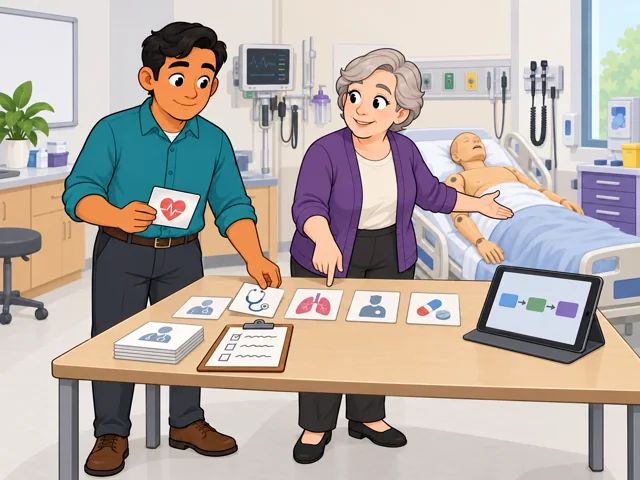
Plan a simulation scenario
Pick the goals for a pretend-patient scenario, then tune it with the simulation director to your students' experience.
Career profile
Health specialties instructors give college students the knowledge and decision-making skills a health field demands.
In a clinical course, an instructor might replay a recorded practice run on a mannequin. Then the instructor asks students why they made each choice.
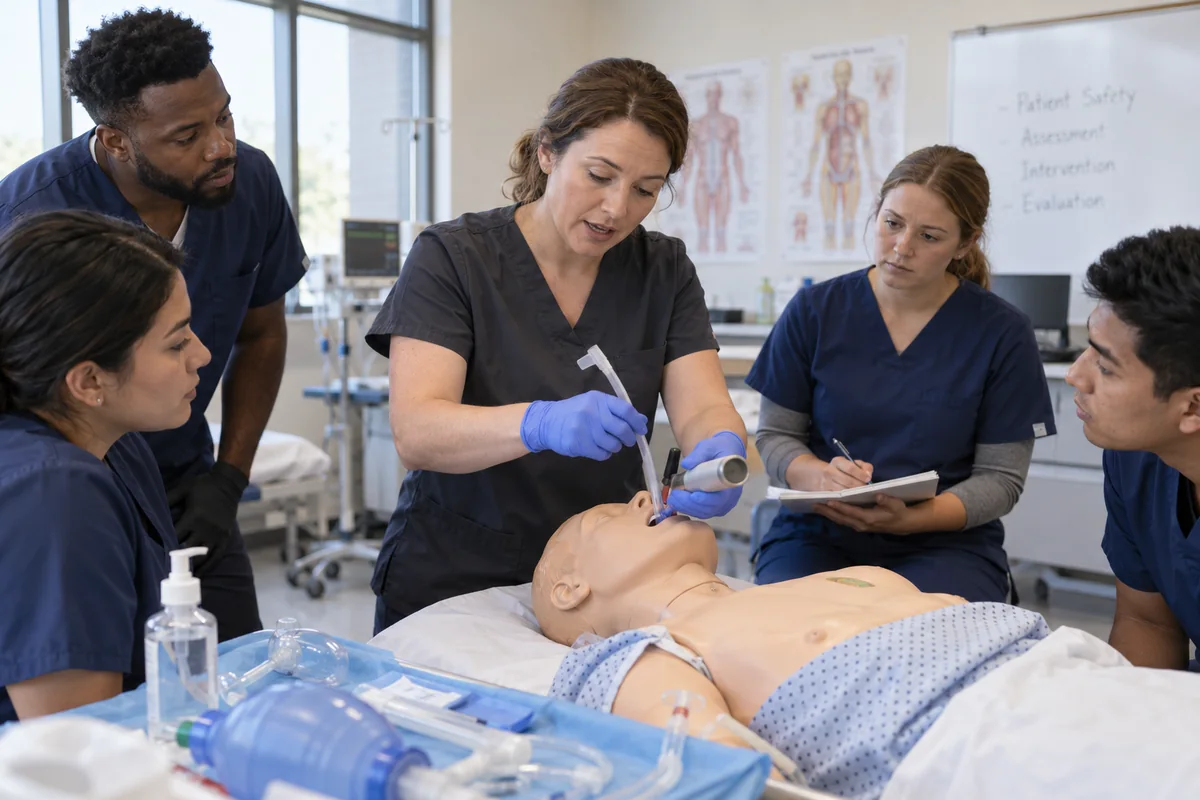
Pick the goals for a pretend-patient scenario, then tune it with the simulation director to your students' experience.
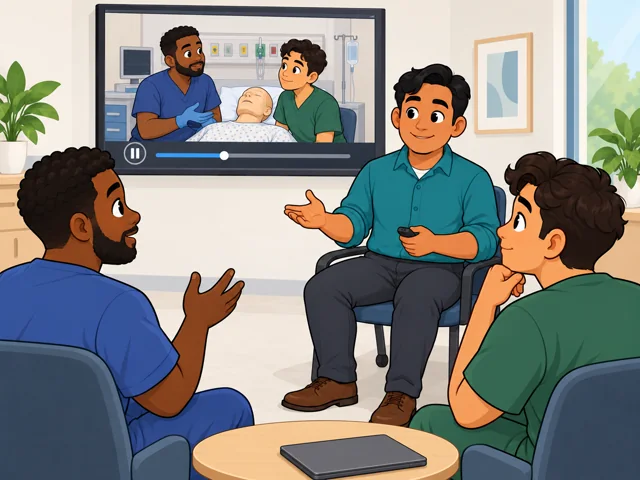
After the mannequin work ends, watch the recording together and ask what students saw and why they acted.
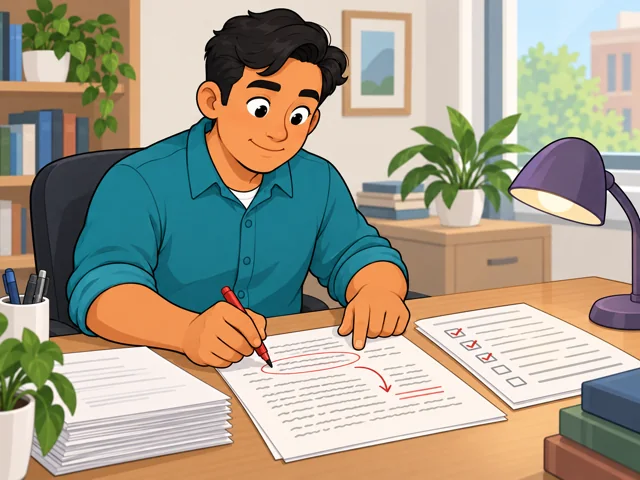
Point out where the evidence supports the student's conclusion and where it comes up short.
If new findings in your specialty change what your course covers, update the slides and assignment.
United States · 2025
United States · May 2025
United States · 2025–2035
Quick orientation
Relevant work experience matters. Some teaching positions accept a master's or bachelor's degree with specialty qualifications.
National pay for health specialties college teachers across specialties, excluding nursing instructors.
About 24,900 openings a year are projected nationally across health specialties.
In medical simulation, mannequins and session recordings let students practice encounters and revisit their choices with you.
You lead the discussion about reasoning and judge whether a teaching tool is appropriate. Medical educators still need to check technology's accuracy and protect learner information.
How much learner assessment artificial intelligence (AI) can take over remains unsettled. Its role will depend on reliable results, privacy protections, and how schools evaluate its use.
Pay in context
These figures cover college teachers across health specialties, including dentistry, medicine, pharmacy, and therapy. Nursing instructors are counted separately.
The May 2025 median was $107,310 annually. Dividing by 2,080 hours gives about $51.59 an hour for comparison; this is not a reported hourly wage or an assumed faculty schedule. The bottom 10% earned $59,270 or less; the top 10% earned $322,020 or more. Those are wage percentiles, not starting and senior salaries.
May 2023 annual averages were $137,370 at colleges, universities, and professional schools; $82,990 at junior colleges; and $162,260 at general medical and surgical hospitals. These older averages describe different groups of faculty, not what switching workplaces would add to your pay.
Check whether an offer covers nine months, a full year, or part-time teaching. Education and experience can affect salary and rank, but the employer's pay rules determine how.
Employment is projected to grow 17.9% from 2025 to 2035, with 24,900 openings per year on average. That national total does not predict opportunities in your particular specialty or town.
First choose the health field you want to teach. The required degree and experience depend on the subject and institution.
After entry
This starts where the entry routes leave off: early work, growing capability, and advancement or specialization.
Set clear assignments and grading criteria, then use student questions to improve your lessons.
In clinical teaching, develop simulation debriefs that help students explain their decisions and recognize what they would change.
Take responsibility for a whole course or pursue promotion to associate professor. Teaching, scholarship, and service expectations depend on your appointment.
Teaching is the main focus. In dental hygiene, your week can move between classroom instruction and student clinics, with some evening classes.
Research-focused appointments divide your attention between students, graduate research, and publications. Progress on a study matters alongside how your classes go.
In a dental school, clinical faculty may combine student instruction with their own patient care. Electronic health records and clinic responsibilities sit alongside course planning.
Try it
Use an anatomy textbook to prepare a five-minute lesson on how the heart moves blood. Teach a friend, then ask them to explain it using your diagram. Revise the part they misunderstood. Notice whether you enjoy figuring out how someone else thinks.
Stay safe: Keep this to explaining anatomy; do not practice procedures or give health advice.