
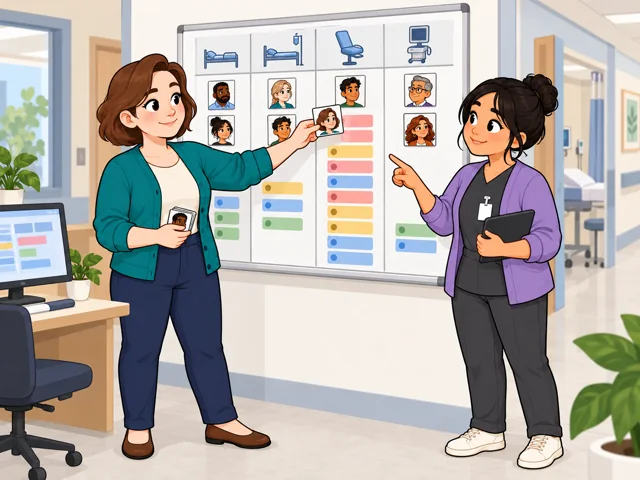
Match staff to each session
Set the staff roster against expected demand, open treatment spaces, and equipment, then shift coverage to short-handed sessions.
Career profile
Health care managers run the staff, budgets, and daily operations of health care services.
What happens when a clinic's schedule suddenly has a hole? You decide which staff and resources must shift so care keeps going.

Set the staff roster against expected demand, open treatment spaces, and equipment, then shift coverage to short-handed sessions.
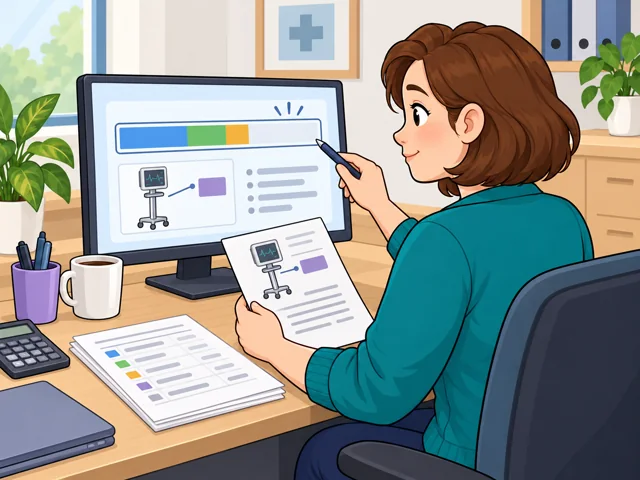
Weigh the cost of a purchase against the budget and judge whether the department can afford it.

Review an employee's performance, point out strengths, say plainly what should change, and set up coaching.

Map each check-in step with staff, find where information stalls, agree on a fix, then test it.
United States
United States · May 2025
United States · 2025–2035
Quick orientation
Related healthcare administrative or clinical experience is typical; requirements vary.
National median for medical and health services managers; about $59.55/hour.
About 62,300 openings yearly, including replacements—not all newly created jobs.
Digital records and reporting tools help you see how work moves through a clinic and where changes may help.
You bring staff into decisions about new systems. When artificial intelligence is introduced, people must test its performance, monitor problems, and protect patient information.
A new tool may reduce checking or create more of it. That depends on data quality, errors, and how well it fits the clinic's routines.
Pay in context
These national figures cover medical and health services managers across specialties and levels of responsibility.
The median was $123,860 a year, or about $59.55 an hour. The 10th and 90th percentiles were $73,390 and $224,340. Those are positions in the wage distribution, not starting and senior salaries.
Annual medians were $133,580 in hospitals, $116,060 in outpatient centers, $105,770 in physicians' offices, and $100,520 in nursing and residential care.
Management usually follows related work experience.
After entry
This starts where the entry routes leave off: early work, growing capability, and advancement or specialization.
Get comfortable with the department's reports, budget, and staffing routines.
Bring staff together to revise a troublesome workflow. Compare what happens before and after, then adjust the plan.
Advance toward executive work or responsibility for hospital-wide information systems. Executive roles may require a master's.
Around-the-clock care can bring evening work and emergency calls.
Appointment scheduling, front desks, and administrative support may have separate teams. Keeping their handoffs connected is a central challenge.
Try it
Sketch a fictional clinic visit from appointment booking to check-in. Give each step an owner, then imagine the appointment details never reach the front desk. Propose one handoff change and a way to tell whether it worked. Notice whether solving the coordination problem interests you.
Stay safe: Use invented information, not real patient records.